Used Car Dealer Marketing: What a Small Lot Should Do First — and What to Skip
Used car dealer marketing in the right order for a 10–50 car lot: measure cost per car sold, get found locally, list everywhere, answer leads fast, and work your customer list.
Used car dealer marketing advice mostly comes from people selling one channel — an ad agency, a texting tool, a listing site — so every guide says their channel comes first. On a 10-to-50 car lot you don't have the budget or the hours to do everything. You need the order: what to do first, what actually sells cars for a lot your size, and how to tell which dollars are working.
This is that order. It starts with measurement, because without it every other decision is a guess, and then works through getting found locally, putting your inventory everywhere shoppers look, answering leads fast, and working the customers you already have. Each step links to a deeper guide when you're ready for the detail.
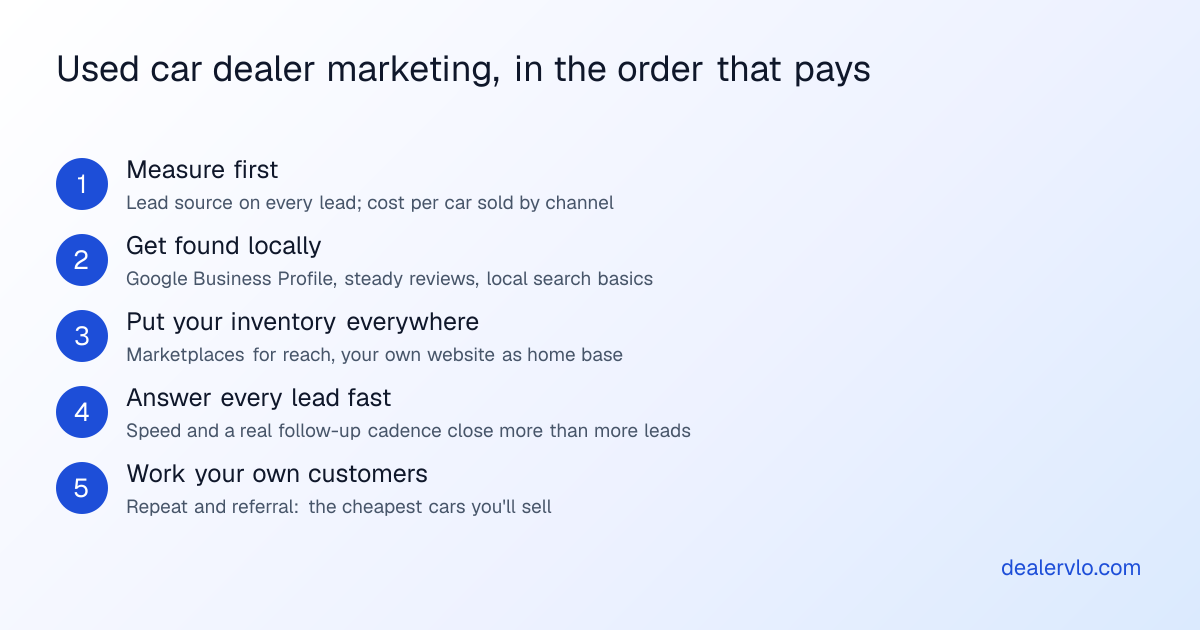
Step 1: Measure before you spend
The number that tells you whether marketing works isn't cost per lead — it's cost per car sold, by source. A cheap channel full of tire-kickers can cost more per sale than an expensive one that closes. So before you change anything, start recording where every lead came from, and then which of those leads actually bought.
Lead-source tracking for a small lot shows how to set that up without enterprise software, and how to measure cost per car sold turns it into the one ratio you manage by. When you're setting the budget itself, the marketing budget breakdown works it per vehicle sold, scaled to your volume.
DealerVLO's lead inbox records the source of every lead as it comes in, so the source is captured at the start instead of reconstructed from memory at the end of the month.
Turn your ad spend into a cost per car sold and a real ROI — and see how many units the spend has to produce just to break even.
Open the Marketing ROI CalculatorStep 2: Get found by local shoppers
Most car shoppers start with a search, and for a small lot the search that matters is local. Three things carry most of the weight:
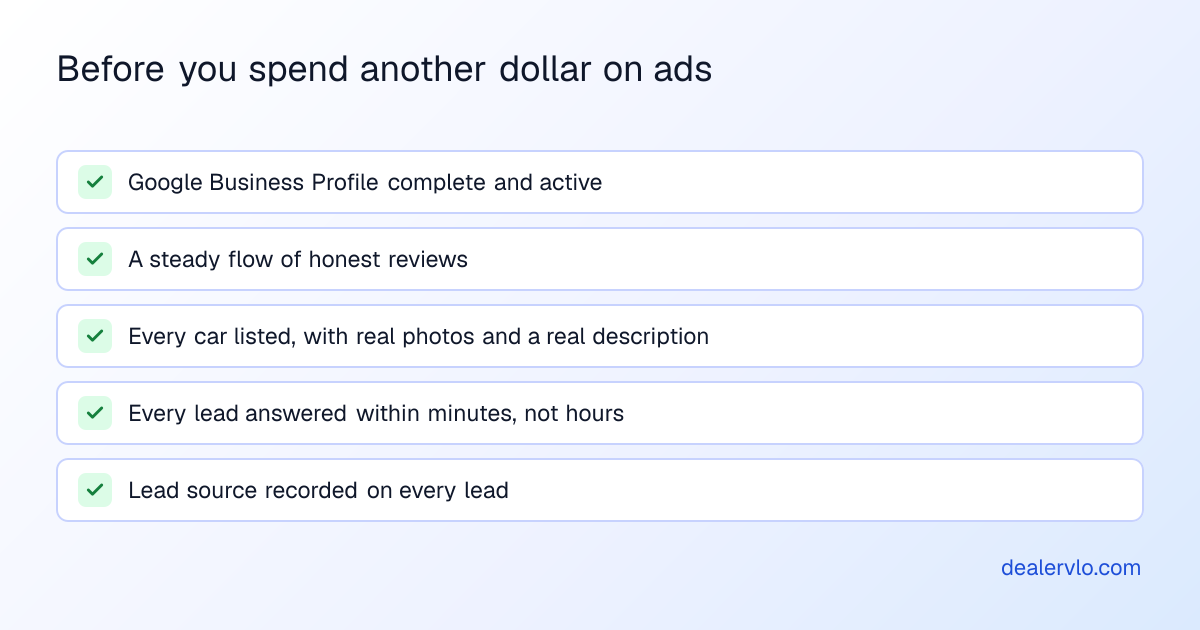
- Your Google Business Profile. For a local lot it often outworks paid ads — photos, hours, inventory posts and answered questions. The one-hour Google Business Profile setup covers the build and the weekly fifteen minutes that keep it working.
- Reviews. A steady flow of recent, honest reviews is the trust signal shoppers and search engines both read. Ask every happy customer, at the right moment, in a way that stays inside the rules: the FTC's rule on consumer reviews, in effect since October 2024, bans fake reviews and paying for positive ones. How to get Google reviews for your dealership has the timing and the scripts.
- Local search basics. Consistent name, address and phone everywhere, a website that says what you sell and where, and the handful of listings that matter. How independent dealerships win "near me" searches lays out what moves rankings and what doesn't.
A newer version of the same idea: shoppers are starting to ask AI assistants which lot to visit, and those answers draw on the same evidence — consistent business data, reviews and useful pages. How to get your dealership recommended by ChatGPT covers the levers.
Step 3: Put your inventory everywhere shoppers look
For a used-car lot, the inventory is the marketing. A shopper deciding between three similar cars is comparing your photos, your price and your description against everyone else's, so the listing is your ad.
Get your cars onto the marketplaces where local buyers browse — where to list your cars for leads covers the major sites and how to be on all of them without re-typing, and selling on Facebook Marketplace as a dealer covers the rules there. Then keep your own website as the home base the marketplaces point back to: do you need a website, or is Marketplace enough? makes the case, and dealer website cost shows what providers charge.
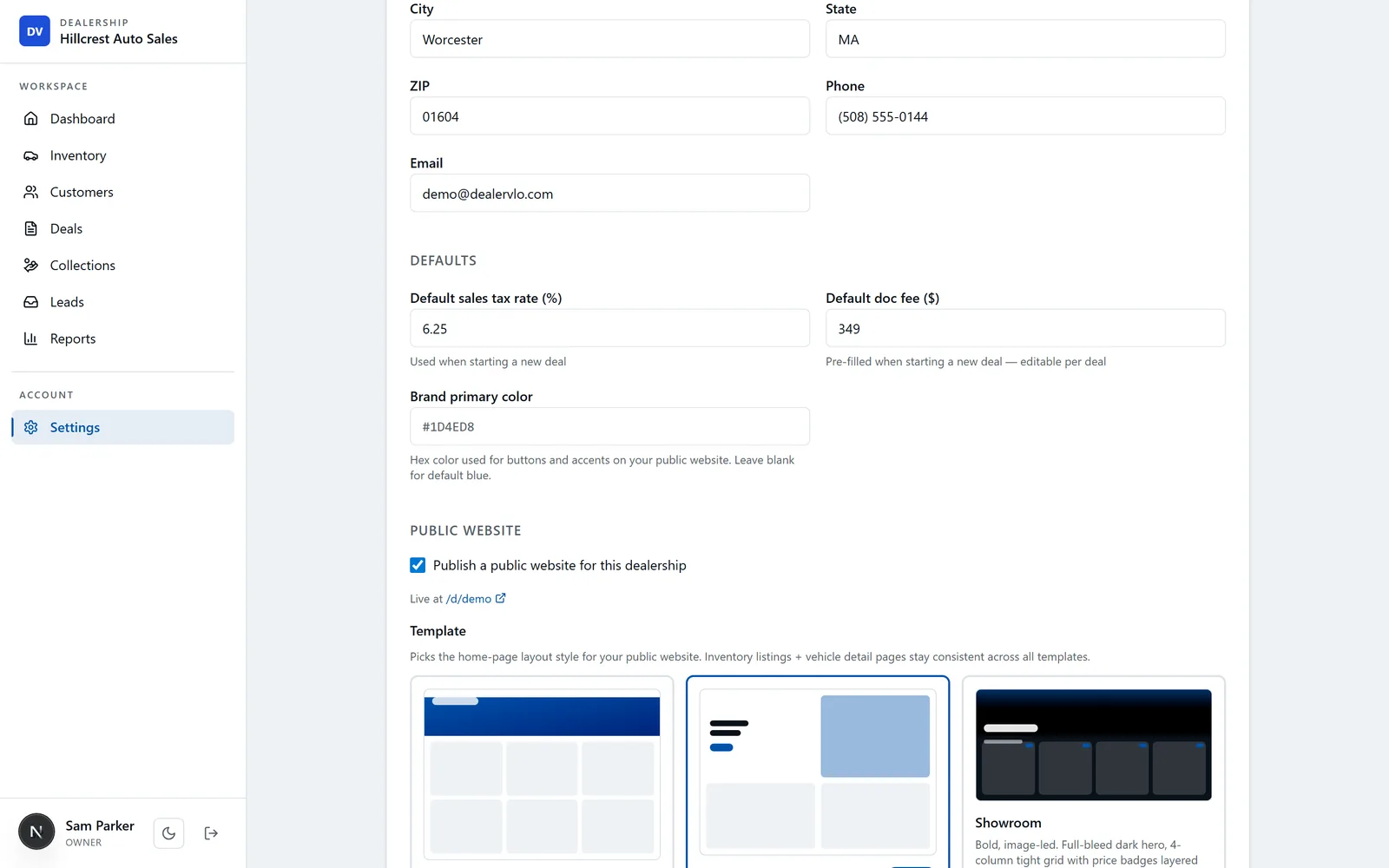
This is where DealerVLO does the most work. A dealer website is included and every car you add posts to it automatically, and listing feeds send your inventory to CarGurus, Cars.com, Autotrader and Facebook once you enroll with each site (their own fees still apply). Add the car once; it shows up everywhere.
14-day free trial, then $29/mo · Cancel anytime
Step 4: Answer every lead fast — then follow up
More leads rarely fix a lot's sales; faster, better follow-up on the leads you already get usually does. A lead that waits hours has often already talked to someone else. Answer the question they asked, then ask for the visit, and keep a follow-up rhythm for the ones who go quiet — converting online leads into appointments covers the cadence.
AI can help here, with limits. An AI BDC can answer leads around the clock, but whether it pays depends on your lead volume — do you actually need an AI BDC? walks through that decision. For the rest of the day-to-day, the AI tools that do real jobs on a lot, how to use AI without getting burned, and ChatGPT prompts for car dealers cover drafting listings, replies and marketing content. The rule across all of them: AI drafts, you decide.
DealerVLO's lead inbox lets you reply to leads by email and keeps the source on every one. It doesn't text or call customers, so phone and text follow-up stays with you.
Step 5: Work the customers you already have
Every car you've sold is a customer who knows your lot, trusts you enough to have bought once, and knows other people who need cars. Repeat and referral business is the cheapest car you'll ever sell — no ad spend, no marketplace fee — and most small lots barely work it. Repeat and referral business for a used-car lot lays out a simple follow-up system and the referral ask most dealers never make.
What to skip (for now)
Some spending rarely pays for a small lot until the basics above are working:
- Broad brand advertising — radio, billboards, general awareness buys — that you can't tie to cars sold.
- Paying for more leads when you aren't answering the ones you have quickly.
- Long contracts for tools you haven't proven on your own lot.
- Anything you can't measure. If a channel can't be tracked to a sale, you can't tell whether it's working.
The budget guide above goes deeper on where not to spend.
The monthly review that keeps it honest
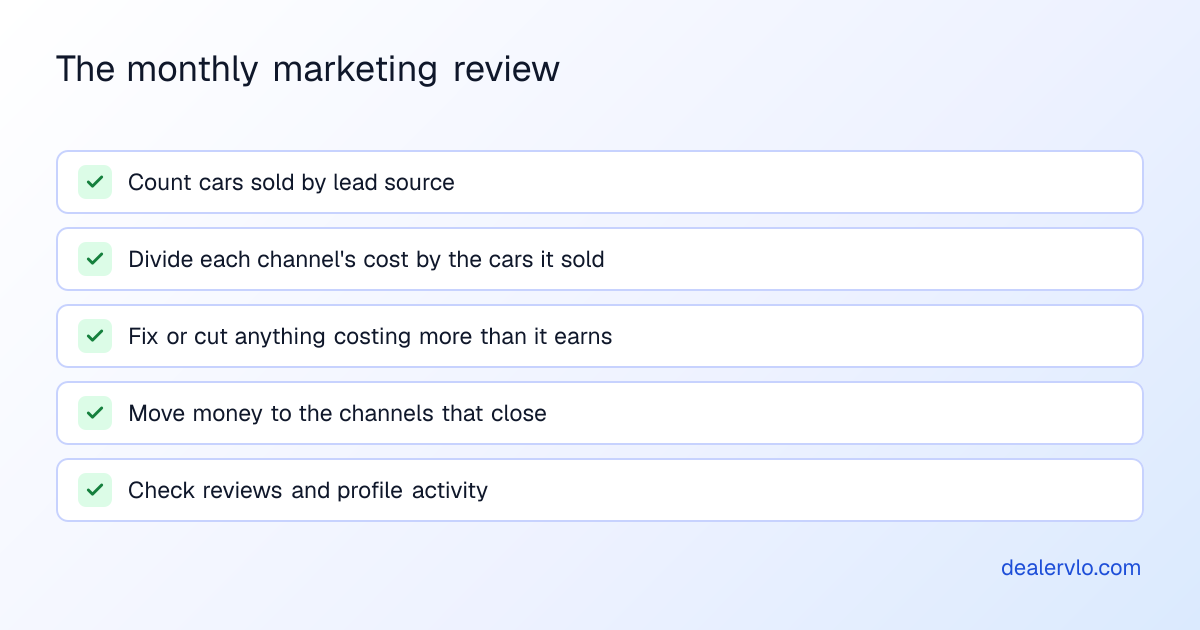
Once a month, count cars sold by source, divide each channel's cost by the cars it sold, and act on it: keep what closes, fix what's close, cut what costs more than the gross it produces. Twenty minutes a month keeps your marketing money following your sales instead of your habits.
14-day free trial, then $29/mo · Cancel anytime
Frequently asked questions
What is the best marketing for a small used car dealership?
The channels that put your actual inventory in front of local buyers who are already shopping: a complete Google Business Profile with steady reviews, your cars listed on the marketplaces and your own website, and fast follow-up on every lead. Those cost less per car sold than broad advertising for most small lots. Then work your own customer list for repeat and referral business, which is the cheapest source of all. Measure cost per car sold by source so you know which is actually working on your lot.
How much should a used car dealer spend on marketing?
Budget per car you expect to sell, not as a flat monthly number, and judge it by cost per car sold rather than cost per lead. What's right depends on your gross per unit and how many cars you move, so there's no single figure that fits every lot. Start with what the channels that are already producing sales cost you, and add spend only where the cost per sale stays comfortably inside your gross.
Do I need a dealer website if I'm on Facebook Marketplace?
Marketplace is a great audience, but it's rented land — the rules can change and you don't own the relationship. A website gives shoppers a place to see your full inventory, your reviews and your contact details, and gives search engines something to rank. For most lots the answer is both: list on the marketplaces for reach, and keep a simple website with your live inventory as the home base.
How do I know which marketing is actually working?
Record where every lead came from, and then which of those leads bought. Divide what each channel costs by the cars it sold and you have cost per car sold by source — the one number that tells you what to keep, what to fix and what to cut. Leads alone lie: a cheap channel that never closes costs more per sale than an expensive one that does.
Does DealerVLO help with marketing?
It covers the parts that live in the dealer's system: a dealer website is included and your inventory posts to it automatically, listing feeds send your cars to CarGurus, Cars.com, Autotrader and Facebook once you enroll with each (you still pay those sites' own fees), and a lead inbox records every lead's source. It doesn't run ads, manage your Google Business Profile, or text customers — those stay with you.
Bottom line
Small-lot marketing isn't about doing everything. Measure cost per car sold, get found locally, put every car everywhere shoppers look, answer leads fast, and work the customers you already have — in that order. Then let the monthly numbers, not the vendor pitches, decide where the next dollar goes.
Start your free 14-day DealerVLO trial and get your website, listings and lead inbox running from one place.