Used cars are priced like new cars. Here's the view from the lot that has to buy them.
Planet Money asked why used cars cost like new ones. A dealer's answer from the buy side: what's driving 2026 prices and how a small lot buys, prices and turns through it.
Part of the Buying & sourcing inventory guide: How to buy at dealer auctions without getting buried
NPR's The Indicator from Planet Money ran an episode on September 23 with a title every independent dealer could have written: "Why are used cars priced like new cars?" Their take is that the used market is out of control, there's no easy fix for prices, and finding an affordable car has gotten genuinely hard. It's worth a listen.
They're telling it from the shopper's side. I run a lot in Tewksbury, Massachusetts, and I'm on the other side of that sticker. Before a car is "priced like new" on my lot, somebody (me) paid close to that at the auction or on a trade. So here's the same story from the buy side: why it's happening, what it does to a small dealer's economics, and what I'd do about it this fall.
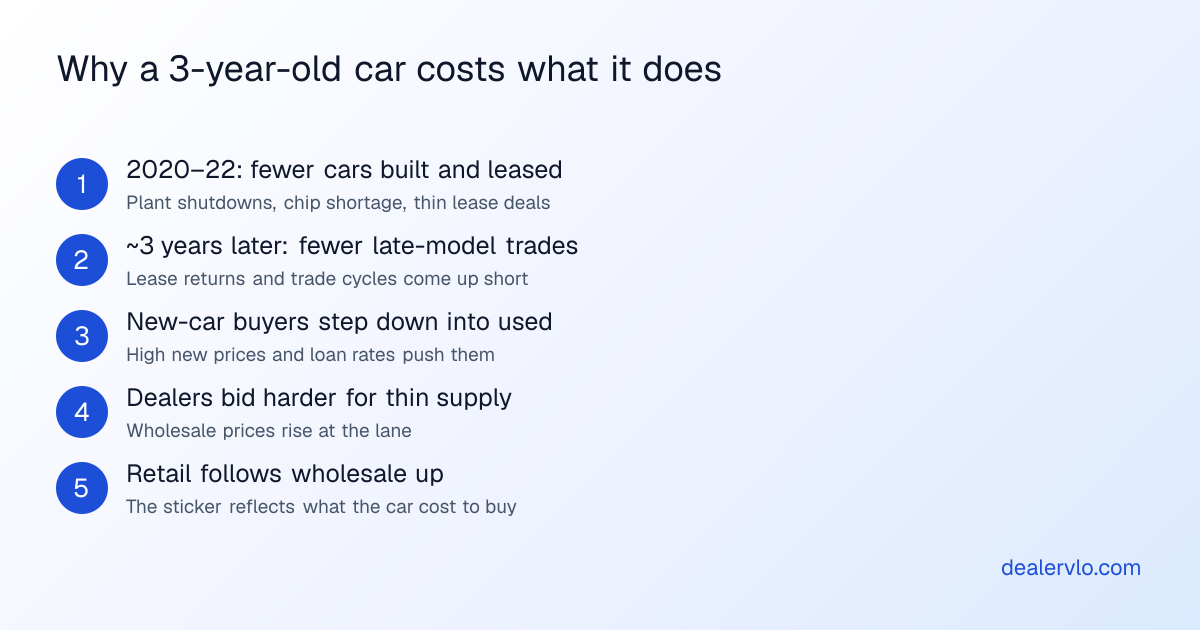
The short answer: used cars cost like new ones because there aren't enough late-model used cars. Automakers built and leased far fewer vehicles during 2020–2022, and that missing production is arriving now as a shortage of three- to five-year-old cars. Meanwhile, new-car prices and loan rates are pushing buyers down into used. More shoppers, fewer cars, so dealers bid harder at the lane, and the retail sticker follows.
14-day free trial, then $29/mo · Cancel anytime
Why are used cars priced like new cars?
Because the used market is a lagging copy of the new market, and the new market had a hole in it. Almost every used car on a dealer lot started life as a new car somebody bought or leased. When plants shut down and the chip shortage hit, fewer new cars were sold, and lease deals got thin, so fewer leases were written. Leases and trade cycles tend to run about three years. Do the math and the shortage of 2021 shows up as a shortage of three-year-old cars right about now.
Edmunds' Q2 2026 used-car report ran under the headline "The Vanishing Affordable Used Car", with three-year-old used vehicles averaging over $32,000. If you've stood in a lane this year, that number won't surprise you.
The demand side makes it worse. New cars got expensive, and so did the loans on them. A shopper who would have bought new in 2019 is now looking at a two- or three-year-old version of the same car, which pushes the buyer who used to want a three-year-old car down to a six-year-old one. Everybody steps down a rung, and every rung gets more crowded.
Why is it so hard to find an affordable used car, even for dealers?
Because the squeeze lands hardest at the cheap end, and dealers feel it at the auction before shoppers feel it on the lot. When the shopper steps down a rung, so do the dealers who sell to them. The clean, older, under-budget car that used to be an easy buy now has a room full of people bidding on it.
That's the part the shopper doesn't see: the sticker on a dealer's lot mostly reflects what the car cost to buy. A higher price doesn't mean a fatter gross. When a car brings strong money at the auction, the dealer who wins it has to retail it for strong money just to make the same margin they made a few years ago. Sometimes they make less, because they got caught in a bidding war. I wrote about that gap in paper spread vs. real gross: the car that "made $3,000" on paper often made a lot less after fees, transport, recon and time.
What high used car prices actually do to a dealer's economics
Here's what nobody outside the business talks about: a priced-like-new market doesn't make dealers richer. It makes every car riskier. Three things change when the average unit costs more to buy.
1. More capital tied up per car. If your average buy goes from $12k to $20k, the same lot full of cars needs a lot more cash or floor-plan line behind it. On a fixed line, that means fewer cars on the ground.
2. Every day on the lot costs more. Floor-plan interest scales with what you owe on the car. Run the example at an illustrative 8% rate: $20,000 × 8% ÷ 365 ≈ $4.38 a day, versus about $2.63 a day on a $12,000 car. Over 60 days that's the difference between roughly $158 and $263 in interest alone, before insurance, lot rent, or the price drop you'll eventually take.
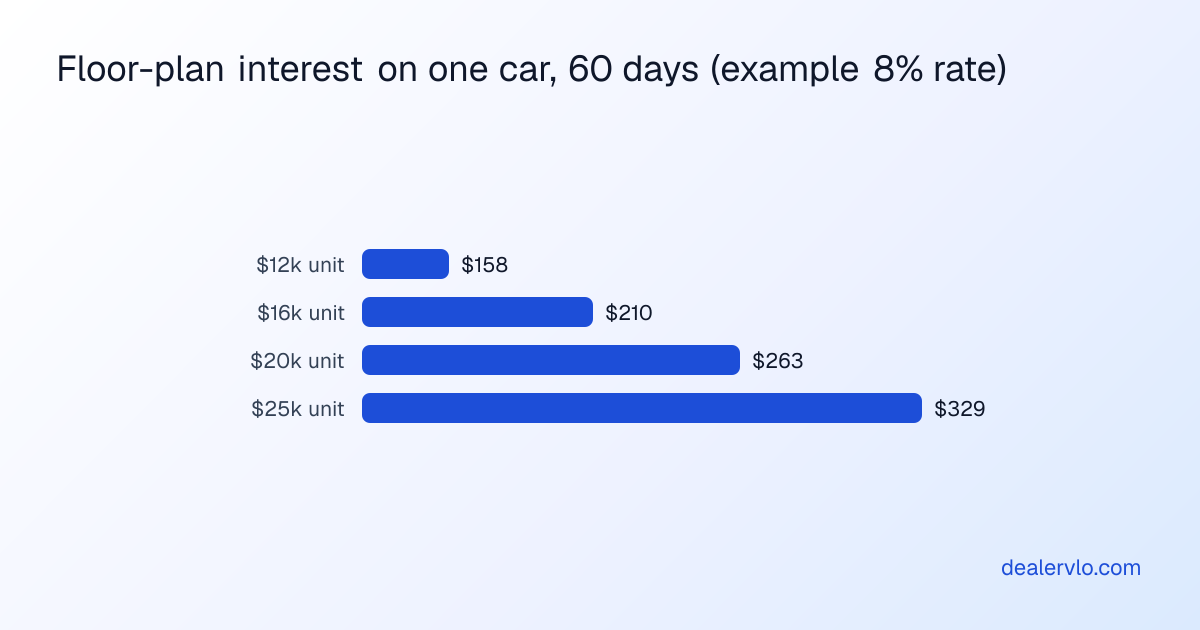
(Example math only. Your rate, your curtailment schedule and your other holding costs will differ, so run your own numbers. If rates have moved on you, here's what a rate hike costs per car.)
3. Buyers get payment-sensitive. Used-car loans usually carry higher rates than new ones, and when the price is up too, the monthly payment is what kills the deal. A shopper who can't make the payment on your $22k car isn't a negotiation; they're a walk.
The upshot: the dealers getting hurt right now aren't the ones with expensive cars. They're the ones whose expensive cars are sitting. Gross profit vs. holding costs on aged inventory goes through that math in more depth.
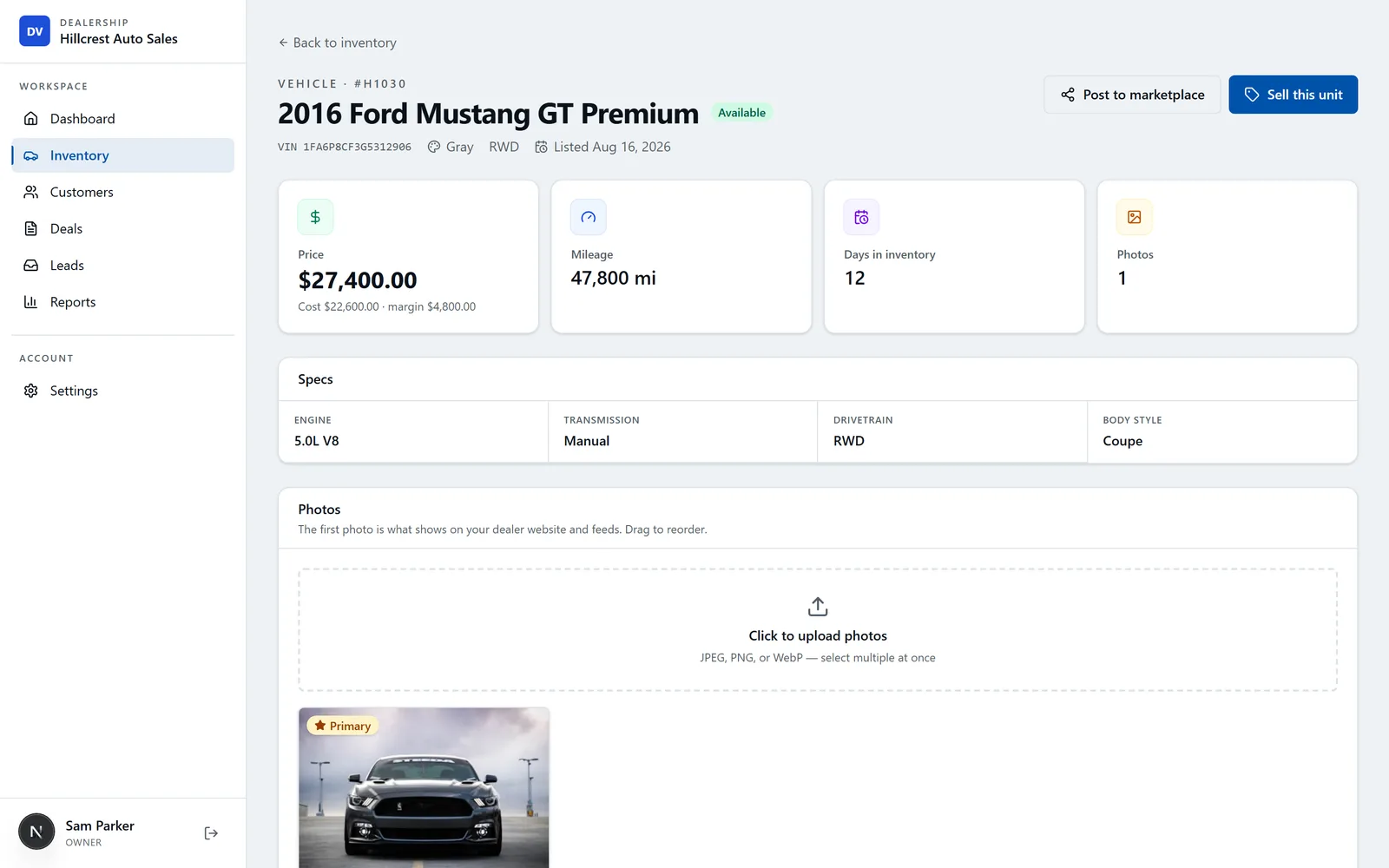
In DealerVLO, every car's page shows its cost, margin and days in inventory side by side, and the dashboard counts units aged 60+ days. That way the cars quietly eating your gross are on the morning screen, not buried in a spreadsheet.
14-day free trial, then $29/mo · Cancel anytime
How should a dealer buy inventory when used prices are this high?
Buy from the retail number backward, and buy more cars where you aren't bidding against a room. That's most of it. In more detail:
Set your max bid before the car crosses the block. Start with what the car will realistically retail for in your market, then subtract recon, transport, the buy fee, a holding cushion for the days it'll sit, and the gross you need. What's left is your ceiling. If the lane goes past it, let it go. Using MMR and Black Book at auction covers how to build that number; the discipline is in actually stopping.
Put a real dollar-a-day number on every unit sitting on your lot.
Open the Holding Cost CalculatorShift sourcing toward the street. In a tight market the auction is where you compete with everyone at once. Trades, service-drive buys, private-party purchases, and dealer-to-dealer deals are where you can still buy a car at a fair number because nobody's bidding against you. Where to find used-car inventory besides the auction lays out the channels, and a sharp trade-in appraisal is worth more this year than it's ever been.
Stock what turns in your market, not what's hot nationally. A car everybody wants at auction is a car everybody's overpaying for. Look at what has actually sold fast off your lot and buy more of that; our October 2026 cars-to-stock list is a starting point, not a substitute for your own sales history.
Know your true cost on every unit. When margins are thin, a few hundred dollars of transport or one surprise in recon can be the whole deal. In DealerVLO you log those costs on the car itself, each line with a vendor, a description and a cost: auction buy fee, transport, a history report, every recon line. They roll into the car's all-in cost and margin, so the gross you see is the gross you actually made.
How should you price used cars when buyers compare them to new?
Price from live local comps, and sell the value, because the shopper is already comparing you to new. When a three-year-old car sits a few thousand dollars under the new version, every shopper does that math. Your number has to hold up to it.
- Price to your market, not your hopes. Start from what comparable cars are listed for nearby, adjusted for miles, condition and equipment. How to price a used car from market comps walks through it step by step.
- Make the value case visible. Put the history report, the recon you did, and the condition up front in the listing. "Why this car instead of new" should be answered before the shopper asks.
- Lead with the payment for payment shoppers. Most buyers in this market shop by the monthly number. Showing a clearly labeled estimate on the listing qualifies them before they call.
- Reprice early, not late. A car that isn't getting calls in its first couple of weeks is telling you something. In a high-cost market, the first markdown is the cheap one.
DealerVLO's AI price suggestion shows a price range from live comparable listings plus a target price for selling in about 30 days, and every priced car on your dealer website shows a monthly payment estimator. Cars past 60 days get an "aging, consider repricing" flag. It doesn't mark prices down for you; the call is still yours. But you make it looking at the market instead of guessing.
Will used car prices come down in 2027?
Probably some, eventually, but don't run your lot on that bet. The pandemic-era shortage is a timing problem: as more recent model years age into the used market and lease volume recovers, the supply hole fills in. Edmunds pointed to steeper depreciation and growing off-lease inventory as early signs of relief in its Q1 2026 report. But "less tight" isn't "back to 2019." New-car prices and rates still set the ceiling the used market prices against.
For a dealer, the practical answer is the same either way: turn fast enough that you don't care. A lot turning its inventory every 30 to 45 days barely notices a slow market drift; a lot holding cars for 90+ days takes every softening as a loss. Inventory turn for used car dealers is the metric that protects you whichever way prices go.
What this means for small, independent lots
Big franchise stores and the national used-car chains have deeper credit lines and bigger buying operations, and in a tight market that matters. But small lots have advantages that matter just as much right now: you can buy off the street in your own town, you can make a pricing call in an afternoon instead of a quarter, and you know which cars actually sell in your zip code. How small lots compete with CarMax and Carvana gets into that.
The Indicator's point holds: there's no easy fix for prices. But there's a playbook for running a lot inside those prices, and it's the same playbook that works in any market, applied with less room for error.
Frequently asked questions
Why are used cars priced like new cars right now?
Because late-model used cars are scarce. Far fewer vehicles were built and leased in 2020–2022, and on a roughly three-year cycle that shows up now as a shortage of three- to five-year-old cars. Meanwhile, high new-car prices and loan rates push buyers down into used. More shoppers chasing fewer cars means dealers bid harder at auction, and retail follows wholesale.
Why is it so hard to find an affordable used car?
The cheap end gets squeezed hardest. When late-model cars are expensive, buyers step down to older cars, pulling those prices up too. Dealers feel it first on the buy side: the clean, older, under-budget car now draws a crowd at the auction.
Will used car prices go down in 2027?
Nobody can promise it. The pandemic supply hole should ease as newer model years age in and off-lease volume recovers, but easing isn't the same as returning to 2019 prices. Plan for a tight, expensive market and treat any softening as upside.
How should a used car dealer buy inventory when prices are this high?
Set your max bid from the retail number backward: realistic retail in your market, minus recon, transport, fees, a holding cushion and the gross you need. Buy more off the street, from trades and service customers. Go home with fewer cars rather than paying a number that leaves no gross.
How do you price a used car when buyers are comparing it to new?
Price from live local comps and show the value: payment, condition, history report, and what the car would cost new. If your number can't survive a side-by-side with new, the car will sit, and sitting costs more when each unit ties up more money.
Do high used car prices help or hurt independent dealers?
Both. Higher retail doesn't mean more gross, because the car cost more to buy. It does mean more capital per unit, bigger holding costs, harder sourcing and more payment-sensitive buyers. Lots that buy right and turn fast still do well; lots that overpay and let cars age take the losses.
Bottom line
Planet Money is right that used cars are priced like new ones, and right that there's no quick fix. From the lot, the cause is simple: a production and leasing hole from 2020–2022 meeting buyers priced out of new. The effect on dealers isn't bigger profits. It's more money tied up in every car and less room for mistakes.
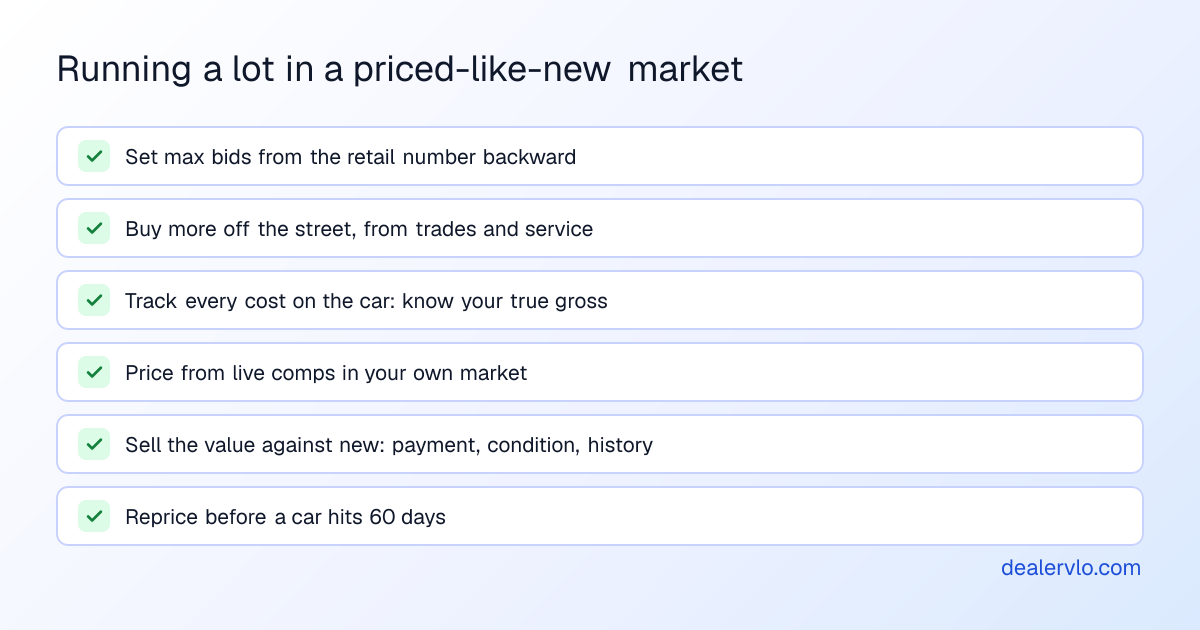
So buy from the retail number backward, source where you're not bidding against a room, know your true cost on every unit, price from live comps, and turn the car before the holding cost eats the gross. That's the job in any market. In this one, it's the whole job.
DealerVLO puts the numbers for that job on one screen: cost and margin on every car, days in inventory and a 60-day aging flag, a price suggestion from live comps, and a P&L that shows what floor plan and overhead are really costing you. $29/month flat, unlimited users. Start a 14-day free trial at dealervlo.com/signup.
14-day free trial, then $29/mo · Cancel anytime
Punch in cost, recon, holding days, and sale price to see your true net gross and margin.
Open the Profit Margin Calculator