Vehicle intake: from the auction lane to your front line in 72 hours
A dealer's vehicle intake process: the 15-minute data capture, the 72-hour arrival-to-listed pipeline, and the habits that stop units from leaking days.
Part of the Reconditioning guide: Used Car Reconditioning Cost: Budgeting & ROI for Dealers
Switching from another DMS? Compare DealerVLO to DealerCenter, Frazer, or Lot Wizard.
Everyone in this business tracks days-to-sell. Almost nobody tracks the quieter number in front of it: days from arrival to actually for sale — photographed, priced, and published. On a lot with no intake routine, that gap runs a week or more, and it's pure holding cost with zero shot at an offer: the car can't sell while it isn't listed.
Intake is the fix, and it's not a big system — it's a 15-minute capture ritual and a 72-hour pipeline you run the same way on every unit. Here's the version that works on a small lot, where the buyer, the photographer, and the title clerk are all the same person.
14-day free trial, then $29/mo · Cancel anytime
Hour zero: the 15-minute capture
The single highest-leverage habit in lot operations: before the car you just bought at auction (or took on trade) is even parked, its data goes in.
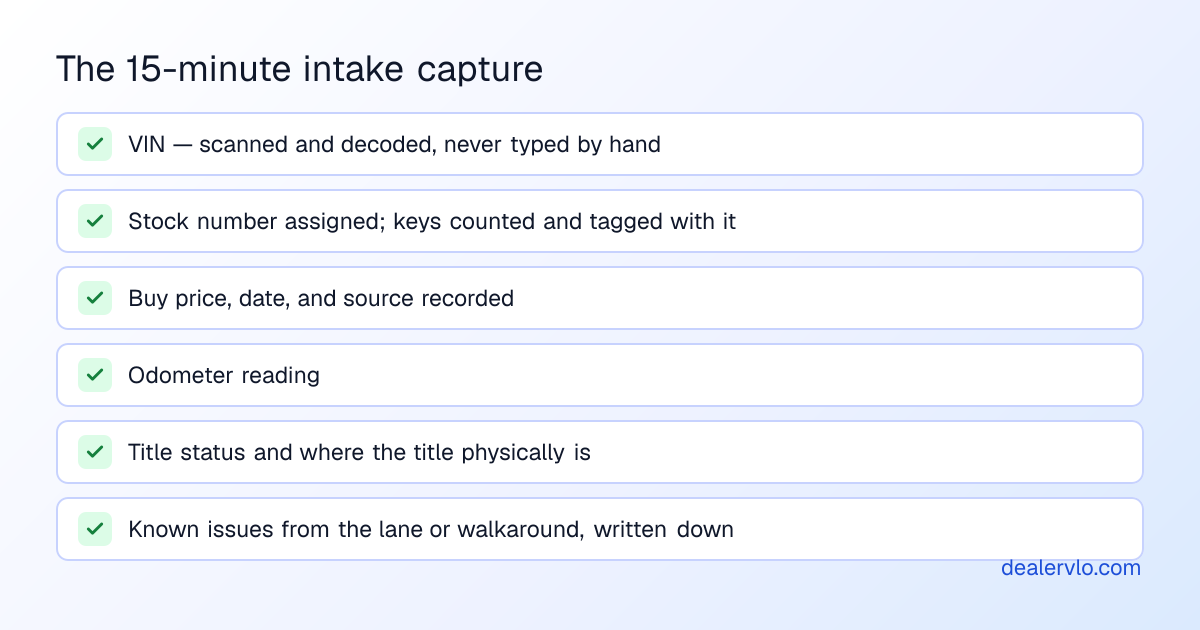
Three of these deserve a word:
Scan the VIN — never type it. A VIN typed by hand is a typo waiting to reach your paperwork, your listings, and your title application, where it costs real time to unwind. Decode it and the year, make, model, trim, and equipment fill themselves — which is also how the intake takes fifteen minutes instead of forty-five. In DealerVLO that's literal: Add vehicle has a Scan VIN button that reads the door-jamb barcode with your phone's camera and runs the decode, no app needed (how the scanning works).
Record the buy price and source, permanently. Not in your head, not in a text thread with your auction buddy. Every margin number you'll ever want — per-unit gross, turn economics, which source actually makes you money — depends on the buy price being written down on day one. A lot that skips this is flying without instruments and calling it experience.
Log where the title is. In hand, at the lienholder, coming by mail from the auction — it doesn't matter which, as long as it's written down. The alternative is the deal-day title scramble, which every dealer has lived and none has enjoyed.
And assign the stock number now, with the keys tagged to it. The stock number is the thread that ties the car, the keys, the title, the recon ticket, the photos, and eventually the deal jacket to one identity.
The 72-hour pipeline
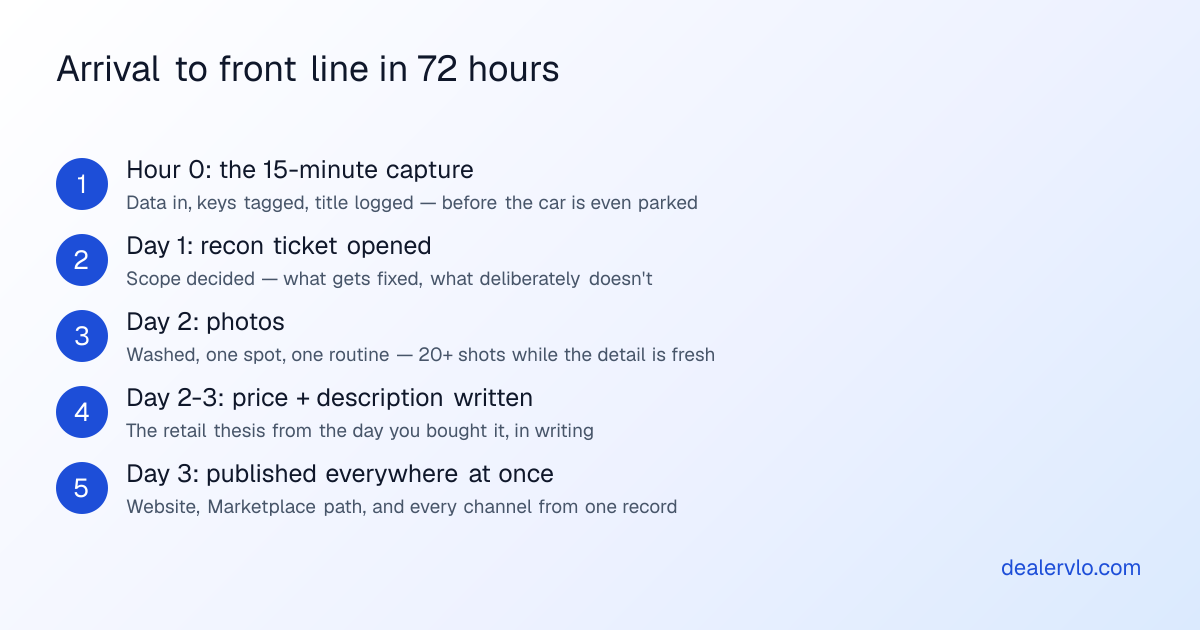
Day one: scope the recon — including what you won't fix. The recon decision should happen the day after arrival even when the work itself takes longer. The 3-day recon workflow covers the shop side; the intake-side rule is simpler: an un-scoped car is an unmanaged car. Decide what gets fixed and what deliberately doesn't, write it on the ticket, and the unit has a schedule instead of a vibe.
Day two: photos, one routine, every car. Washed, same spot on the lot, same shot list, twenty-plus photos. The photography routine is its own post; the intake point is scheduling — photos are the step most likely to wait for "a nice day," and every day they wait, the finished car sits invisible.
Day two to three: price it and write the description. You had a retail thesis when you raised your hand at the lane — that's why you bought it. Write it down while it's fresh: asking price, the one honest description, the thing that makes this unit interesting. If recon surprises you later, adjust. Waiting for certainty just converts into days.
Day three: publish everywhere at once. Website, the Marketplace dealer path, and whatever else is in your listing stack — from one record, in one sitting. "Listed on one channel, meaning to do the rest" is the most common quiet leak on small lots.
Where the days leak
Run an honest audit on your last five units — arrival date versus fully-listed date — and if there's a gap, it's almost always one of these:
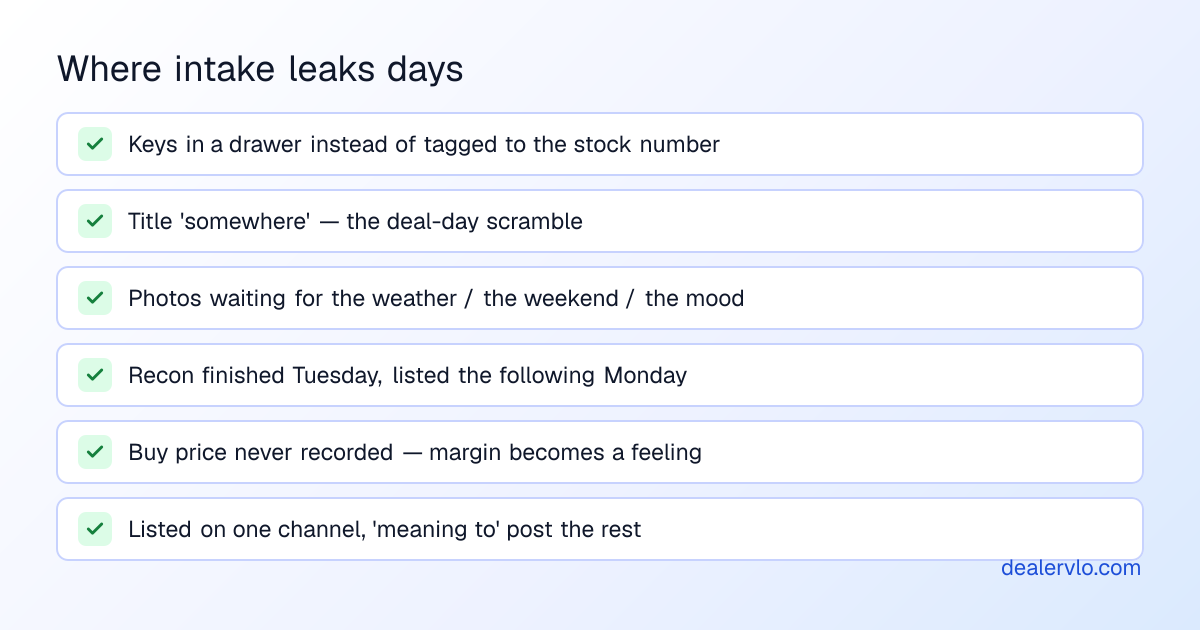
None of these is a skill problem. They're all sequencing problems — steps that had no assigned day, so they happened whenever. That's the whole argument for intake-as-routine: the same fifteen minutes and the same 72-hour clock on every unit, so nothing depends on remembering.
14-day free trial, then $29/mo · Cancel anytime
Frequently asked questions
What is a vehicle intake process?
The standard sequence between a unit arriving and being fully for sale: data capture, recon ticket, photos, pricing, publishing. Every lot does the steps; a process does them in order, on a clock.
How long should arrival-to-listed take?
About 72 hours for a unit needing typical light recon. Heavy work takes what it takes — but data, photos, and listing are fully in your control.
What gets captured at intake?
Decoded VIN, stock number, buy price/date/source, odometer, title status and location, keys tagged, known issues. Buy price is the one you'll regret skipping.
Why do stock numbers matter on a 15-car lot?
Because they tie the car, keys, title, recon, photos, and deal jacket to one identity — which is what lets the lot run without living entirely in your head.
Price before or after recon?
At intake, from your buy thesis — adjusted later if recon surprises you. Un-priced cars accumulate days invisibly.
Bottom line
Days-to-sell starts counting when the listing goes live — but your money starts counting the day the truck drops the car. A 15-minute capture and a 72-hour pipeline close the gap between those clocks, and they cost nothing but the decision to run every unit the same way.
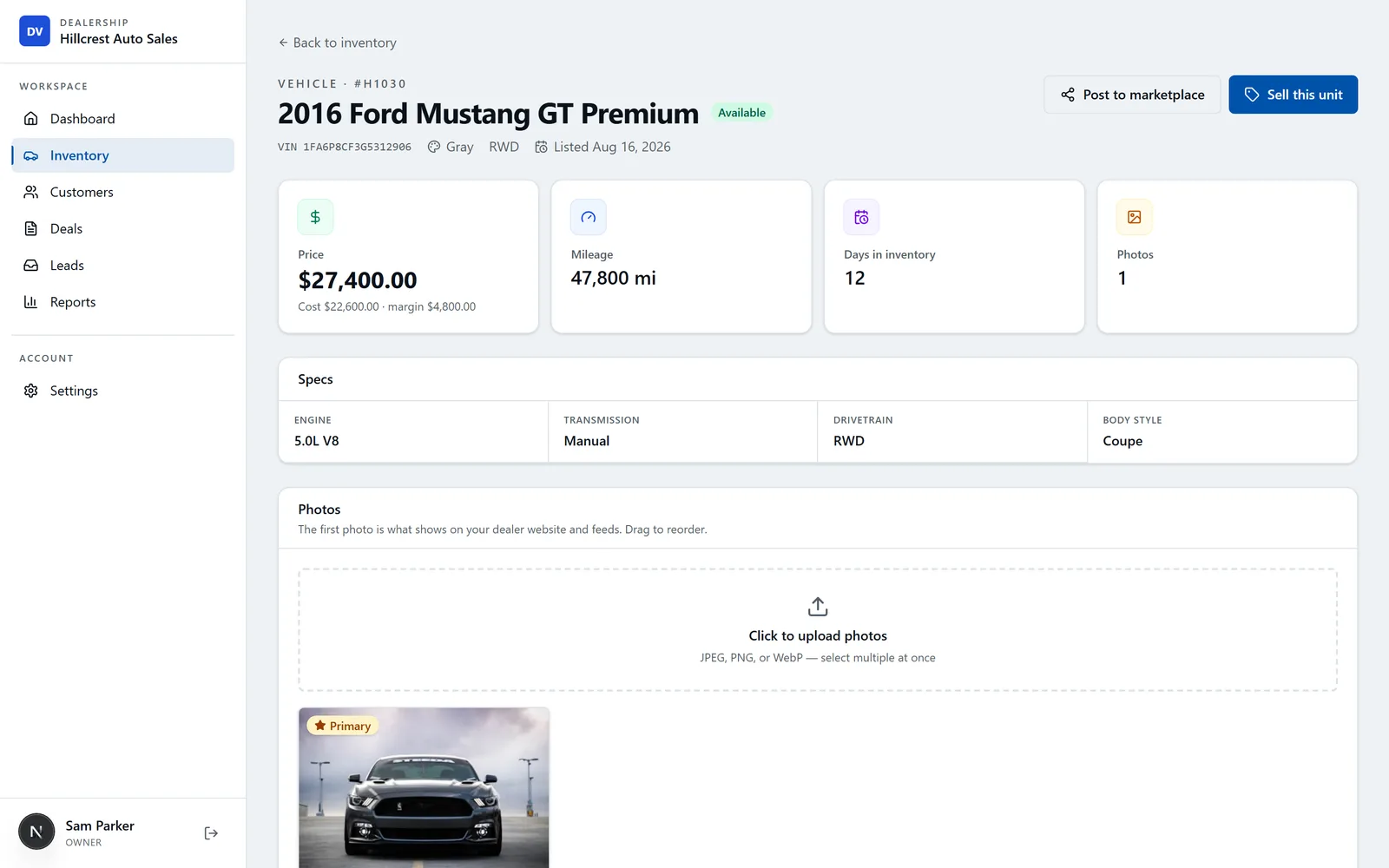
The clerical half of that is what DealerVLO automates: scan the VIN and the record fills itself, photos and price live on the same screen, days-in-inventory counts from day one, and the listing flows to your website the moment the unit is ready. $29/month flat, with a free 14-day trial — no charge until day 14.
14-day free trial, then $29/mo · Cancel anytime
Before you authorize the work: see whether a repair earns back its cost plus the holding days it adds.
Open the Recon ROI Calculator