Customer Wants a Pre-Purchase Inspection? How a Used-Car Lot Should Handle PPI Requests
A buyer wants their mechanic to look at the car. Why the answer should be yes, the rules to set first, and what to do with what the inspection finds.
Part of the Selling & your sales team guide: The In-Person Used-Car Sale: From Test Drive to Close on an Independent Lot
Switching from another DMS? Compare DealerVLO to DealerCenter, Frazer, or Lot Wizard.
A buyer likes the car, the numbers work, and then they say it: "Can I have my mechanic look at it first?" Some dealers hear that as a stall or an insult. I hear it as a buyer who's close, and who wants one more reason to say yes.
This is how a small used-car lot should handle pre-purchase inspection (PPI) requests: why the default answer is yes, the rules to set before the first request, how to keep the car safe while it's off the lot, and what to do with what the mechanic finds. It's written for the dealer's side of the counter. It isn't legal or insurance advice, so check the insurance points with your own agent.
14-day free trial, then $29/mo · Cancel anytime
Why the answer should be yes
Start with the sticker that's already on your window. The front of the FTC's Buyers Guide, required on every used car you offer for sale, tells the shopper: "Ask the dealer if your mechanic can inspect the vehicle on or off the lot" (the FTC's Buyers Guide form). Your own paperwork invites the question.
And the FTC's advice to car buyers is blunt about a refusal. Its guide to buying a used car from a dealer says "it's always a good idea to pay for an independent mechanic" to inspect a used car, and "If a dealer won't allow an independent inspection, consider going to another dealer." A buyer who did their homework has read that.
So a "no" rarely ends with the buyer trusting you more. It usually ends with them leaving, and sometimes with a review that says you wouldn't let anyone look at the car. A "yes" with clear rules does the opposite. It tells the buyer you know what you're selling. If you've reconditioned the car properly, the inspection mostly confirms your work.
There's a selling point here too. If your vehicle intake process catches the problems before the car is ever listed, you can say "go ahead" without hesitating, and that confidence closes deals.
Set the rules before the first request
The worst time to invent a PPI policy is with a buyer standing at your desk. Decide these once, write them down, and give every salesperson the same answer.
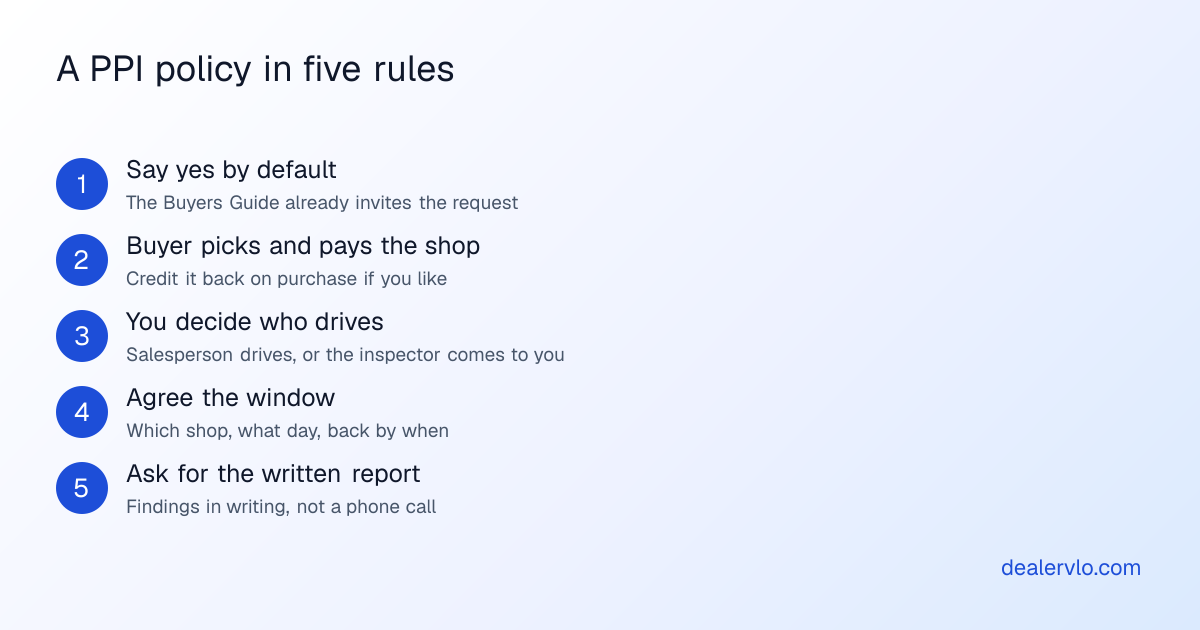
- Say yes by default. Make the exceptions narrow and specific, for example a car that's already sold pending paperwork.
- The buyer picks and pays the shop. It's their mechanic, so it's their bill. Published estimates vary: Consumer Reports has put it around $100 to $150, and RepairPal's estimator shows $186 to $273 for labor as of September 2026. Some dealers credit the fee back if the buyer buys; that's a fine sweetener, but decide it in advance.
- You decide who drives. You can have your salesperson drive it to the shop, let the customer drive with a salesperson along, or have a mobile inspector come to your lot. Mobile inspection services exist (the FTC itself points buyers to them when a dealer won't let a car leave the lot) and remove the off-lot question entirely.
- Agree the window. Which shop, what day, and when the car is back. A car that disappears for a day is a car you can't show to the next buyer.
- Ask for the written report. "My guy says it needs work" isn't something you can respond to. A written list of findings is.
Keeping the car safe while it's off the lot
Before any car leaves for an inspection, ask your insurance agent two plain questions: how does my policy treat a customer driving one of my cars, and how does it treat a customer's mechanic driving it? The answers depend on your policy, and you want them before something happens, not after. Our used-car dealer insurance guide covers the coverage types and what insurers ask.
Then cover the practical side:
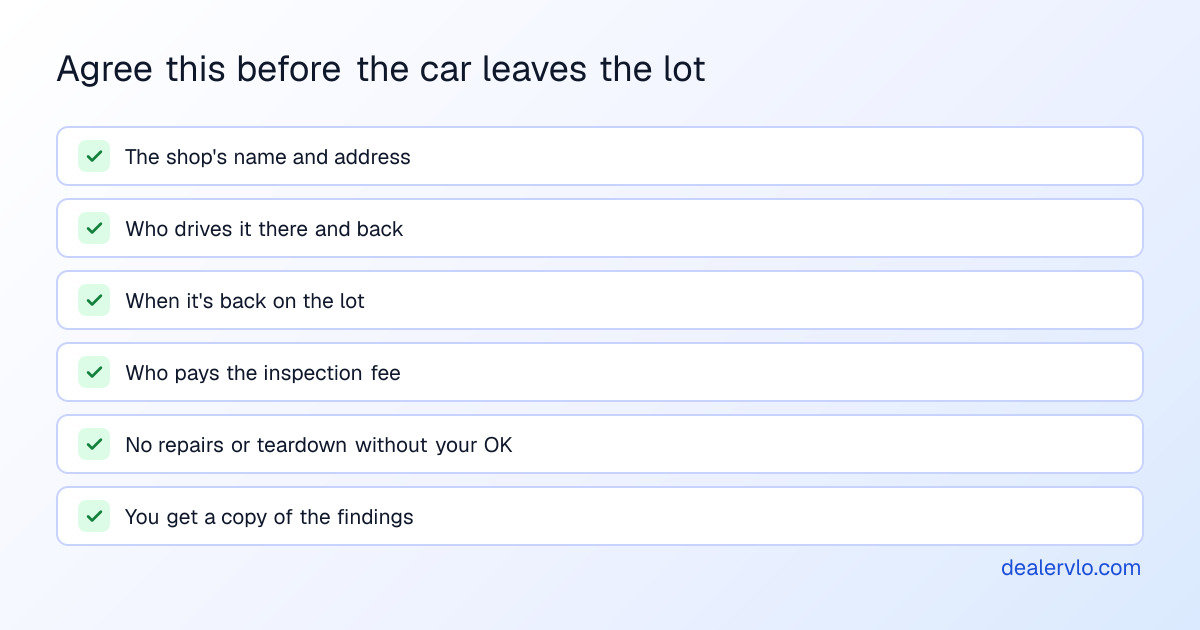
- Get the shop's name and address, and call it if you don't know it.
- No repairs and no teardown without your OK. An inspection looks; it doesn't pull the transmission pan or "fix one small thing."
- Use the same identity check as a test drive. Copy the driver's license and keep the same rules you'd use for any car leaving the lot. Our post on test-drive theft and payment fraud has the full list.
If the buyer is out of town, a mobile inspector they hire is often the cleanest path: the car never leaves, and the buyer gets a report from someone who isn't you. That also makes a remote sale much easier to close.
In DealerVLO, when the shopper came in through your website, the lead has internal notes. Put the shop, the time and who's driving there, so whoever answers the phone that afternoon knows where the car is.
What to do with what the inspection finds
Most PPIs come back with something. A car with miles on it always has a list. The question is what kind of finding it is.
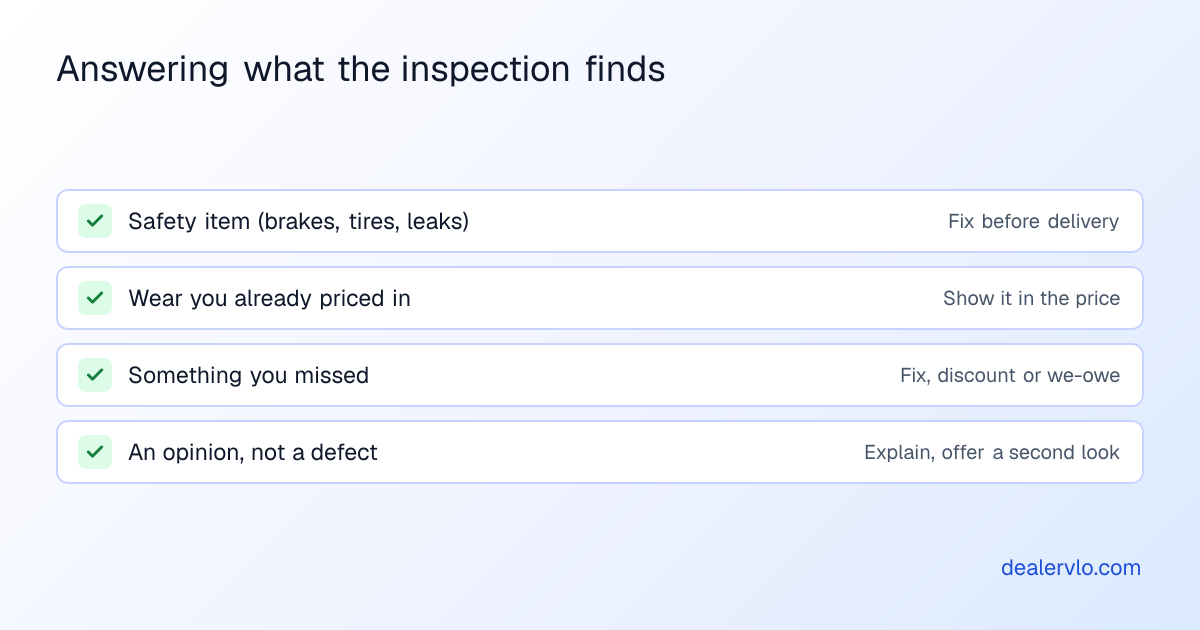
- A safety item (brakes at minimum, a tire that won't last, an active leak): fix it before delivery. You don't want that car leaving your lot anyway.
- Wear you already priced in: show the buyer. If the car is priced under the clean comps because it needs tires, our guide to pricing from market comps is how you explain it.
- Something you genuinely missed: fix it, take it off the price, or promise it in writing. If you promise it, it goes on a we-owe, never on a handshake.
- An opinion, not a defect ("I'd do the timing belt soon"): explain what the car has had done, and offer to let your shop or a second shop look at it.
Whatever you agree, put the money where it belongs. If you do a $400 brake job to close the deal, that $400 is part of what the car cost you. Skip it, and your gross on that car is $400 better than it really was. What not to fix in recon is a useful filter for which findings are worth spending on before the next car even gets listed.
14-day free trial, then $29/mo · Cancel anytime
Turning PPIs into a recon signal
If outside mechanics keep finding the same things on your cars, that's free feedback on your own reconditioning. Brakes and tires every time? Your recon checklist isn't strict enough. Fluid leaks your tech didn't flag? Look at the inspection step. Keep a copy of every PPI report with the car's file and read them once a month. If the same item shows up again and again, change the checklist, not the sales pitch. Our guide to reconditioning bottlenecks has more on fixing the process itself.
Where DealerVLO fits, and what it doesn't do
DealerVLO doesn't book inspections, talk to the buyer's mechanic, or store the inspection report as its own document type. Here's what it does handle around a PPI:
- The Buyers Guide: the current two-page FTC Buyers Guide prints from each car's page, no deal needed, so the one on your window is the one that invites the inspection.
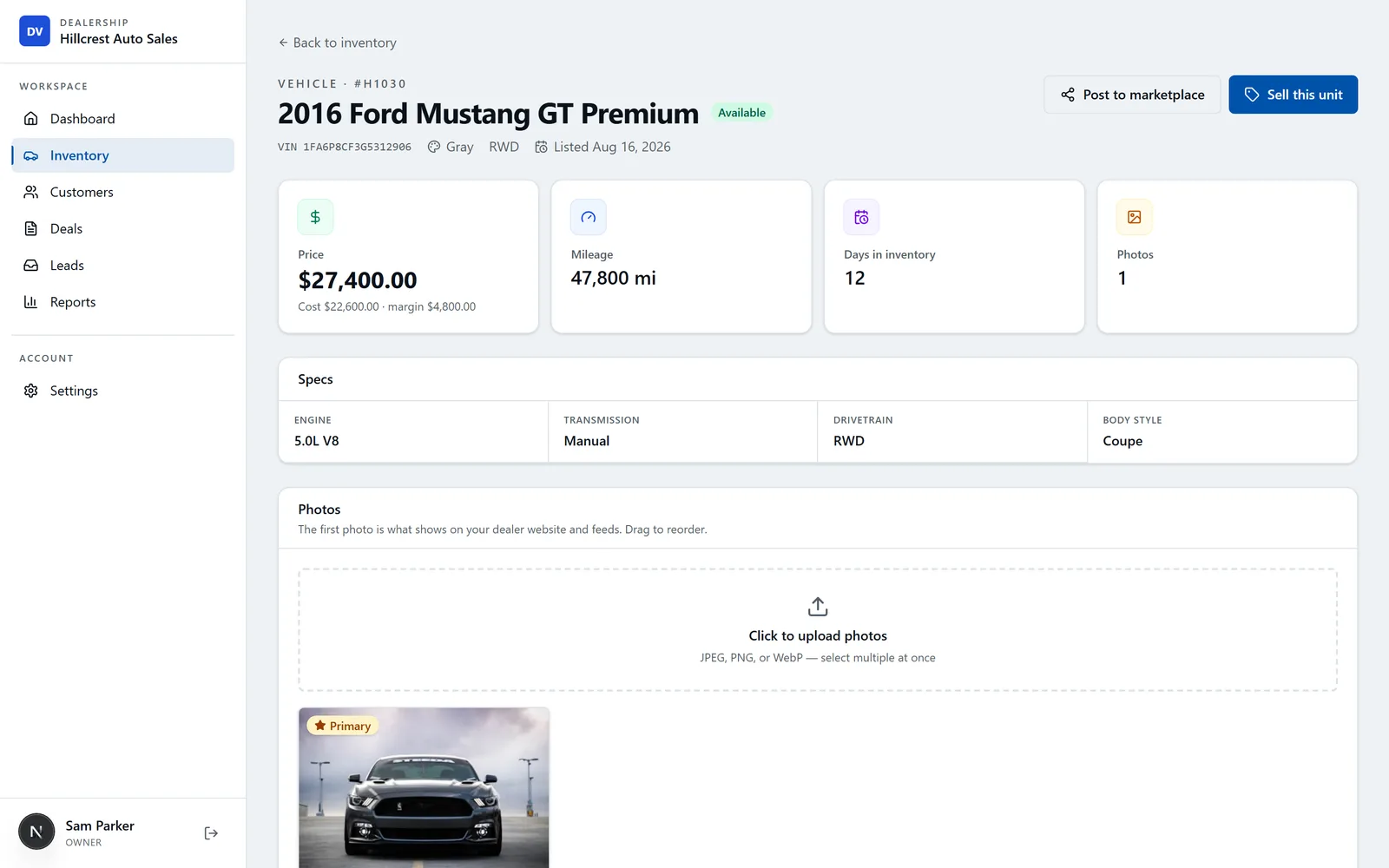
- The car's real cost: each car has cost lines with a vendor, a description and a cost. Log the brake job the PPI turned up there, and it rolls into the car's all-in cost and the gross on the deal and the sales report.
- The promises: type what you still owe the buyer into the deal's "We owe" box and DealerVLO prints the We Owe / Due Bill with the deal's buyer and vehicle details filled in.
- The paperwork: the bill of sale, Buyers Guide and your state's title paperwork fill from the deal, with e-signatures in person or by an emailed link for each signer, which helps when the buyer who used a mobile inspector is in another town.
It's $29 a month flat with unlimited users; see what's included.
Frequently asked questions
Should a used car dealer allow a pre-purchase inspection?
Yes, with rules. The FTC's Buyers Guide, which has to hang on every used car you offer for sale, already tells shoppers to ask whether they can have the car inspected by their own mechanic, and the FTC's buyer advice tells shoppers to consider another dealer if one won't allow an independent inspection. Saying yes with clear terms sells more cars than it costs.
Who pays for a pre-purchase inspection at a dealership?
Normally the buyer. It's their mechanic and their peace of mind, and published estimates generally run from about $100 to a little under $300. Some dealers credit the fee back if the buyer buys the car, or pay for it when the inspection finds something the dealer missed; that's a policy choice, so decide it before the first request, not in the middle of a deal.
Can the customer take the car off the lot for an inspection?
That's your call. Many lots let a salesperson drive the car to a nearby shop, or have a mobile inspector come to the lot, rather than handing the keys to the customer. The FTC's own buyer advice mentions mobile inspection services for exactly that case. Before any car leaves, check with your insurance agent how your policy treats a customer or a customer's mechanic driving it.
What should I do if the inspection finds a problem?
Sort it by kind. Safety items you fix before delivery. Wear you already priced in, you show the buyer. Something you genuinely missed, you fix, discount, or put on a written we-owe. And an opinion that isn't a defect, you explain and offer a second look. Then log any repair as a cost on the car so your gross stays honest.
What does a dealer refusing a pre-purchase inspection mean to a buyer?
To most buyers it reads as "there's something wrong with this car." The FTC's own used-car buying advice says that if a dealer won't allow an independent inspection, consider going to another dealer, so a refusal can cost you the deal and the review.
Does a pre-purchase inspection change an As Is sale?
No. The inspection is information for the buyer; the warranty terms are whatever your Buyers Guide and contract say. But if you promise repairs to close the deal, put each one in writing on a we-owe, and the Buyers Guide should match what you actually agree.
Bottom line
A buyer who asks for an inspection is a buyer who's close. Say yes by default, set the rules once (who pays, who drives, when it's back, no repairs without your OK), check your insurance before cars leave the lot, and sort what the mechanic finds into fix, show, discount or explain. Then log every repair you agree to as a cost on the car, and use the reports you collect to tighten your own recon.
14-day free trial, then $29/mo · Cancel anytime
Before you authorize the work: see whether a repair earns back its cost plus the holding days it adds.
Open the Recon ROI Calculator