Hiring Your First Salesperson at a Used-Car Lot (When, How, and How to Pay)
Your first salesperson's real risk isn't the salary — it's your gross and your process. When you're actually ready to hire, how to vet and pay them, and how to onboard without the damage.
There's a moment on a growing lot where you realize you're the bottleneck. Leads come in while you're at the auction. A buyer texts at 2 p.m. and you answer at 7. You're the only person who can price a deal, so nothing moves when you're not standing there. That's the moment people start thinking about hiring a salesperson — and it's also where a lot of owners make an expensive mistake.
Here's the thing nobody tells you: the risk in your first hire isn't the salary. It's handing your gross and your process to someone before either one is ready to be handed off. Done right, a second closer is the best money you'll spend. Done wrong, they'll discount your margin away and create compliance holes you don't find until it's a problem. This is how I'd think about it.
When you're actually ready (and when you're not)
The honest test is a bottleneck you can measure, not a feeling. You're ready when:
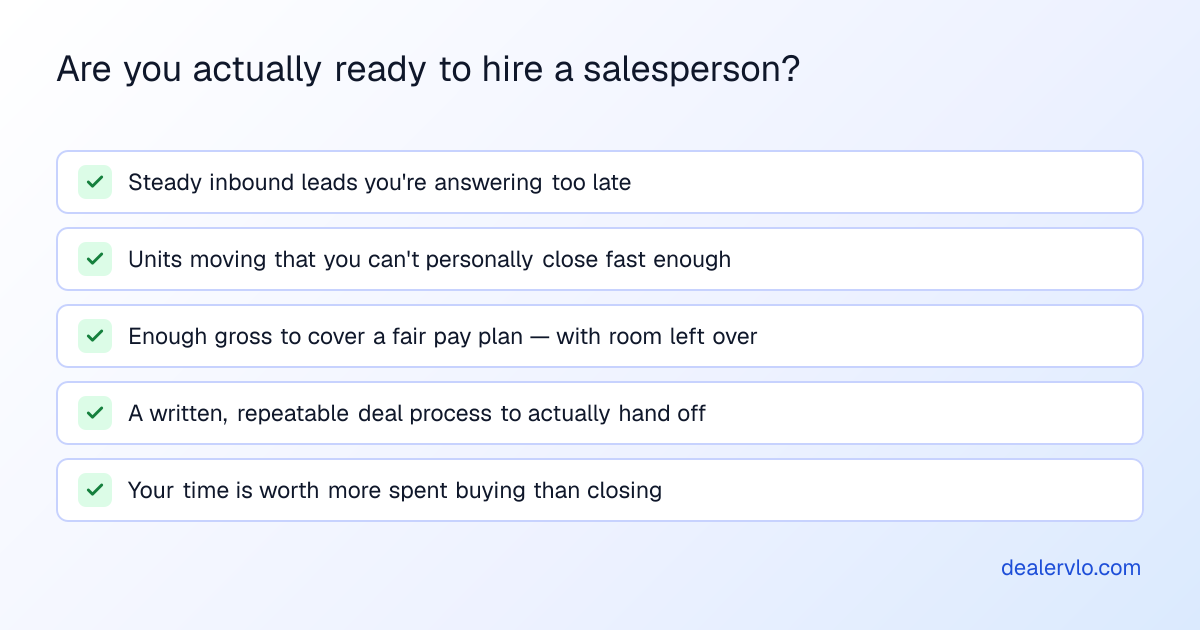
The two that matter most are lead flow and gross. If you've got steady inbound you're answering too late — that's demand you're literally leaving on the table, and a second person answering fast turns those leads into appointments you're currently losing. And you need enough gross across your units to cover a fair pay plan with room left over, because a salesperson is a cost you're adding to the deal.
When you're not ready: thin leads, or gross that's already tight. Hiring doesn't create demand. If the phone isn't ringing, a salesperson just stands on the lot costing you money — the fix there is more inventory that sells and better merchandising, not another mouth to feed.
Who to actually hire
Ignore the resume more than you think. Used-car selling on an independent lot is a follow-up-and-trust game — the person who answers texts in two minutes, listens more than they pitch, and doesn't need to be chased will out-sell the polished veteran with bad habits nine times out of ten. Skills you can teach with a good process; work ethic and honesty you can't.
Interview them like it's a deal. Were they on time? Did they follow up after? Are they straight with you about what they don't know? How someone runs your interview is a preview of how they'll run a customer.
Onboarding without losing control of your gross
This is where it's won or lost. A green salesperson with full access and no process will, with the best intentions, give away margin and skip steps. The fix is a repeatable system and guardrails:
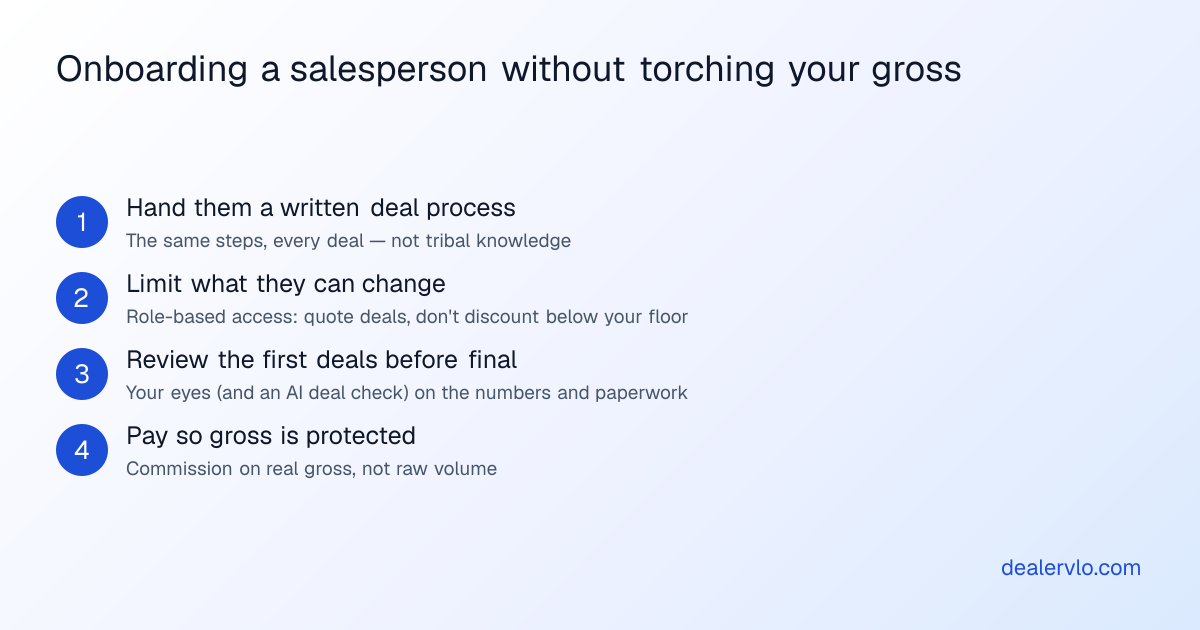
Give them a written process. The same steps, every deal — not tribal knowledge they absorb by osmosis. When every deal runs the same way, you can actually spot what went wrong.
Limit what they can change. This is the practical reason role-based access matters. A new salesperson should be able to build and quote a deal, not rewrite your cost or discount below your floor. Give them their own login with the right permissions, not the keys to everything.
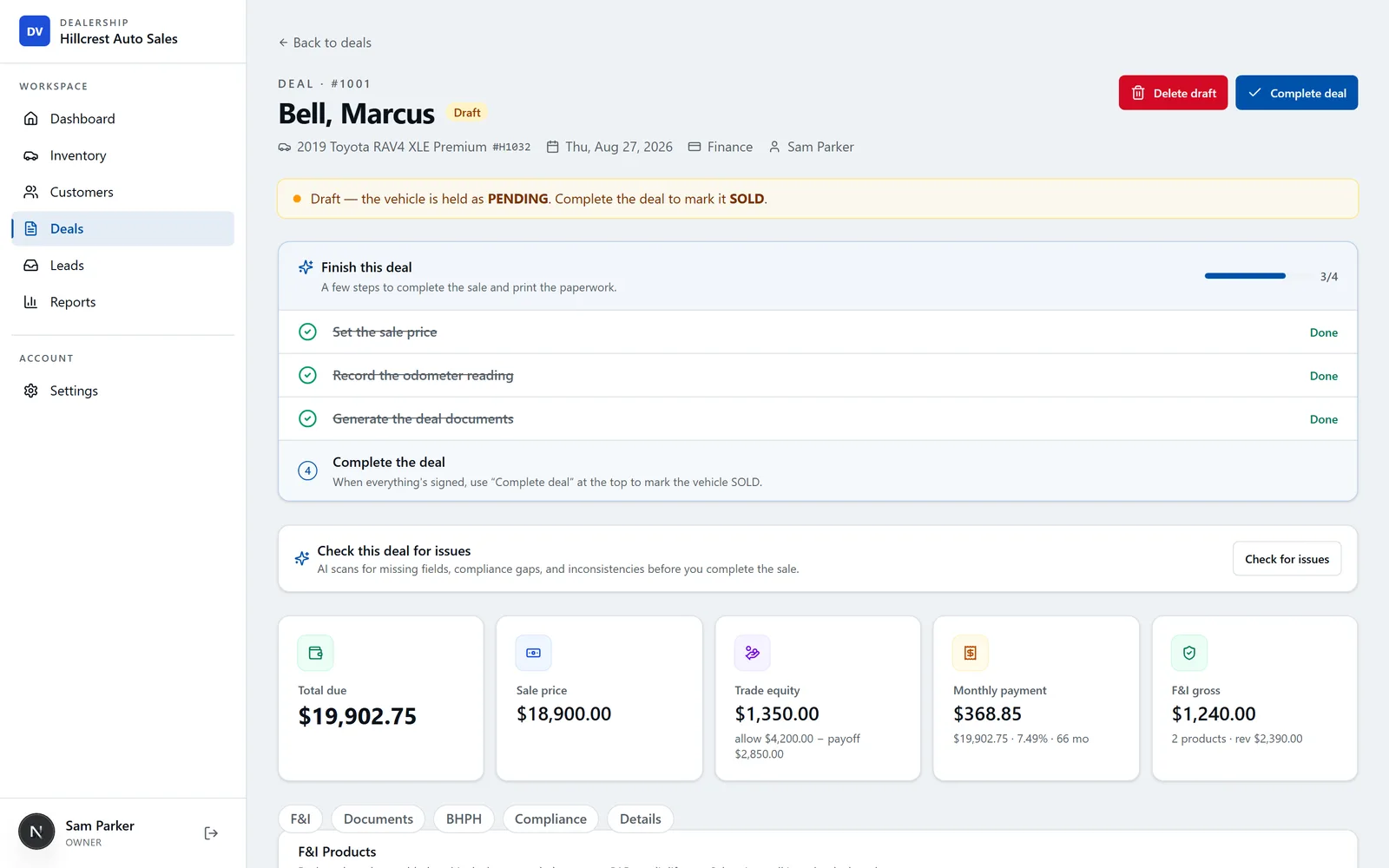
Review the first deals before they're final. Your eyes on the numbers and the paperwork for the first stretch, every time. A standardized deal jacket makes this fast — and an AI deal review as a second check catches the math and disclosure slips a rookie makes before they cost you. This is also where the compliance steps live: make following them part of the process, not an afterthought.
Pay so gross is protected. Tie the commission to real front-plus-back gross, not raw volume, so the incentive is to protect margin instead of dumping cars to hit a number. I go deeper on structures in the sales commission pay plan guide — the short version is: reward the number you actually care about.
The part most owners get wrong on cost
One quiet trap: on a lot of dealer software, adding a salesperson means adding a paid seat. So owners ration logins, or worse, have the new hire share theirs — which kills the accountability you hired them to have. If your software charges per user, growing your team grows your bill every time.
It doesn't have to. Flat-rate software with unlimited users lets you give every person their own role-based login at no extra cost — which is how DealerVLO is priced on purpose, and why adding a salesperson never touches your software bill. The seat should be free; what you're paying for is the person.
Frequently asked questions
When should a used-car dealer hire their first salesperson? When you're consistently leaving deals on the table because you can't get to every lead fast enough — and you have enough gross to cover a fair pay plan with room left over. Hire to relieve a bottleneck you can measure, not to feel bigger. Thin leads or tight gross? Hiring adds cost to a problem it won't fix.
How do you pay a used-car salesperson? Most independent lots pay commission on the gross profit of each deal, often with a small base or per-unit minimum. Tie the pay to front-plus-back gross after pack so the salesperson protects margin instead of just moving metal. Structures vary by market and volume — build yours around your real numbers.
How do you train a new car salesperson on a small lot? Give them a written, repeatable deal process and make them run every deal the same way. The fastest training is shadowing you on real deals, then reversing it, with a review of the first several before anything's final. A standardized deal screen where the numbers and paperwork generate the same way every time leaves far less room for a rookie mistake.
Does adding a salesperson increase your dealer software cost? It depends how your software is priced. Per-seat platforms charge again for every login. Flat-rate software with unlimited users doesn't — adding a salesperson costs nothing extra. DealerVLO is priced this way on purpose, so a new hire gets their own role-based account at no added cost.
What should you look for when hiring a car salesperson? Coachability, hustle, and how they treat people — more than a resume. Independent-lot selling is a follow-up-and-trust game. The person who answers fast, listens, and doesn't need chasing beats the polished veteran with bad habits. Skills you can teach; work ethic and integrity you can't.
Bottom line
Your first salesperson is a force multiplier or an expensive lesson, and the difference is almost entirely process. Hire when you have a bottleneck you can measure, pick for hustle over resume, and hand off a repeatable deal system with real guardrails — role limits, a review of the first deals, and a pay plan that rewards gross. Get that right and you stop being the ceiling on your own lot.
DealerVLO gives every person their own role-based login at one flat price — unlimited users, a standardized deal jacket, and an AI review that catches a new hire's mistakes before they cost you. Start a free trial and put your next salesperson on a system, not a spreadsheet.
Work out a salesperson's commission on a deal — rate, pack, and mini — and what's left for the house.
Open the Sales Commission Calculator