NextGear Floor Plan, Explained: How It Works, What It Costs, and When to Use It
How a NextGear Capital floor-plan line actually works for a small used-car lot — the structure, the fees to expect, and when flooring beats buying with cash.
You get to the sale, and there are six clean cars that pencil. Your cash covers two. That gap — between the inventory you could sell and the inventory you can afford to buy — is the whole reason floor plans exist, and for a lot of independent lots the first one they run into is NextGear Capital.
A floor plan is a line of credit for inventory. Used right, it lets you stock the cars your market actually wants instead of only the two you had cash for that week. Used wrong, it quietly bleeds your gross one daily-interest charge at a time. Here's how a NextGear line actually works, what it costs (and why the "rate" is the wrong thing to fixate on), and when a small lot should floor a car versus pay cash.
What a floor plan actually is
Strip away the branding and a floor plan is simple: a revolving line you draw on to buy inventory. You floor a car, the lender pays the seller, and the unit sits on your line instead of your bank account. You pay interest on the balance until the car sells, make principal paydowns along the way, and clear the unit off the line when it retails. If the mechanics are fuzzy, start with how dealer floor plans work — this piece assumes that base and gets specific about the NextGear flavor of it.
The point of the tool is buying power. Your cash is finite; your line refreshes as you pay units off. On a good week that's the difference between grabbing the whole run of clean trades and watching four of them go to the dealer next to you.
How a NextGear line works, unit by unit
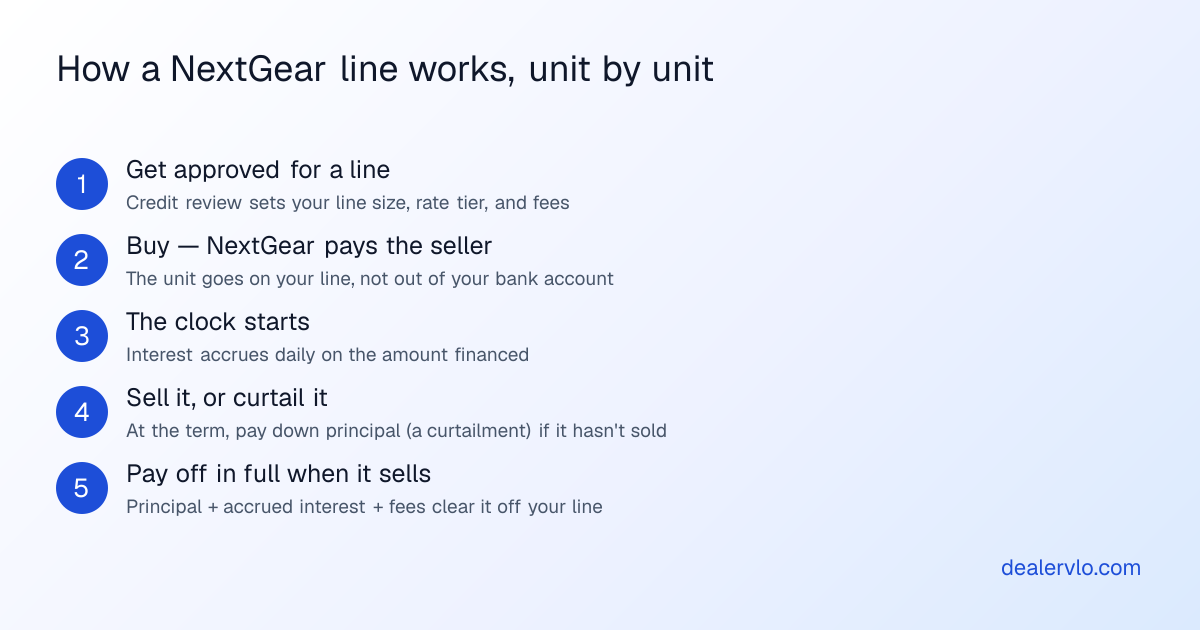
The rhythm is the same on every car. You get approved for a line — that sets your size, your rate tier, and your fee schedule. You buy and floor the unit; NextGear pays the seller, so the car goes on your line, not out of your checking. From that moment the clock is running — interest accrues daily on what you financed. At the term, if the car hasn't sold, you make a curtailment: a principal paydown that keeps the line healthy and signals you're moving metal. When the car sells, you pay off the remaining principal plus accrued interest and fees, and it clears off your line.
The thing to internalize is that daily clock. A floor plan doesn't care how you feel about a car — it charges you every day the car is on the line, sale or no sale.
Estimate your daily floor-plan carrying cost per unit.
Open the Floor Plan CalculatorWhat it costs — and why the rate isn't the number that matters
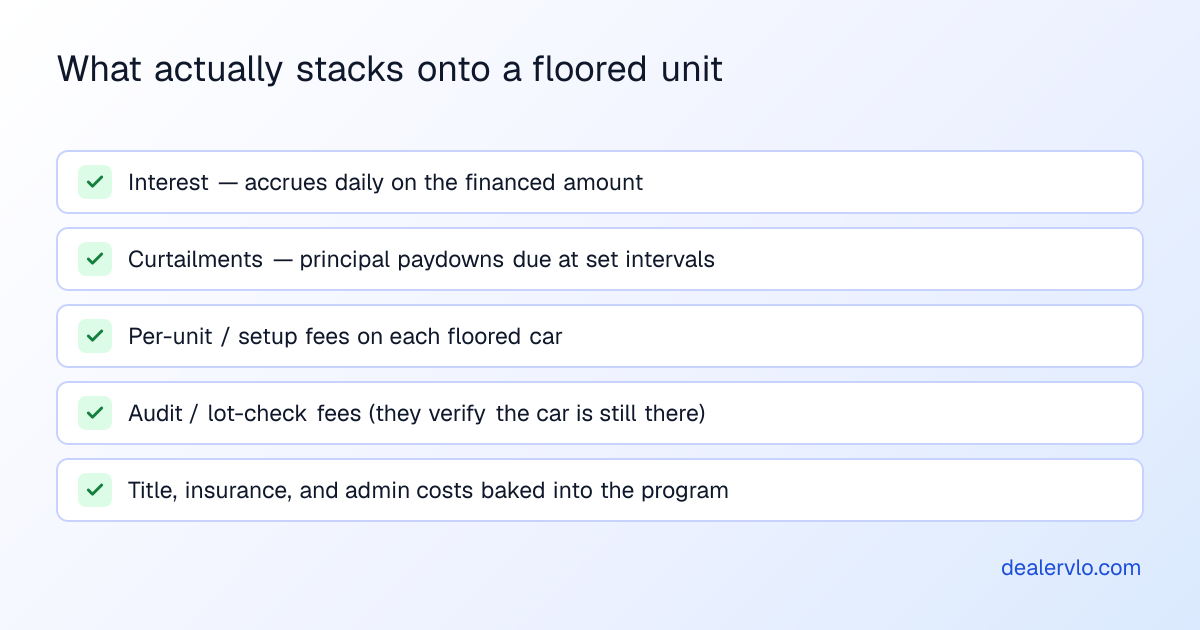
Dealers ask "what's the rate?" like it's one number. It isn't, and it varies by your credit, your volume, and the program you're on — so treat any single rate you see quoted online as a guess. What's consistent is the structure: daily interest, curtailment paydowns at each term, per-unit and setup fees, audit or lot-check fees (they physically confirm the car is still on your lot), and the usual title/insurance/admin baked in. Get your actual terms from NextGear in writing, then stop staring at the percent and look at the calendar.
Because the real cost is time. Here's the honest math on a single unit — illustrative, not a quote:
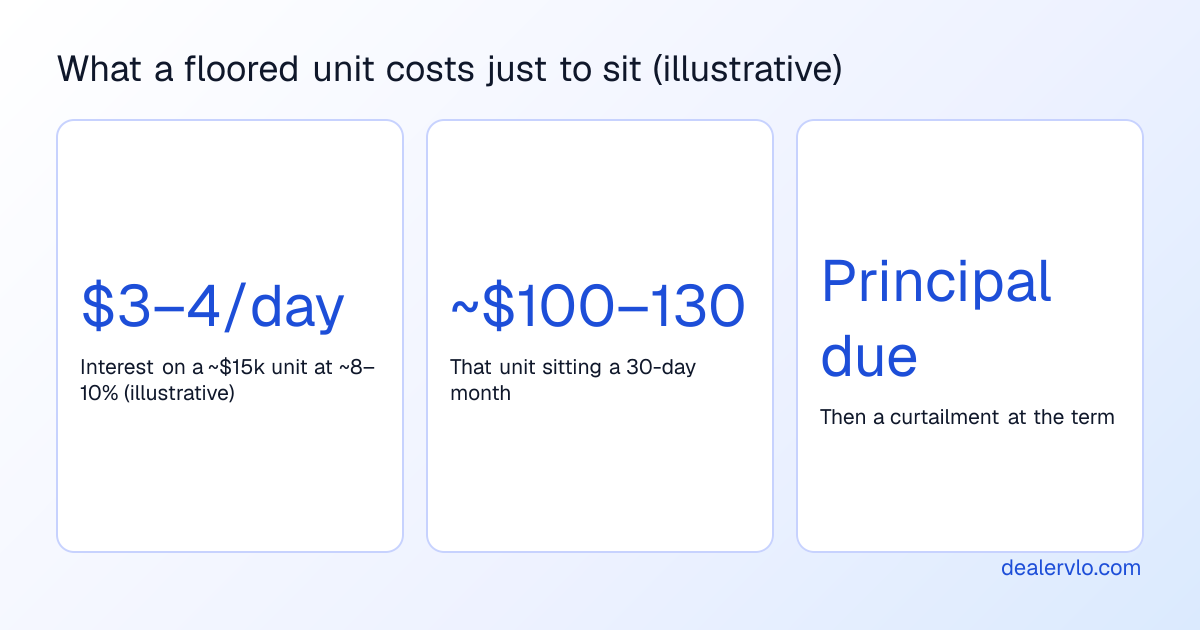
Call it a ~$15k car at roughly eight to ten percent: $15,000 × 0.09 ÷ 365 ≈ $3.70 a day, so about $100–$130 across a 30-day month — plus a curtailment at the term. That's cheap on a car that turns in three weeks and brutal on one that sits ninety days. Floor plan turns inventory aging from an annoyance into a metered bill, which is exactly why your days-to-turn is the number that decides whether flooring is smart or expensive.
Getting approved
Expect a credit review of the business and, for most independents, a personal guarantee — plus the usual business documentation (dealer license, bond, entity paperwork) and often some operating history. Your approved line size scales with your operation: a newer lot starts smaller and earns a bigger line by showing clean pay-offs and real turn. Don't treat the first number as a ceiling; treat it as the tier you graduate out of by moving cars.
When flooring beats cash — and when it doesn't
This is the decision that actually matters, and the rate is a supporting actor. Flooring makes sense when it lets you stock more fast-turning units than your cash alone would, and you genuinely turn them before the carry eats the gross. It rewards a disciplined buyer with a tight days-to-turn and punishes the one who falls in love with cars.
Cash tends to win when you turn slowly, when you carry high-day-count or specialty units that predictably sit, or when you've got idle money doing nothing anyway. Most lots land in the middle — floor the fast-moving bread-and-butter, pay cash for the oddball you know will take a while. If you want to put real numbers to your own situation, the floor-plan-vs-cash decision framework and the floor-plan cost calculator do the arithmetic for you, and the NextGear vs. AFC vs. lender-program comparison is the next stop if you're choosing a provider rather than learning how one works.
Frequently asked questions
What is NextGear Capital?
An inventory-financing (floor-plan) company, part of Cox Automotive, that many independent used-car dealers use. Instead of paying cash for every car, you draw on a revolving line to buy, NextGear pays the seller, and you pay it back with interest and fees when the car sells.
How does a floor plan work, step by step?
Get approved for a line; floor a car and the lender pays the seller; interest accrues daily; make a curtailment (principal paydown) at each term if it hasn't sold; pay off principal + interest + fees when it sells, clearing the unit off your line.
What does NextGear cost?
It varies by credit, volume, and program, so no single online number is trustworthy. The structure is daily interest + curtailments + per-unit and audit fees. Get your real terms in writing and weigh them against your days-to-turn — that's what decides the true cost.
What do you need to get approved?
Typically a business credit review and a personal guarantee, plus your dealer license, bond, and entity paperwork. Your line size starts modest and grows as you show clean pay-offs.
When should a small lot floor instead of paying cash?
When it lets you stock more fast-turning units and you turn them before the carry adds up. Pay cash for slow or specialty units. The deciding number is your days-to-turn, not the interest rate.
Bottom line
A floor plan like NextGear is buying power, and buying power is only worth what you do with it. Floor the cars that move, keep your days-to-turn tight, and the daily interest is a rounding error against the gross. Let cars age on the line and the same tool that grew your lot starts shrinking your margin one day at a time.
The through-line is knowing each unit's true cost — buy price, floor-plan carry, recon, all of it — before you price it. That's what DealerVLO is built to track: itemized cost per car flowing straight into your deal gross, so you always know which floored units are earning their keep and which are quietly costing you. It's $29/month flat, unlimited users, with a free 14-day trial a card starts, no charge until day 14.