Inventory Aging Policy: A Day-by-Day Markdown Playbook for Used-Car Dealers
A day-by-day inventory aging policy for used-car dealers: when to take the first markdown, 15-day adjustments, the 60-day wholesale call, and faster turn.
Part of the Inventory, pricing & aging guide: Inventory Turn Rate for Used Car Dealers: Benchmarks, Formula & How to Improve
Switching from another DMS? Compare DealerVLO to DealerCenter, Frazer, or Lot Wizard.
The Real Cost of Waiting
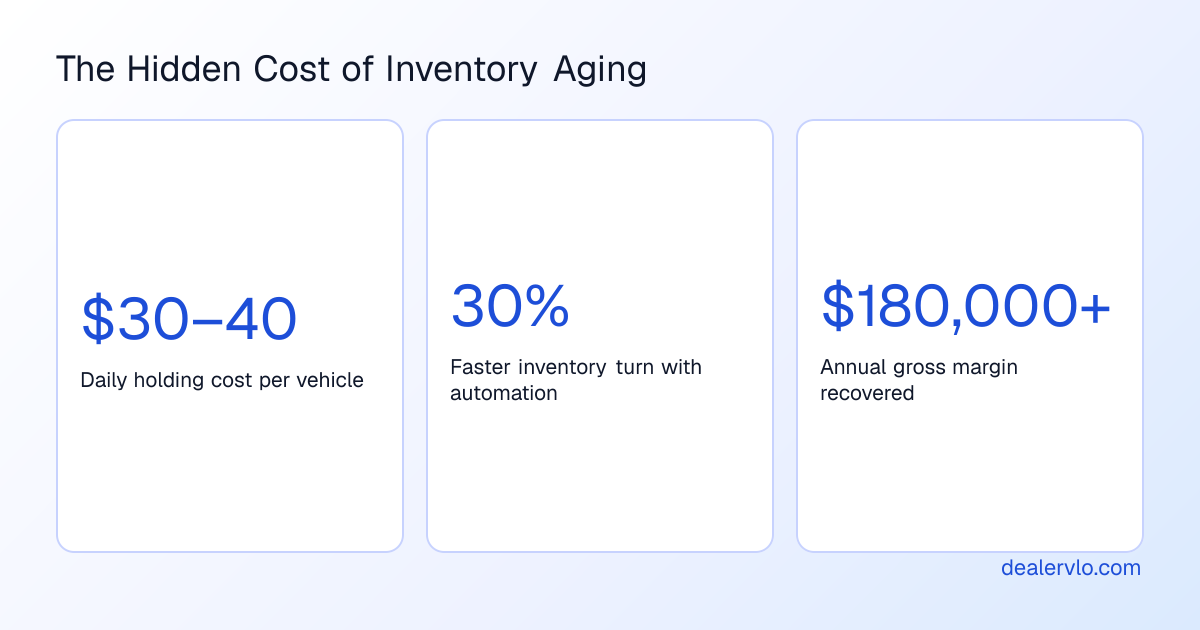
Every used car sitting on your lot past its sell-by date costs you money every day: floorplan interest, insurance, lot overhead, and the value the car loses while it sits. What that adds up to depends on your store, so work out your own number with the holding-cost calculator instead of borrowing someone else's average. To keep the math in this playbook simple, I'll use an example of $35 a day all-in. At that rate a car has cost you $1,050 by day 30 and $2,100 by day 60, before you count the gross you give up by being overpriced while it sat.
The dealers who turn inventory fastest aren't always the ones with the best acquisition prices. They're the ones who run a disciplined inventory aging policy, take markdowns early, and look at their aged units on a schedule instead of when they happen to notice. The playbook below walks through the day-by-day timeline: when to adjust pricing, when to merchandise harder, and when to wholesale.
14-day free trial, then $29/mo · Cancel anytime
Why Holding Costs Matter More Than Ever
Used cars aren't cheap to stock. Edmunds reported that the average transaction price of a three-year-old used vehicle hit a record second-quarter high of $32,461 in Q2 2026, up 4 percent from a year earlier, and those cars averaged 38 days on dealer lots (Edmunds Q2 2026 used vehicle report). The more you pay for a car, the more interest every extra week on the lot costs you.
Floorplan expense per unit climbed 13.2 percent to $427 in Q3 2025, according to Optimum Info's dealer financial analysis, and dealers were still reporting rising floorplan costs in Q1 2026. Then add the costs that never show up on the floorplan statement: insurance, lot overhead, and depreciation, which is often the biggest piece. At the example $35 a day, a car that sits sixty days longer than it should have has cost about $2,100 in holding alone.
The Day-by-Day Markdown Timeline
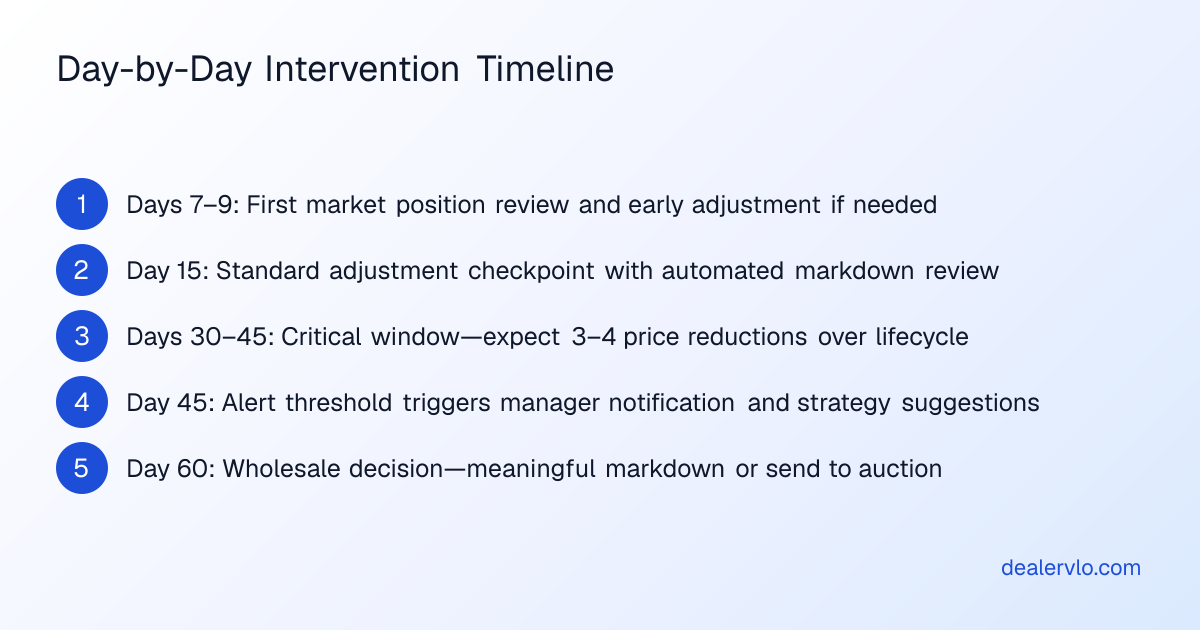
Days 7–9: The First Look
The old habit was to wait thirty days before touching price. For most cars that's too late: by then the car has been online for a month, and the shoppers who were going to call already have. A review at seven to nine days lets you catch a bad price or a weak listing while a small fix still works.
This doesn't mean panic-discounting every unit on day eight. It means reviewing each vehicle's market position, photo quality, description detail, and competitive pricing early, before the unit goes stale. If market data shows you're priced 5 percent above comps and you've had zero calls in a week, a small adjustment now beats a big one later.
Day 15: Standard Adjustment Checkpoint
Make day fifteen a fixed checkpoint. If a unit hasn't generated meaningful activity by then (calls, leads, test drives), pull it up against current comparable listings and decide on a price change, a merchandising change, or both. Once a week, go through every car that has crossed fifteen days since the last review.
Days 30–45: The Critical Window
This is where front-end gross starts to slip. Once a unit crosses thirty to forty-five days in stock, shoppers who've watched it sit online start to wonder what's wrong with it, and you start wondering whether your original price was realistic. Plan on more than one markdown over a slow car's life rather than one big cut at the end. By day thirty you should have made at least one adjustment and re-merchandised the unit with better photos or a revised description.
Day 45: Manager Review
At forty-five days, the manager looks at every unit past that line and picks one action for each: a price cut (for example, $500), featuring the car in an email to your customer list, or moving it to a front-line spot on the lot. Put this review on the calendar so it happens whether or not your software reminds you. At the example $35 a day, a car at day forty-five has already cost about $1,575 to hold.
Day 60: The Wholesale Decision
Used vehicles over sixty days enter a must-sell zone. Plenty of stores run a strict rule: if a used car isn't sold within sixty or ninety days, it goes to auction. The reasoning is simple. A car that was worth, say, $10,000 when you bought it might be worth $9,000 ninety days later, and the longer it sits, the lower the selling price goes.
One way to run a sixty-to-ninety-day policy is to step the price down on a fixed schedule, for example every ten days, so the car never sits at a stale number. By day sixty you're facing a binary choice: take a meaningful markdown (for example, $500 to $1,000) and feature the unit hard, or wholesale it and replace it with something that will turn in the next cycle. The decision tree is straightforward:
- Has the unit had multiple markdowns and fresh merchandising? If yes, and it's still not moving, wholesale it.
- Is it a high-demand segment where you just got the pricing wrong? If yes, take a bigger cut and promote it hard for two weeks.
- Is it a low-turn segment (luxury sedan, older model year) that will keep depreciating? Wholesale now; don't wait for day ninety.
Comparing your day-sixty unit to recent auction results and live retail comps makes the call faster and less emotional. If the wholesale number is close to what you'd net after another month of holding and another markdown, send it.
Put a real dollar-a-day number on every unit sitting on your lot.
Open the Holding Cost CalculatorRunning the Policy in Your DMS
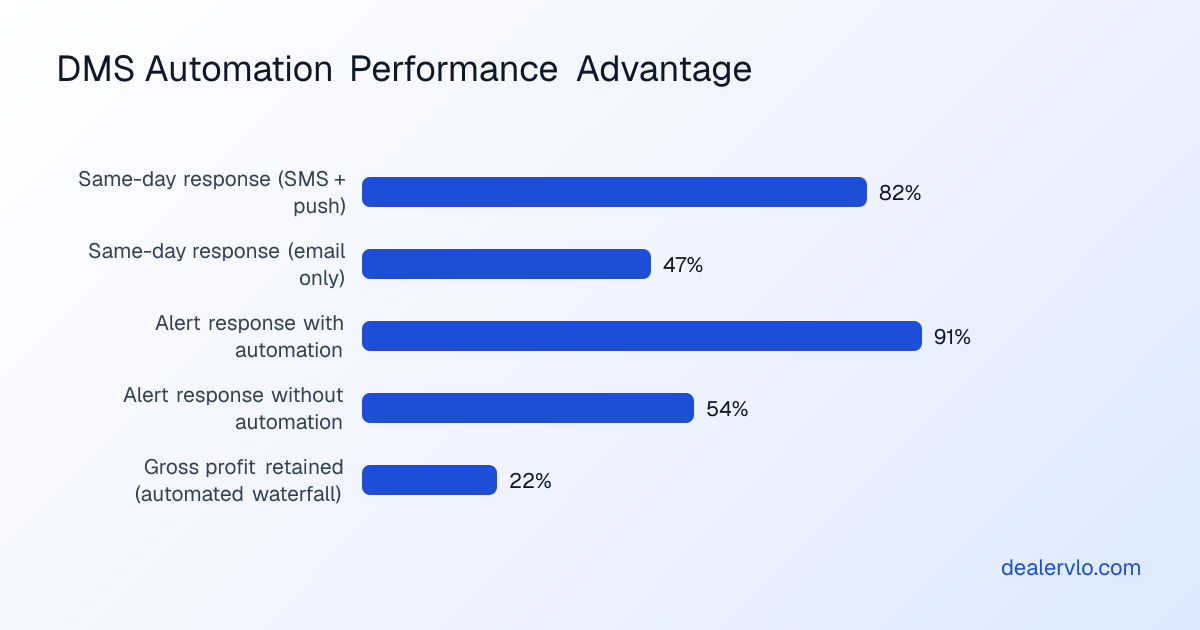
Software helps an aging policy in two ways: it shows you which cars are getting old, and it gives you a market-based starting point for the price. It doesn't make the decision for you. Some pricing tools can send alerts or step prices down on rules you set; whether that's worth paying for depends on how many cars you carry, and inventory aging alerts and markdown rules walks through that choice and a weekly routine that works without it.
Here's what DealerVLO does and doesn't do. Every car's page shows its days in inventory, with an "Aging — consider repricing" hint once it passes 60 days. The dashboard's Needs attention list counts the units aged 60+ days, and the Reports page splits your inventory into 0–30, 31–60, 61–90 and 90+ day buckets. When you add a car, an AI price suggestion shows a price range from live comparable listings and a target price for selling in about 30 days. The 60-day line is fixed, and DealerVLO doesn't send alerts or change prices on its own, so put the day-15 and day-45 reviews on your own calendar.
14-day free trial, then $29/mo · Cancel anytime
Merchandising First, Pricing Second
Here's the mistake most stores make: they treat inventory age as a pricing problem when it's often a merchandising and workflow problem. A 2019 Honda CR-V with 68,000 miles that's been sitting for forty-five days doesn't always need an $800 price cut. It might need better photos, a clean title explanation, a detailed reconditioning history, and the right price from day one based on actual market data.
Shoppers see your photos and description before they ever see the car. A car that has sat for thirty days with eight dark, blurry photos deserves a full re-shoot and a rewritten description before it gets a price cut. Before you mark anything down, ask: did we merchandise this correctly? Are the photos sharp and well-lit? Is the description specific and honest? Is the title story clear?
Aging often starts before the car is even for sale. Get units through recon and listed in days, not weeks. A vehicle stuck in reconditioning for fourteen days is already losing momentum; by day thirty, it's losing money. If your aging problem starts in recon, pricing adjustments later won't fix it.
Market-Adjusted Thresholds: Not All Cars Age the Same
Thirty-sixty-ninety-day aging buckets are the usual way to report age, but the right time to act varies by segment. A three-year-old economy SUV in high demand might not need any markdown until day sixty. A seven-year-old luxury sedan might need aggressive pricing by day fifteen. Adjust your review points by vehicle type and local market, not a one-size-fits-all calendar.
Luxury sedans, older trucks, and high-mileage SUVs all depreciate on different curves, and your markdown policy should reflect that. If your system uses one fixed aging line for every car (DealerVLO's is 60 days), keep a short list of the segments you review sooner. The fewer markdowns a car needs in the first place, the better: pricing a used car to sell faster starts with the day-one number.
Bottom Line
An effective inventory aging policy isn't about slashing prices. It's about knowing when to intervene, what intervention to make, and reviewing on a schedule so it actually happens. Start reviewing units at seven to nine days, put reviews at fifteen and forty-five days on the calendar, and make the wholesale call by sixty. Use your DMS to see which cars are aging so you're not relying on memory or a spreadsheet. Merchandising matters as much as pricing: fix the photos and listing before you cut the price.
Every day you wait past the right markdown point costs you another day of holding, plus whatever gross the stale price is giving away. Know your daily number; the holding-cost calculator works it out. The dealers who win in 2026 are the ones who move fast, trust the data, and turn inventory before it turns into a problem. For where your age mix should land relative to the market, see the used car dealer benchmarks.
14-day free trial, then $29/mo · Cancel anytime