After-Hours Security for a Small Used-Car Lot: Keys, Lighting, Cameras and the Morning a Car Is Missing
How a small used-car lot protects inventory overnight: where the keys sleep, barriers and lighting, off-site camera footage, and the morning a car is missing.
Part of the Starting a used-car lot guide: How to Start a Used Car Dealership: A Step-by-Step Launch Playbook (2026)
Switching from another DMS? Compare DealerVLO to DealerCenter, Frazer, or Lot Wizard.
Most overnight losses on a small lot come down to four things you control: where the keys spend the night, what blocks the exits, what's lit, and whether your camera footage survives a break-in. And when a car is missing in the morning, the first hour has an order to it: confirm it wasn't moved, save the footage, report it with the VIN, then call your insurance agent and your floor plan lender.
This post covers both, sized for a lot with 20 to 50 cars, no fence, and nobody there after you lock up. It isn't a pitch for a security system, and it won't quote camera prices. It's the routine. (Daytime risks, like a test drive that doesn't come back or a cashier's check that bounces, are in our test-drive theft and payment fraud post.)
14-day free trial, then $29/mo · Cancel anytime
Why small lots get hit after hours
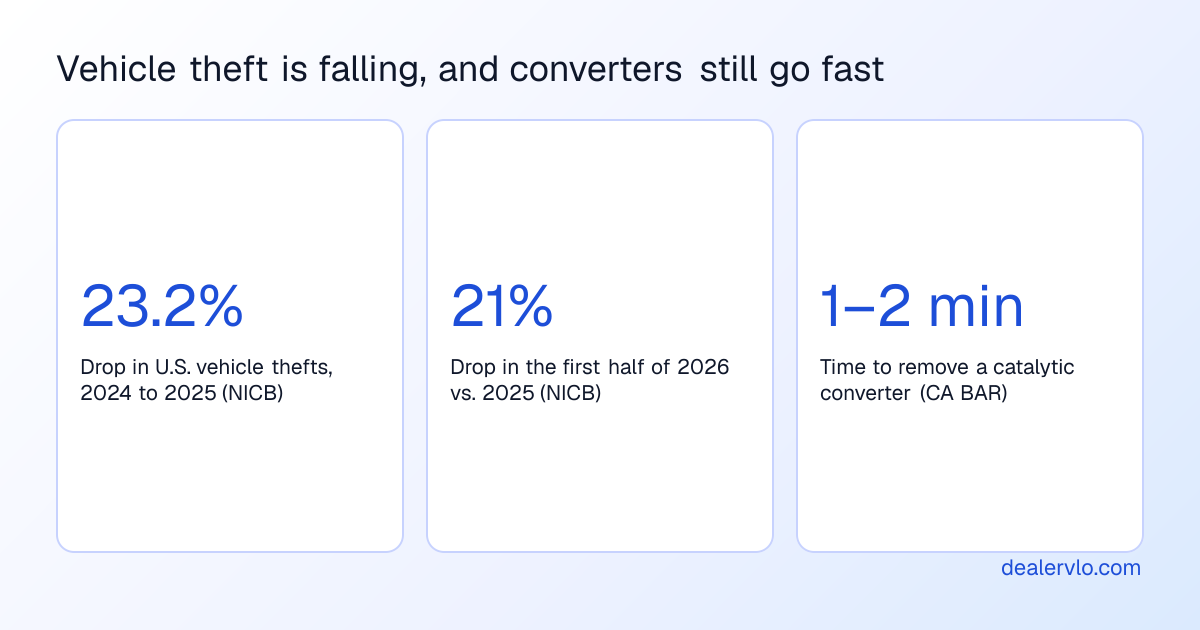
Start with the good news: vehicle theft is falling. The National Insurance Crime Bureau reported a 23.2% drop in U.S. vehicle thefts from 2024 to 2025, and another 21% drop in the first half of 2026. This isn't a crime wave. It's about not being the easiest lot on the street.
What makes a lot easy is almost always the same short list: keys a thief can reach, exits a car can drive straight out of, dark rows, and cameras whose footage sits on a recorder in the building. Fix those four and you've done most of the work.
Where the keys sleep
Keys are the whole game. A car without its key is slow and loud to steal; a car with its key is gone in seconds.
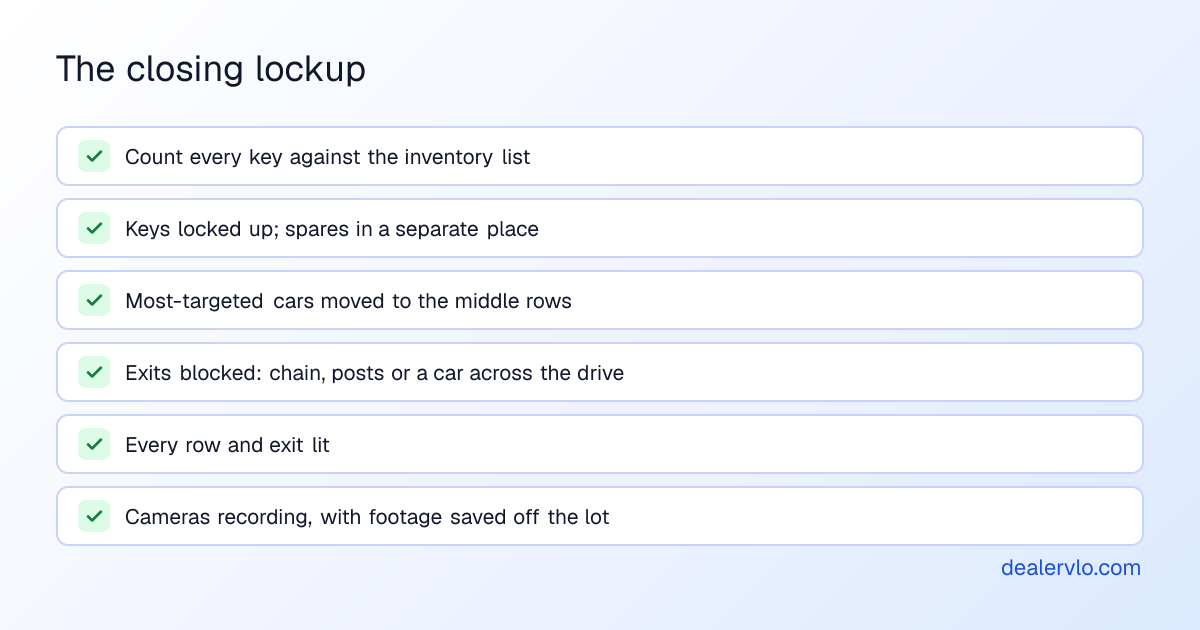
- Count at close. Every key against your inventory list, every night. A missing key you find at 6 p.m. is a problem you can fix before it becomes a missing car.
- Lock them in a locked room. A key cabinet or safe, inside a room that also locks. Never in the cars, never in an unlocked office drawer, never on a pegboard by the door.
- Spares go somewhere else. If the primaries and the spares sit in the same cabinet, one break-in gets both.
- Keyless fobs are worth storing in a metal or signal-blocking box away from outside walls if you stock a lot of push-button-start cars.
Don't treat the safe as the finish line. When thieves hit North Country Ford in Arab, Alabama in 2024, NICB's write-up of the local report says they turned off the cameras, erased hours of footage, then plugged a computer into the dealership's key safe and unlocked it, leaving with more than 330 keys and eight vehicles. That's a big store and a determined crew, but the lesson scales down: keys, barriers, lighting and off-site footage work as layers, and any one of them alone can be beaten.
Barriers, and where you park what at night
A thief with a key still has to drive out. Make that hard.
- Block the exits after close. A chain across the drive, removable posts, or simply one of your least-wanted cars parked across the entrance. If you want permanent bollards, check with your city first; some require a permit.
- Reshuffle at close. Your daytime front line puts the best cars nearest the street, which is the opposite of what you want at night. Move the most-targeted and highest-value units to the middle or back rows, boxed in by other cars. Our lot layout guide covers the daytime arrangement this reverses.
- Leave no clear path out. If a car would have to move three others to reach the street, it's not the car that leaves.
Lighting and cameras for a lot with no fence
Light every row and both ends of every row, plus the exits and the door to wherever the keys are. Dark corners are where converters come off.
For cameras, cover three things before anything else: the exits, the key room, and the rows of cars. Then make sure the footage is saved off the lot, to the cloud or a remote recorder you can pull up on your phone. A recorder sitting in your office is the first thing a thief switches off, as the Alabama crew did. If you put up signs saying the lot is monitored, make sure it really is.
Whether paid remote monitoring is worth it depends on your lot. Price it against what one stolen car costs you, and against how exposed your lot is at night.
Catalytic converters and wheels
These thefts don't need a key at all. California's Bureau of Automotive Repair says an experienced thief can remove a catalytic converter in one to two minutes, and that a licensed shop can install a plate, shield, clamp, cage or other device to protect it; the BAR also stresses the device has to be installed properly. Texas's Motor Vehicle Crime Prevention Authority, via NICB, adds parking in well-lit areas and engraving the VIN on the converter.
For a small lot, that means: protect the converters on the units thieves target, light the rows, put wheel locks on cars with expensive wheels, and park the targeted units where it's hardest to get under or around them.
The morning a car is missing
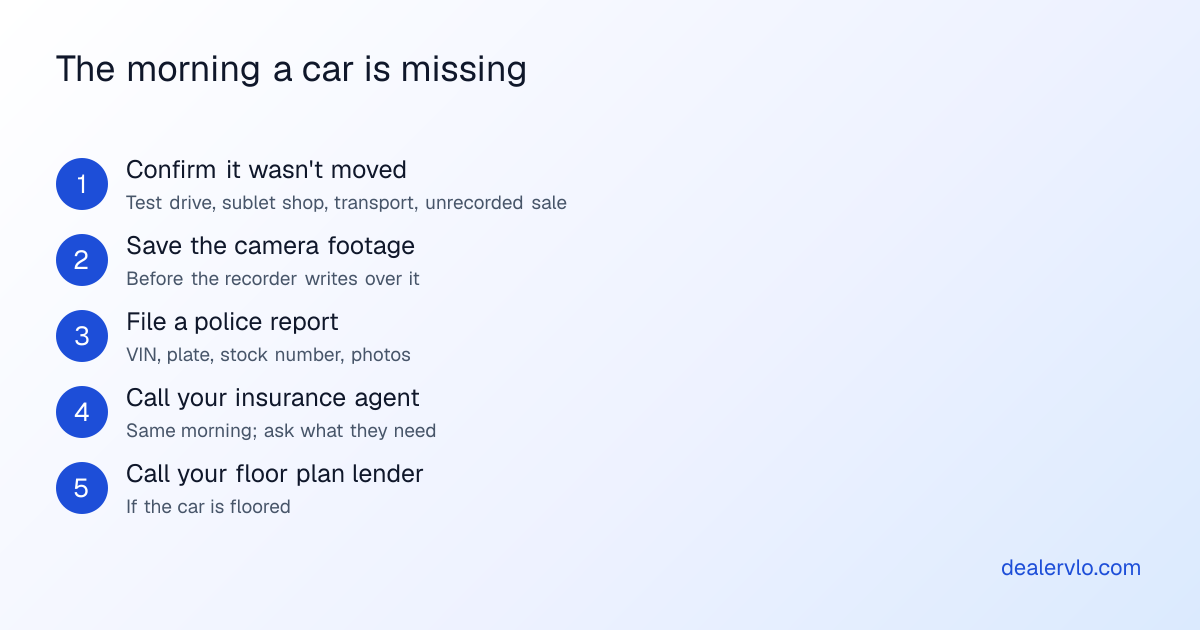
This is the hour that decides how bad it gets. Do it in this order.
- Confirm it wasn't moved. Before you call anyone, rule out the ordinary explanations: a test drive that never came back, a car at a sublet shop, a car on a transport truck, a car that sold and went out before the paperwork caught up. Check your deals and your recon list.
- Save the footage. Pull and save the overnight video before the recorder writes over it.
- File a police report with the VIN, the plate if it had one, the stock number, the color and photos. The faster the VIN is in the system, the better.
- Call your insurance agent the same morning, and ask exactly what they need from you.
- Call your floor plan lender if the car is floored. Your agreement says what happens next, and your claim and the payoff have to be worked out together.
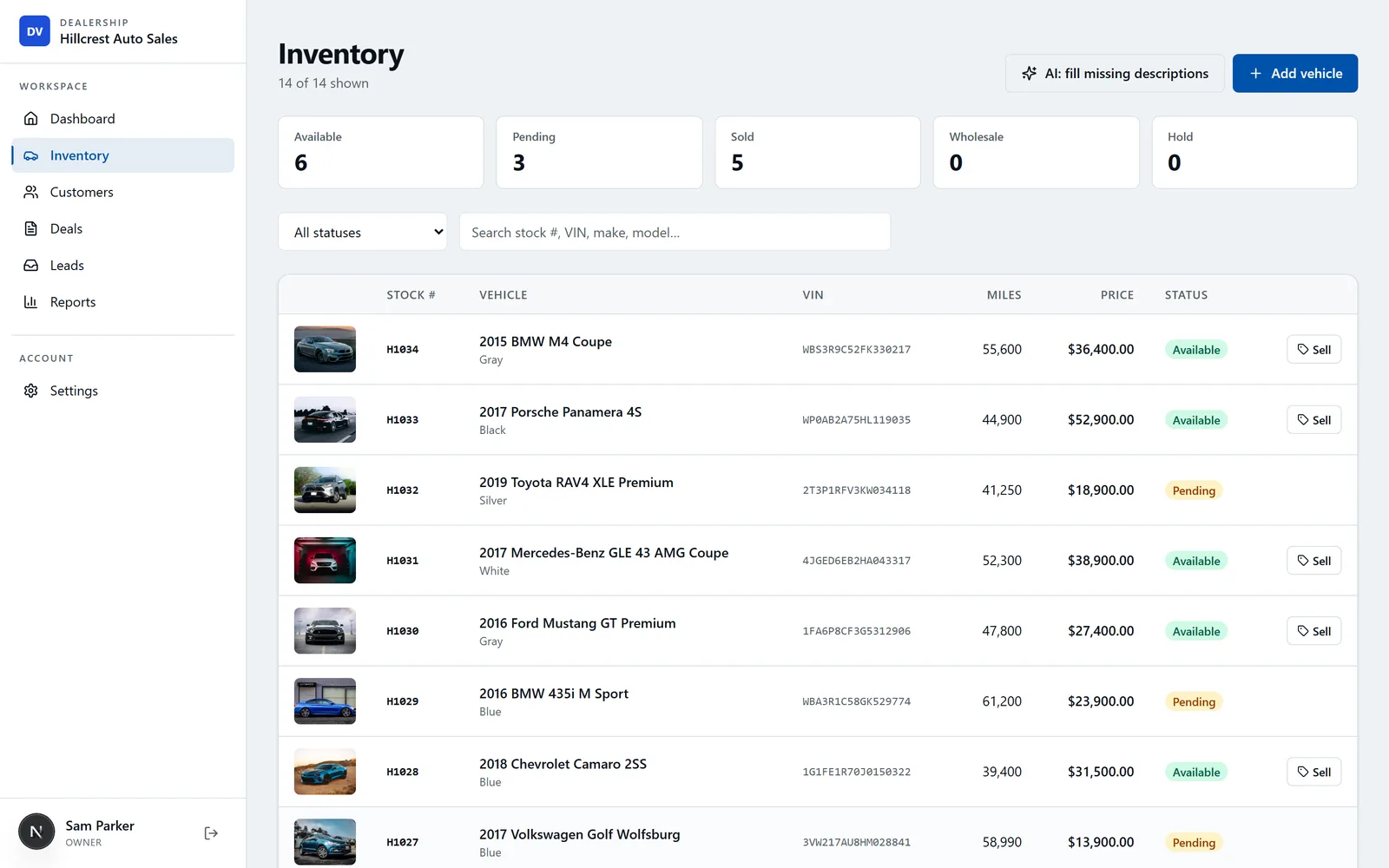
Step 3 is where being organized pays off. In DealerVLO, every car in inventory has its VIN, stock number and photos on its record, and the inventory list is searchable by stock number or VIN, so you can hand police the details in a minute instead of digging through paperwork. Each car's cost lines also show what you have in it, which your agent may ask about. And the inventory CSV export gives you a list of everything on the lot if your insurer or lender wants one.
14-day free trial, then $29/mo · Cancel anytime
Insurance and your floor plan lender: ask before you need them
Dealer inventory is usually covered by a dealers open lot policy, and those policies set their own conditions. IRMI, the insurance reference, describes four basic levels of protection for open lot coverage, from an unprotected lot with no fencing or barriers up to inventory kept inside a building, which tells you your lot's security can be part of how the coverage is written. A policy may also limit or exclude a theft when a car was left with the key in it or unattended. Our used car dealer insurance guide walks through the coverages.
Ask your agent, in writing:
- What does my policy require for key storage and lot security at night?
- Does it cover a car stolen overnight with the key in the building? In the car?
- What do you need from me to file a theft claim, and how fast?
- Are converters and wheels covered when they're stolen off a car?
Then read your floor plan agreement for what it says about a stolen floored car: who has to be notified, how fast, and what insurance it requires. Our post on how dealer floor plans work covers the agreement itself.
Where DealerVLO fits, and what it doesn't do
DealerVLO is your system of record for the cars, not a security system. Every car has its VIN, stock number, photos and cost lines on its record, the inventory list searches by stock number or VIN, and the inventory exports to CSV. It's $29 a month flat with unlimited users; see what's included.
It doesn't track keys, connect to cameras, GPS trackers or alarm systems, or send you alerts. The security itself is the routine above.
Frequently asked questions
Where should a car dealer keep keys overnight?
Count every key against your inventory list at close, then lock them in a key cabinet or safe inside a locked room, never in the cars or an office drawer. Keep spare keys in a different locked place from the primaries, so one break-in can't get both. A safe isn't the whole answer: in one Alabama dealership theft, the thieves plugged a computer into the key safe and unlocked it, so pair it with barriers, lighting and cameras.
Does dealer open lot insurance cover a car stolen with the keys in it?
Don't assume it does. Dealers open lot policies set their own conditions, and a policy may limit or exclude a theft when a car was left with the keys in it or unattended. Ask your agent in writing what your policy requires for key storage and lot security, and what it pays for a theft overnight.
What do I do if a car is missing from my lot in the morning?
First confirm it wasn't moved: a test drive that never came back, a sublet shop, transport, or a sold car that went out without the paperwork catching up. Then save the camera footage before it records over, file a police report with the VIN, plate and photos, call your insurance agent, and call your floor plan lender if the car is floored.
If a floored car is stolen, do I still owe the floor plan lender?
Your floor plan agreement decides that, not a blog post. Read the sections on theft, insurance and payoff before you ever need them, and call your floor plan rep the same morning a floored car goes missing. Your insurance claim and the lender's payoff timeline have to be worked out together.
How do small car lots stop catalytic converter and wheel theft?
California's Bureau of Automotive Repair says a converter can come off in one to two minutes, and that a licensed shop can install a plate, shield, cage or other device to protect it. Good lighting, cameras covering every row, and wheel locks on the units thieves want also help. Park the most-targeted vehicles where they're hardest to get under or around.
Where should I park the most-stolen cars on my lot overnight?
In the middle or back rows, boxed in by other cars, away from the street and the exits. That's the opposite of your daytime front line, so reshuffle at close if your best cars sit up front all day.
Are remote video monitoring services worth it for a small used car lot?
It depends on what one stolen car costs you compared with the monthly fee, and on how exposed your lot is. Get quotes and compare them against your average unit cost. Whatever you choose, make sure footage is saved somewhere off the lot, because a recorder sitting in the building can be switched off or erased.
What proof does my insurer need for a theft claim?
Ask your agent for their list before you need it. Expect to need the police report, the VIN, proof of ownership and what the car cost you, and an account of where the keys were. Having every car's VIN, stock number, photos and costs in one place makes that hour a lot easier.
Bottom line
You don't need a fortress. You need the keys counted and locked up with the spares somewhere else, the exits blocked, every row lit, and camera footage that lives off the lot. Then a written answer from your agent about what your policy requires, and a five-step plan for the morning a car is gone. Most lots that get hit were simply the easiest one on the street.
14-day free trial, then $29/mo · Cancel anytime