# What Does an Auto Broker Do? The Job, Step by Step, and How It Differs From a Dealer
> What is an auto broker and what does a car broker do? The job from first call to delivery, broker vs dealer, the types of brokers, and the paper trail.
- Source: https://www.dealervlo.com/blog/what-does-an-auto-broker-do
- Published: 2026-10-23
- Updated: 2026-10-23
- Author: Chris Abouraad
- Tags: auto broker, sourcing, negotiation, operations
---
An auto broker, or car broker, finds and negotiates a vehicle for a client, usually for a fee, and typically doesn't own the car. The client says what they want and what they'll spend. The broker goes and gets it, and a dealer or a private seller does the actual selling.
That one-paragraph answer hides most of the job, though. This post walks through what an auto broker does on a real deal, how that differs from what a dealer does, the different kinds of brokers, and the paper trail that keeps a broker out of trouble. I run a used-car lot, so this is the job as it looks from the dealer side of the desk, where the broker's call lands.
Brokering through a dealer license? Keep every client, car, and deal document in one place: try DealerVLO free for 14 days
## What is an auto broker?
The word gets used loosely, but the core idea is consistent: a broker arranges a car purchase for someone else. Florida's [motor vehicle dealer statute](https://www.leg.state.fl.us/statutes/index.cfm?App_mode=Display_Statute&URL=0300-0399/0320/Sections/0320.27.html) puts it plainly, defining a "motor vehicle broker" as someone who procures cars for the public without storing, displaying, or taking ownership of them.
Not every state draws the line there. California's [definition of a dealer](https://leginfo.legislature.ca.gov/faces/codes_displaySection.xhtml?lawCode=VEH§ionNum=285.) includes someone who negotiates a car sale for a commission or brokerage fee, and the DMV requires an [autobroker's endorsement](https://www.dmv.ca.gov/portal/vehicle-industry-services/occupational-licensing/occupational-licenses/vehicle-dealer-license/autobrokers-endorsement/) on a dealer license to broker retail sales. So in some states an auto broker is a licensed dealer who also brokers. The licensing side is covered in [how to become an auto broker](/blog/how-to-become-an-auto-broker).
## What does an auto broker do on a deal?
Here's the job from first call to delivery.
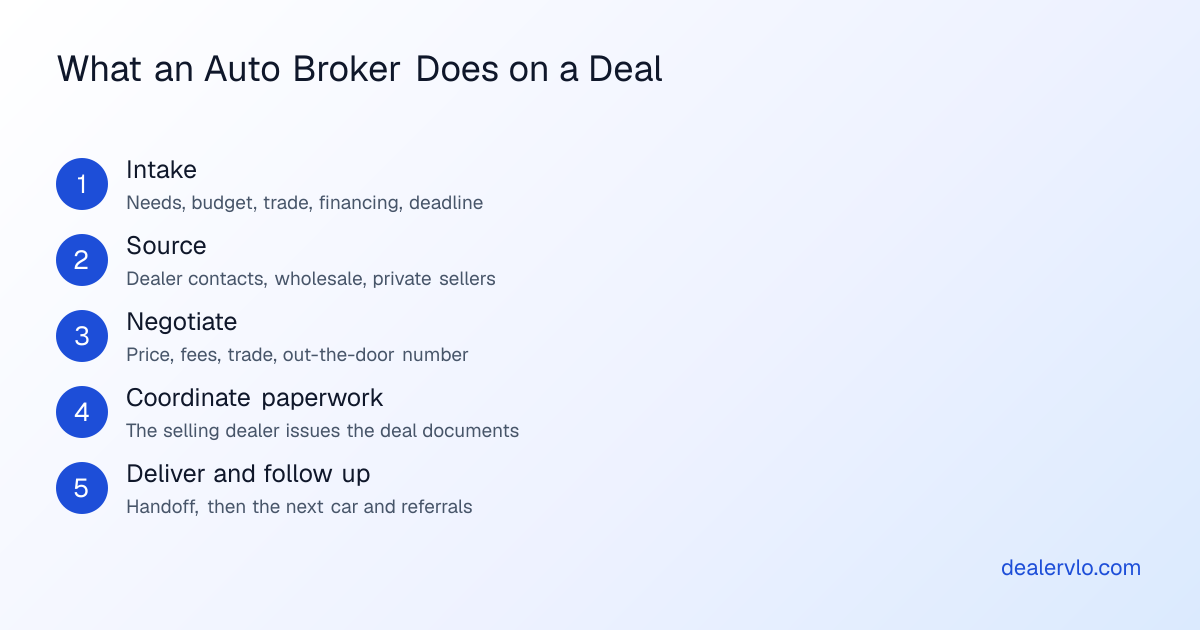
**1. Intake.** What does the client actually need, not just what they named? Budget as an out-the-door number, a trade-in, how they'll pay or finance, and the date they need the car. A good intake saves you from sourcing the wrong car twice.
**2. Source.** This is the skill clients pay for. A broker works dealer contacts who'll quote straight, wholesale channels if they're licensed to buy there, and sometimes private sellers. Knowing what a car is really worth matters here; [how to determine wholesale value](/blog/how-to-determine-wholesale-value-of-a-car) covers the dealer's way of pricing one.
**3. Negotiate.** Price, fees, trade value, and the final out-the-door number. Clients judge you on the check they write, not the sticker. To lay out every piece of the number for a client:
**4. Coordinate the paperwork.** Whoever sells the car issues the deal documents and, in most states, handles the sales tax. The broker's job is making sure the paperwork matches what was negotiated and that the client knows what they're signing.
**5. Deliver and follow up.** Arrange pickup or delivery, make sure the client is happy, and stay in touch. A broker's next deal usually comes from the last client's referral.
If you hold a dealer license and the car passes through your inventory, DealerVLO covers steps 3 and 4 from your side: the deal jacket computes totals, trade equity, and payment as you type, fills the FTC Buyers Guide and your state's title and registration paperwork from the deal, and lets the buyer e-sign in person or from an emailed link, which helps when your client is across town.
## Auto broker vs. car dealer
People search "auto broker vs dealer" because the two blur. The cleanest way to see the difference is who owns the car and who pays you.
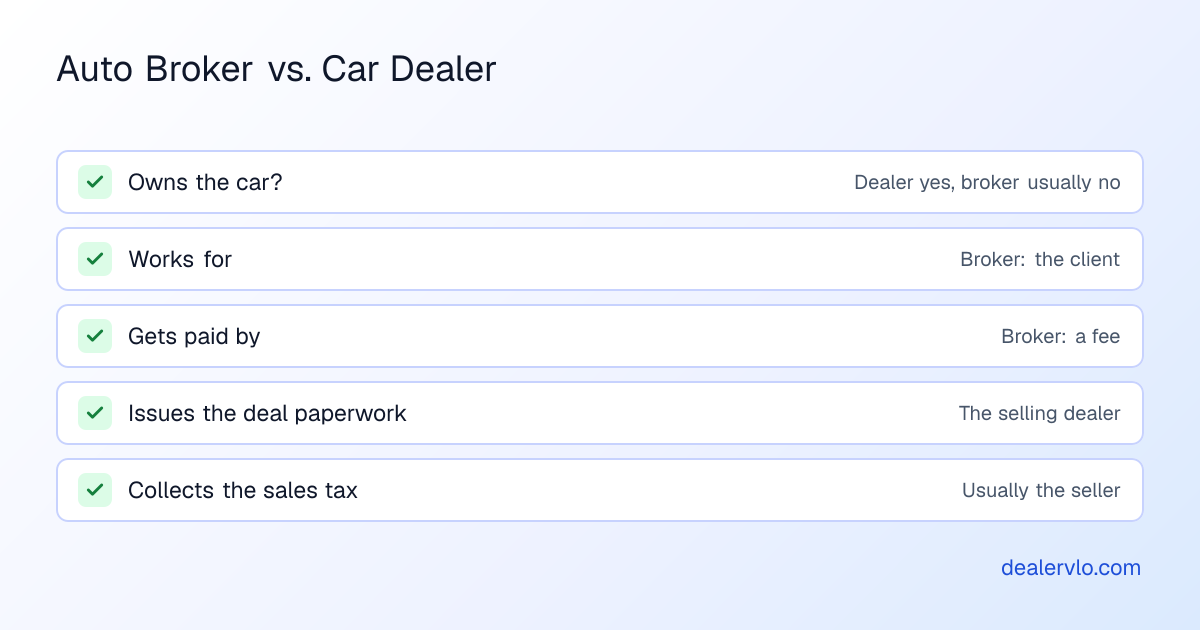
A dealer buys inventory, carries the risk, sells from it, and earns gross on each sale. A broker works for the client, avoids carrying inventory, and earns a fee. Some brokers do both: they hold a dealer license because their state requires it, or they buy the car and resell it to the client as a normal dealer sale. If that's you, or you're a dealer thinking about brokering, read [can a used car dealer broker cars](/blog/can-a-used-car-dealer-broker-cars), which breaks down the three deal structures and who collects the sales tax in each.
When the car does pass through your license, DealerVLO fills the state paperwork from the deal: start your 14-day free trial
## The kinds of auto brokers
"Auto broker" covers a few different businesses:
- **Buyer-side brokers** work for the car buyer and are paid by them, often a flat fee. They pitch themselves as being on the buyer's side.
- **Dealer-paid brokers** get compensated by the selling dealer when the deal closes, so the buyer may pay no separate fee. Some local brokers say this openly on their sites.
- **Lease brokers** do the same job for a lease: find the car, negotiate the lease terms with a dealer, arrange delivery.
- **Dealer-to-dealer brokers** find cars for other dealers rather than for retail buyers, which is closer to wholesale.
Who pays you shapes everything: who you work for, what you have to disclose, and what your state may require. The money side gets its own post: [how auto brokers make money](/blog/how-auto-brokers-make-money).
## The paper trail: what a broker should keep on every deal
Whatever kind of broker you are, keep the paper. It's your protection if a client disputes a fee, a seller changes the deal, or your state asks what you've been doing. California's endorsement, for example, comes with a log of each brokered retail sale that the DMV can inspect.
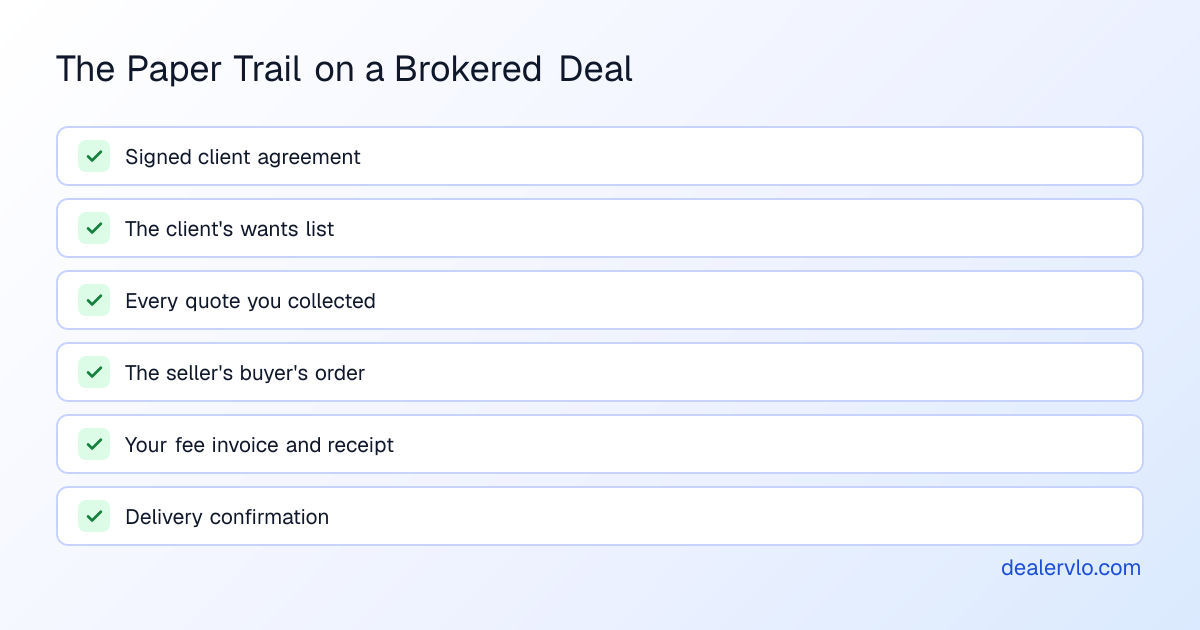
In DealerVLO, each customer has a record with contact details, address, notes, and every deal they've been on, so the client side of that trail lives in one place. Your own client agreement can be uploaded as a fillable PDF and filled from a deal. What DealerVLO doesn't do is keep an autobroker's log, track a trust account, or store quotes from other dealers; keep those the way your state requires. More on organizing all of this in [how to manage clients as an auto broker](/blog/auto-broker-crm-manage-clients).
Put your client records and deal documents in one system built for independent dealers, $29 a month flat: try DealerVLO free
## Frequently asked questions
### What is an auto broker?
An auto broker, or car broker, is someone who finds and negotiates a vehicle for a client, usually for a fee. The defining difference from a dealer is that a broker typically arranges the purchase rather than owning and reselling the car. Florida's dealer statute, for example, defines a motor vehicle broker as someone who procures cars for the public without storing, displaying, or taking ownership of them. Other states define it differently.
### What does a car broker do day to day?
Takes a client's needs and budget, sources matching cars through dealer contacts and wholesale channels, negotiates the price and terms, coordinates the paperwork with the selling dealer, arranges delivery or pickup, and keeps in touch for the next car and referrals. Most of the day is phone and email with clients and sellers.
### What is the difference between an auto broker and a car dealer?
A dealer owns its inventory, sells cars from it, issues the deal paperwork, and in most states collects the sales tax. A broker works for the client, usually doesn't own the car, and gets paid a fee while a dealer or private seller sells the car. Some brokers hold a dealer license because their state requires it, which blurs the line.
### Are car brokers legit?
Many are, but the rules vary by state, so check that a broker is licensed or registered wherever your state requires it. California, for example, requires an autobroker's endorsement on a dealer license to broker retail sales. A legitimate broker will tell you in writing what they charge and who pays them.
### What is a lease broker?
A lease broker does the same job for a lease instead of a purchase: finds the vehicle, negotiates the lease terms with a dealer, and arranges delivery. The same licensing question applies, so check your state's rules before brokering leases.
## Bottom line
An auto broker finds, negotiates, and coordinates a car purchase for a client, usually without owning the car, and gets paid a fee by the buyer, the selling dealer, or both. The job is intake, sourcing, negotiation, paperwork coordination, and follow-up, and the paper trail is what keeps it clean.
If you broker under a dealer license, start a free DealerVLO trial and run your next client's deal through it.
---
## FAQ
### What is an auto broker?
An auto broker, or car broker, is someone who finds and negotiates a vehicle for a client, usually for a fee. The defining difference from a dealer is that a broker typically arranges the purchase rather than owning and reselling the car. Florida's dealer statute, for example, defines a motor vehicle broker as someone who procures cars for the public without storing, displaying, or taking ownership of them. Other states define it differently.
### What does a car broker do day to day?
Takes a client's needs and budget, sources matching cars through dealer contacts and wholesale channels, negotiates the price and terms, coordinates the paperwork with the selling dealer, arranges delivery or pickup, and keeps in touch for the next car and referrals. Most of the day is phone and email with clients and sellers.
### What is the difference between an auto broker and a car dealer?
A dealer owns its inventory, sells cars from it, issues the deal paperwork, and in most states collects the sales tax. A broker works for the client, usually doesn't own the car, and gets paid a fee while a dealer or private seller sells the car. Some brokers hold a dealer license because their state requires it, which blurs the line.
### Are car brokers legit?
Many are, but the rules vary by state, so check that a broker is licensed or registered wherever your state requires it. California, for example, requires an autobroker's endorsement on a dealer license to broker retail sales. A legitimate broker will tell you in writing what they charge and who pays them.
### What is a lease broker?
A lease broker does the same job for a lease instead of a purchase: finds the vehicle, negotiates the lease terms with a dealer, and arranges delivery. The same licensing question applies, so check your state's rules before brokering leases.