# How Massachusetts car sales tax works — and the trade-in credit dealers explain wrong
> How the 6.25% Massachusetts car sales tax works on a dealer sale: the statewide rate, the trade-in credit that cuts the taxable amount, and the NADA book-value myth.
- Source: https://www.dealervlo.com/blog/ma-car-sales-tax-dealer
- Published: 2026-06-22
- Updated: 2026-06-22
- Author: Chris Abouraad
- Tags: massachusetts, sales tax
---
Massachusetts car sales tax is simpler than most states — one flat rate, no county or city add-ons — but the trade-in piece trips up customers constantly, and they'll ask you. Here's how it actually works on a dealer deal.
## The Massachusetts car sales tax rate: 6.25%, statewide
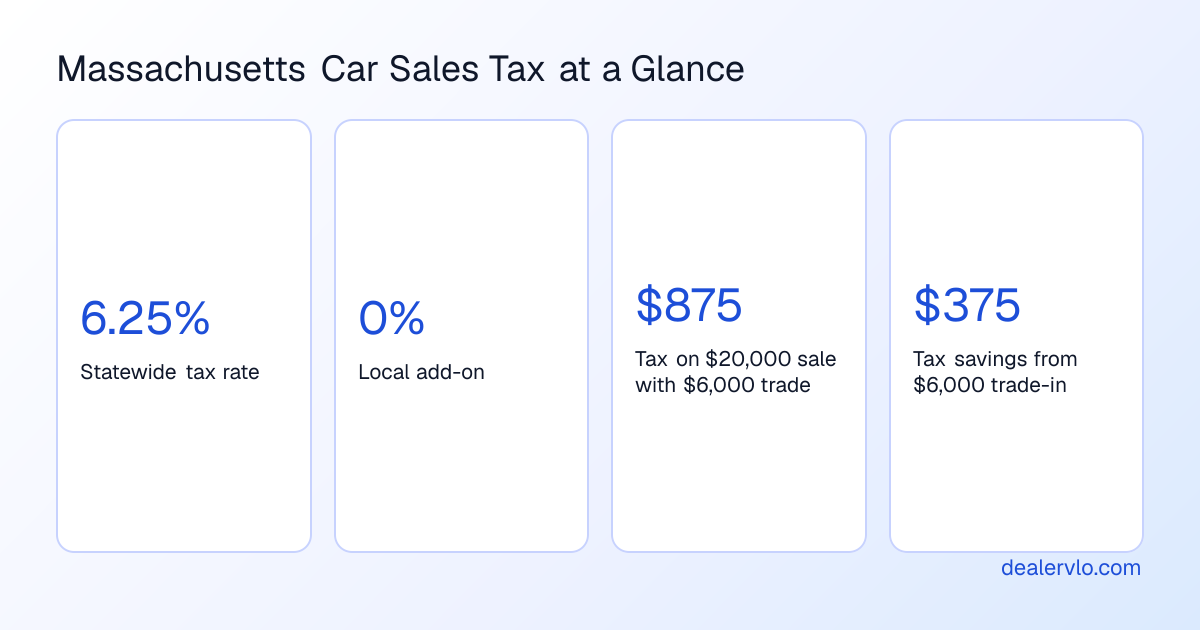
Massachusetts charges a **6.25% sales/use tax** on motor vehicles. Unlike Texas or Florida, there's **no local surtax** — a buyer in Boston and a buyer in the Berkshires pay the same rate. The tax is collected through the title and registration process when the [RMV-1](/guide/how-to-fill-out-rmv-1-massachusetts) is filed.
## The trade-in credit (dealer sales only)
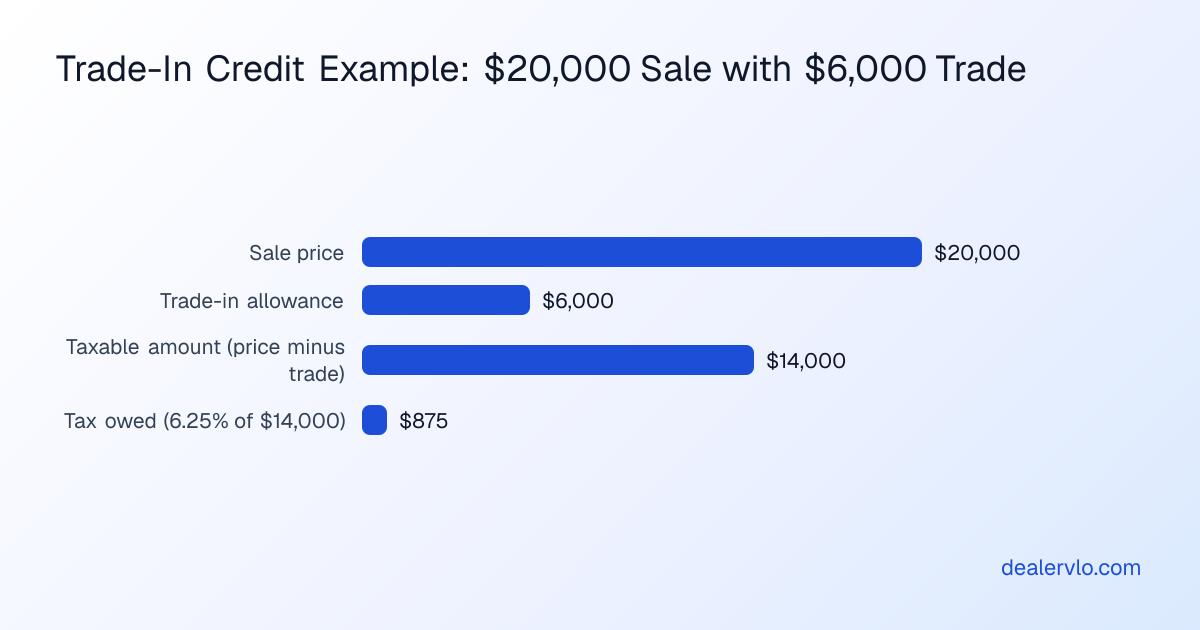
This is the part worth getting right. When you sell a car **in the regular course of business as a dealer** and the customer trades in a vehicle, the 6.25% is computed on the **sale price minus the trade-in allowance** — not the full price.
Example: you sell a $20,000 car and allow $6,000 for the trade. Tax is on **$14,000**, or **$875** — not $1,250. That trade-in credit is real money to your customer, and it only exists because you're a licensed dealer taking the trade. Quote the out-the-door number with the credit applied so the deal math holds up.
The trade-in credit reduces the *taxable amount*, not the tax dollar-for-dollar. A $6,000 trade saves the buyer 6.25% of $6,000 — $375 — in tax, on top of the $6,000 toward the price.
## The NADA "book value" rule — that's private-party, not you
Customers who bought a cheap car off a neighbor sometimes think the RMV will tax them on book value, and they bring that worry onto your lot. Set it straight: the **higher-of-NADA-or-price rule applies to casual private-party sales**, not dealer sales.
For a private sale between individuals, Massachusetts taxes the **higher of the actual price paid or the NADA "clean trade-in" value**. That's to stop two private parties from writing "$500" on a bill of sale for a $9,000 car. **On a dealer sale, the tax is based on your actual sales price** (less the trade-in) — your bill of sale governs. You don't get taxed on book value.
## What you collect vs. what the buyer pays
The sales tax is part of the title-and-registration package that goes to the RMV with the RMV-1 and the bill of sale. The price on your bill of sale is the basis, so keep it accurate and consistent with the RMV-1 — a mismatch is a common reason a title application gets questioned. (The full document set is in the [MA paperwork checklist](/guide/massachusetts-used-car-dealer-paperwork-checklist).)
## The short version
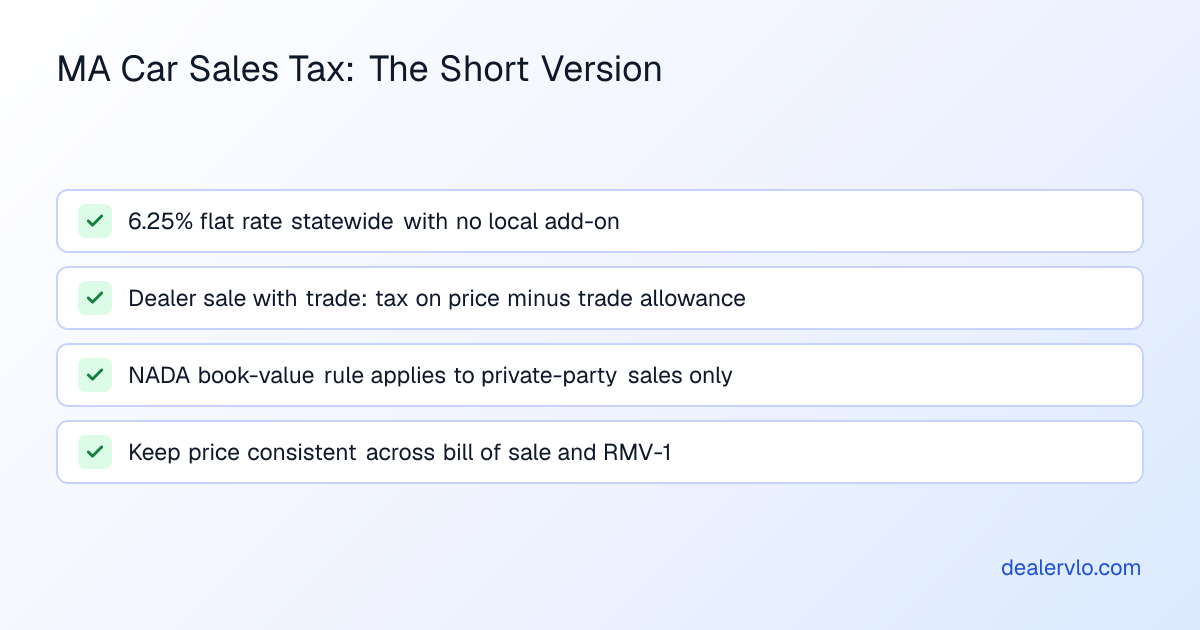
- 6.25%, flat, statewide — no local add-on.
- Dealer sale with a trade: tax on **price minus trade allowance**.
- The book-value (NADA) rule is a **private-party** anti-fraud rule, not a dealer rule.
- Keep the price consistent across the bill of sale and the RMV-1.
This isn't tax advice — verify specifics with the Massachusetts Department of Revenue — but it's the version that answers 95% of what customers ask at the desk.
Let DealerVLO do the deal math and the MA paperwork for you