# How to Track Expenses as a Used-Car Dealer (Without a Spreadsheet)
> Most lots track deals but never track overhead — so they know gross and never net. Here's a simple way to track rent, payroll, floor plan, and the rest, and see real profit.
- Source: https://www.dealervlo.com/blog/how-to-track-expenses-used-car-dealer
- Published: 2026-09-13
- Author: Chris Abouraad
- Tags: used car dealer expenses, dealership overhead, tracking business expenses, floor plan interest
---
Ask a used-car dealer for last month's gross and they can usually tell you to the dollar. Ask for last month's overhead and you'll often get a shrug and a guess. That gap is the whole problem: if you track what you make on the cars but never track what it costs to keep the doors open, you know your [gross but never your net](/blog/used-car-dealership-gross-vs-net-profit) — and net is the number that actually pays you.
The good news is that tracking expenses on a small lot is not complicated. It's just a habit most of us never set up, because the mental picture of "doing the books" is a spreadsheet nobody wants to open. Here's a simpler way to think about it.
## What counts as overhead vs. a per-car cost?
Two kinds of money leave your business, and they're accounted for differently:
- **Per-car costs** — what you paid for the vehicle and what you spent on [reconditioning](/blog/gross-profit-vs-holding-costs-aged-inventory). These belong to that car's gross profit. Track them on the vehicle.
- **Overhead** — what you pay whether or not you sold a car this month. This is what comes out *after* gross to give you net.
This post is about the second bucket. Here's what belongs in it:
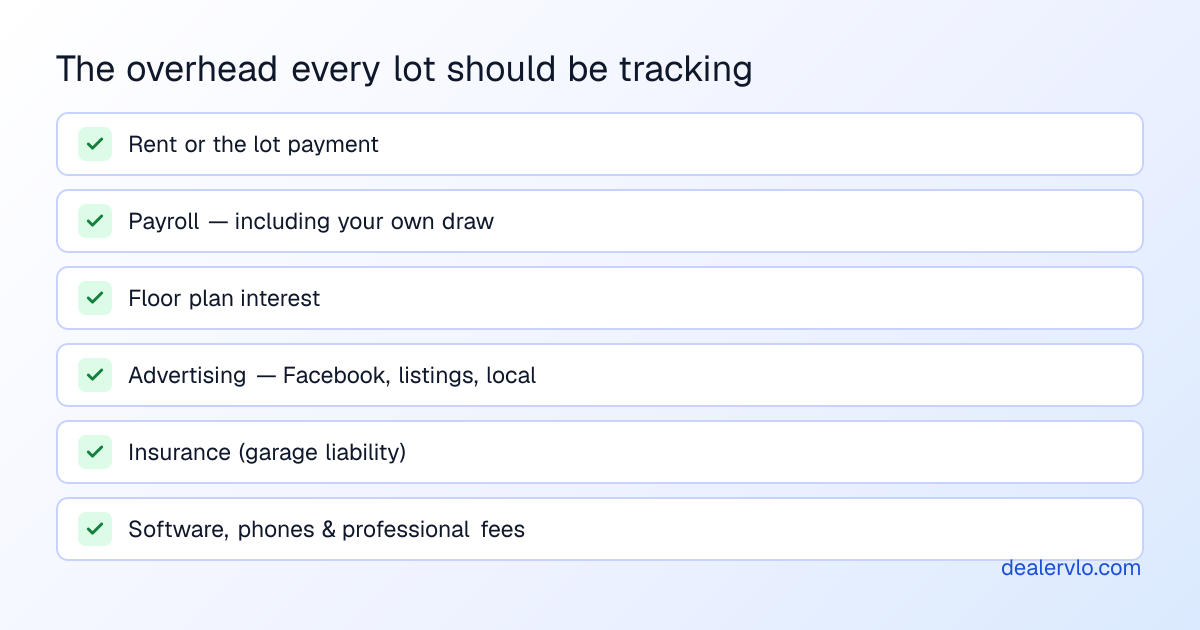
Two of these get skipped almost every time: **floor plan interest** (every day a car sits is money) and **your own draw** (if you don't pay yourself in the math, your "profit" is really just your wage). Count both, honestly.
## How do you track recurring dealer expenses?
Here's the move that turns expense tracking from a chore into a habit: your fixed costs are the same every month, so record them *one time* as recurring and let them carry forward. Rent, payroll, floor plan, insurance, software — set them once and you're done.
That's exactly how I built it into DealerVLO. You add each overhead item once, mark it one-time or recurring monthly, and it flows straight onto your profit and loss:
A sample lot's monthly overhead looks something like this — a mix of a few big fixed costs and a couple of small ones:
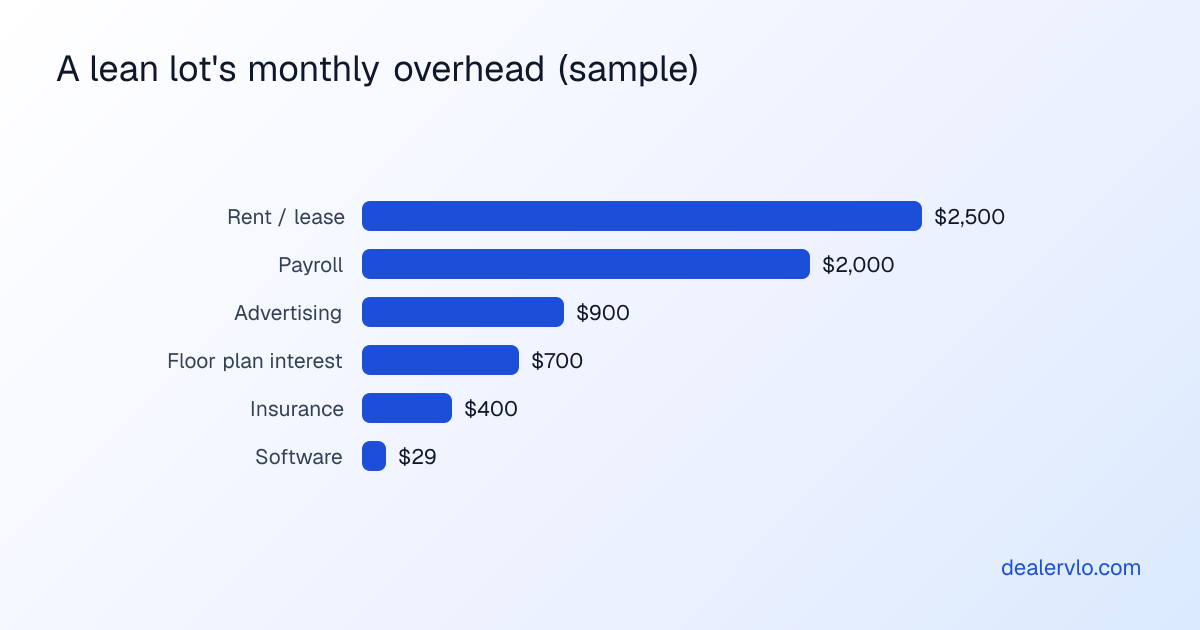
Nothing exotic. But add those up and it's over $6,500 a month that has to be covered *before* a single dollar of gross becomes profit. That's why the number matters.
## Then the profit number takes care of itself
Once your overhead is recorded, net profit stops being a mystery you reconstruct at tax time. It's just gross minus what you already entered — and because the recurring costs carry forward, the profit and loss is always current:
## The whole habit, start to finish
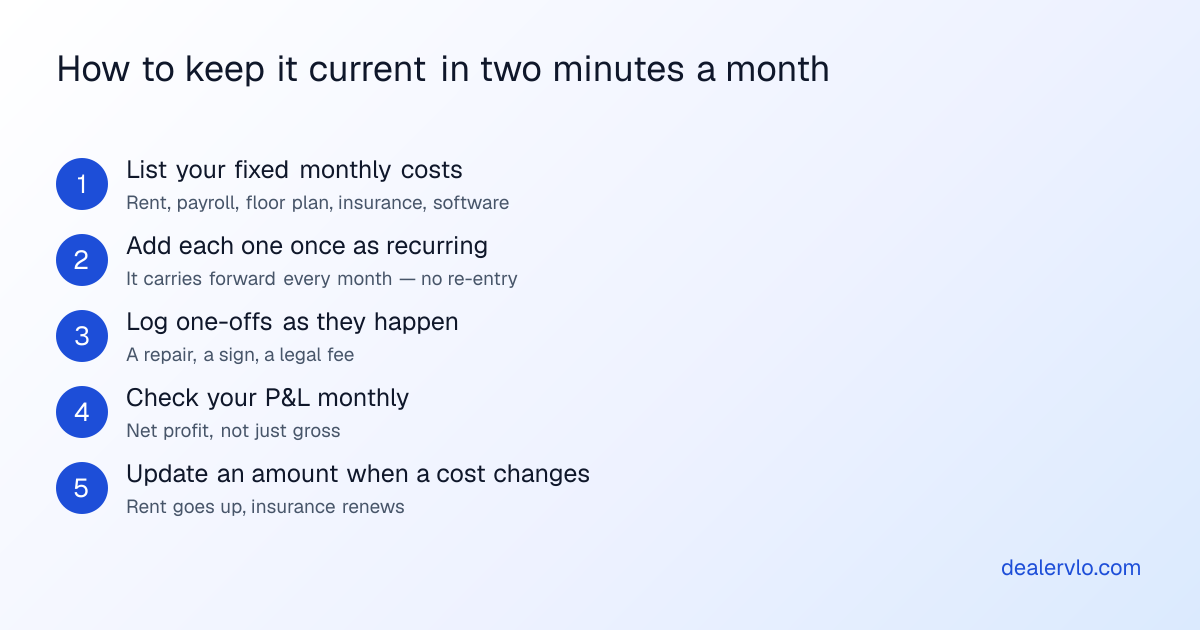
Set the recurring costs once, log the one-offs as they land, and glance at the P&L monthly. That's it. The dealers who do this catch a cost creeping up before it eats a quarter's profit; the ones who don't find out months later, when there's nothing left to do about it.
Want to know how many cars you need to sell just to cover that overhead? Run it on the [break-even calculator](/tools/dealer-break-even-calculator) — and if you floor your inventory, the [floor plan calculator](/tools/floor-plan-calculator) shows what the interest is really costing you.
## Frequently asked questions
**What expenses should a used-car dealer track?**
Everything you'd pay whether or not you sold a car: rent, payroll (including your draw), floor plan interest, advertising, insurance, utilities, software, and professional fees. Track per-car costs — acquisition and recon — separately, on the vehicle, because those belong to gross.
**How do I keep track of overhead without a spreadsheet?**
Record recurring costs once instead of re-entering them monthly. Rent, payroll, floor plan, and insurance are the same each month, so enter them as recurring and only ever log the one-offs. That keeps your profit number current instead of something you rebuild at tax time.
**Should I track floor plan interest as an expense?**
Yes — it's a real operating cost and one of the most under-counted. Every day a floored car sits, interest accrues, so it belongs in monthly overhead. Tracking it gives you an honest net and makes the cost of aged inventory visible.
**Do I need accounting software to track dealer expenses?**
You can use general accounting software, but many small lots find it heavier than they'll keep current. Tracking overhead inside your DMS works because it already knows the gross on every deal, so it can produce a real P&L without reconciling two systems.
**How often should I update my expenses?**
Set recurring costs once, log one-offs as they happen, and review your P&L at least monthly — the rhythm that matches how rent, floor plan, and payroll actually hit.
## Bottom line
Tracking expenses isn't about becoming an accountant. It's about recording your overhead once, keeping it current, and finally being able to see net profit instead of guessing at it. DealerVLO lets you record overhead in a couple of minutes and turns it into a live profit and loss automatically. [Start a free trial](/signup) and stop running blind on gross.
---
## FAQ
### What expenses should a used-car dealer track?
Track everything you'd pay whether or not you sold a car this month: rent or the lot payment, payroll (including your own draw), floor plan interest, advertising, insurance (garage liability), utilities, software and phones, and professional fees like your accountant. Then track the per-car costs separately — acquisition and reconditioning — because those belong to the vehicle's gross, not to overhead. The split matters: per-car costs come out of gross profit, and overhead comes out after, to give you net. Most lots track the car costs and forget the overhead, which is why they know their gross but never their real profit.
### How do I keep track of dealership overhead without a spreadsheet?
The trick is to record recurring costs once instead of re-entering them every month. Rent, payroll, floor plan, insurance, and software are the same (or nearly the same) each month, so enter them as recurring monthly expenses one time and let them carry forward. Then you only ever log the one-offs — a repair, a new sign, a legal fee — as they happen. That turns expense tracking from a monthly chore you skip into a two-minute habit, and it means your profit number is always current instead of something you reconstruct at tax time.
### Should I track floor plan interest as an expense?
Yes — floor plan interest is a real operating cost and one of the most under-counted on small lots. Every day a floored car sits, interest accrues, so it belongs in your monthly overhead. Tracking it does two things: it gives you an honest net profit, and it makes the cost of slow-moving inventory visible, which is exactly the pressure you want when you're deciding whether to wholesale an aged unit. If you pay cash for inventory instead of flooring it, you don't have the interest line, but you should still respect the holding cost of tied-up capital.
### Do I need accounting software to track dealer expenses?
You can use general accounting software, but a lot of small used-car dealers find it heavier than they need and end up not keeping it current. The reason to track expenses inside your DMS instead is that it already knows the gross on every deal — so once you add your overhead, it can produce a real profit and loss without you exporting numbers and reconciling two systems. Whatever tool you use, the goal is the same: record overhead consistently so you're always looking at net profit, not just gross.
### How often should I update my dealership expenses?
Set your recurring monthly costs once, then log one-off expenses as they happen so nothing gets forgotten, and glance at your profit and loss at least once a month. Monthly is the right rhythm because it matches how your rent, floor plan, and payroll actually hit, and it's frequent enough to catch a cost creeping up before it eats a quarter of profit. If you only look at the numbers at tax time, you find out about a losing stretch months after you could have done anything about it.