# 5 Cars That Penciled at the Greater Atlanta Auto Auction — With the ROI Math
> Five real cars from the 9/23 Greater Atlanta Auto Auction that penciled for an independent lot: hammer price, grade, and the estimated return on each, with the math shown.
- Source: https://www.dealervlo.com/blog/best-auction-buys-atlanta-september-2026
- Published: 2026-09-27
- Author: Chris Abouraad
- Tags: buying, auctions, inventory, southeast
---
Last week I went through the run sheet from the **Greater Atlanta Auto Auction's September 23 sale**, 252 cars, and pulled the five that penciled hardest for a small independent lot in the Southeast. This time I've also done the thing people always ask about: the **estimated return** on each one, with the math shown so you can check it against your own market.
Two honesty notes before the cars. The sheet has no MMR or retail values, so every retail figure below is **my estimate**, a range for this market, before recon. And the return is an **estimated gross on your all-in cost**, before overhead and holding costs: it's the room you have in the deal, not a guaranteed profit. If you only read one car, read the method section, because the method is what carries over to your next sale. (This is the Southeast edition; the [Northeast edition](/blog/best-auction-buys-september-2026) covered a Massachusetts sale.)
## How I read the sale
Out of 252 cars, most were out before any math: no condition report, a grade under 3.5, high-risk project cars, or models that sit in this market. What was left, I ranked on the gap between the hammer price and a realistic retail range, weighted by how fast the car should sell in the Southeast, where full-size trucks and three-row SUVs move.
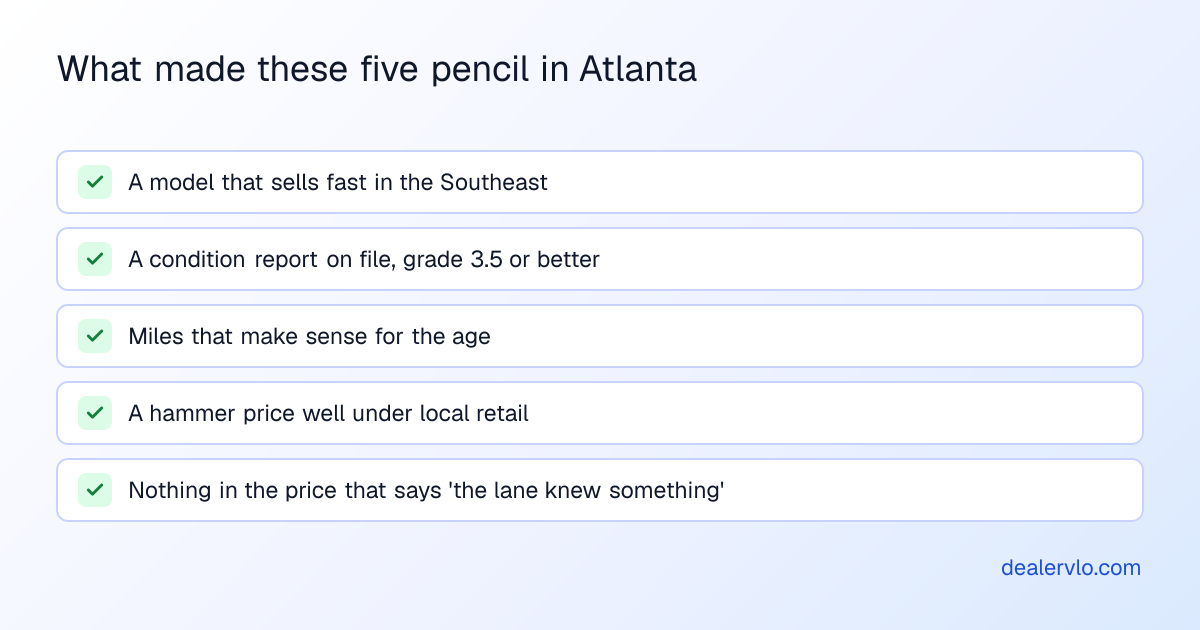
The last item on that list matters more than it looks. I'll come back to it with the one car I'd walk away from.
## The five buys
Each one shows the estimate the same way: **all-in cost** is the hammer price plus my assumed allowance of about **$600** for the buyer fee and local transport (check your auction's actual fee schedule and your hauler), plus a recon estimate for that car. The return is estimated gross ÷ all-in.
### 1. 2018 Chevrolet Equinox LT — Run `X-019` · 81k mi · grade 4.6 · hammered $8,200
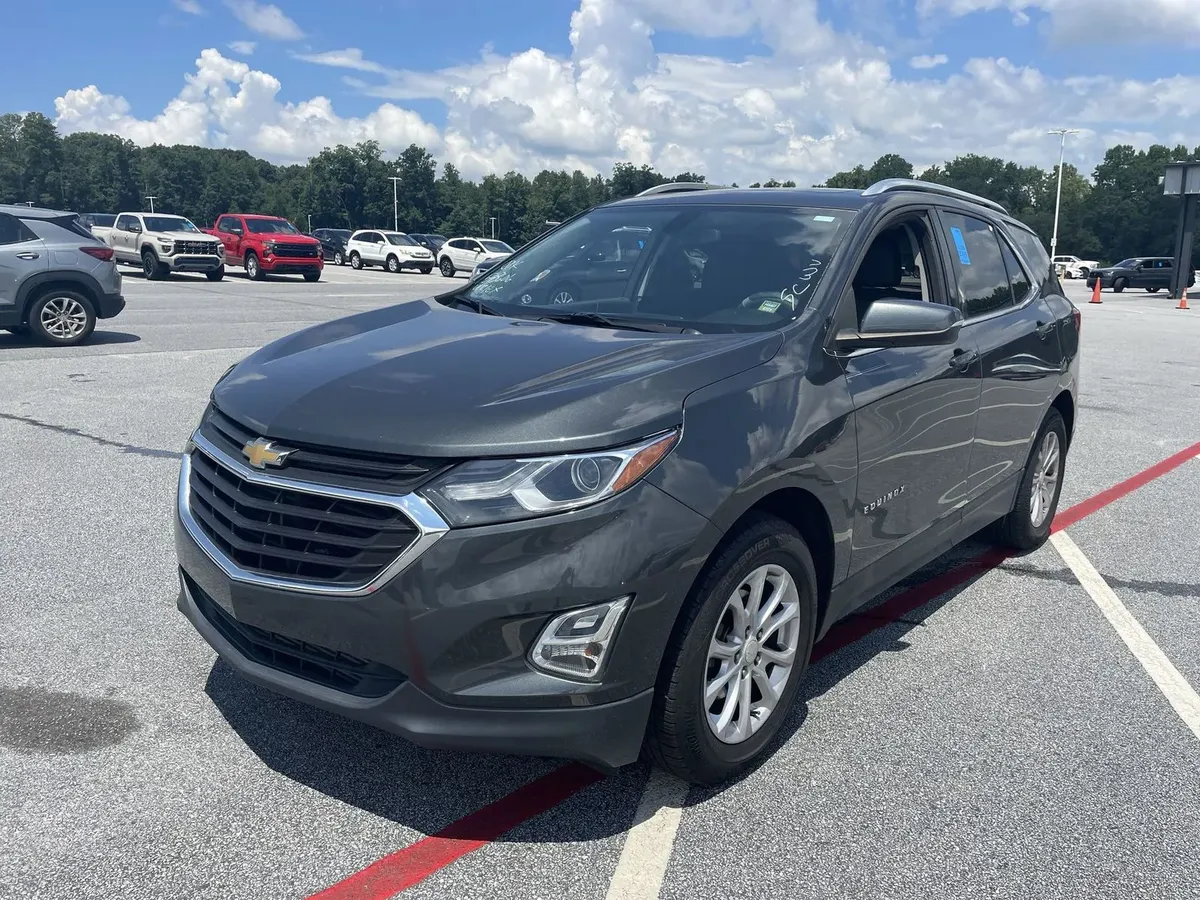
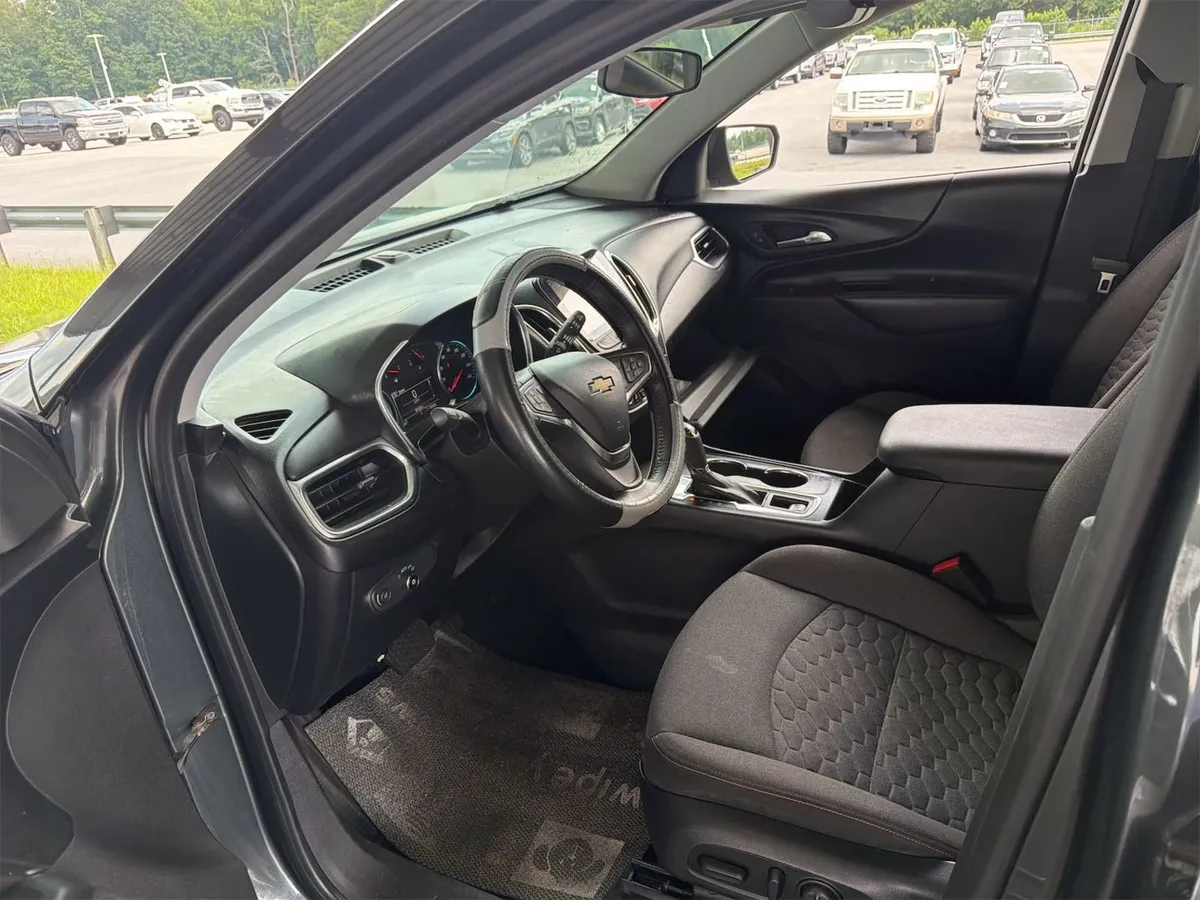 **The read:** a 4.6 grade on the most ordinary compact SUV in America, under $10k. That's the car a small lot can never keep in stock. The interior needs a real detail (lose the steering wheel cover, shampoo the floor), but the body is clean.
**The math (estimates):** retail ~**$12,500–$14,500** · all-in ≈ $8,200 + $600 + ~$600 recon = **$9,400** · est. gross **$3,100–$5,100** · est. return **~33–54%**.
### 2. 2019 Hyundai Tucson — Run `X-027` · 45k mi · grade 4.1 · hammered $12,400
**The read:** a 4.6 grade on the most ordinary compact SUV in America, under $10k. That's the car a small lot can never keep in stock. The interior needs a real detail (lose the steering wheel cover, shampoo the floor), but the body is clean.
**The math (estimates):** retail ~**$12,500–$14,500** · all-in ≈ $8,200 + $600 + ~$600 recon = **$9,400** · est. gross **$3,100–$5,100** · est. return **~33–54%**.
### 2. 2019 Hyundai Tucson — Run `X-027` · 45k mi · grade 4.1 · hammered $12,400
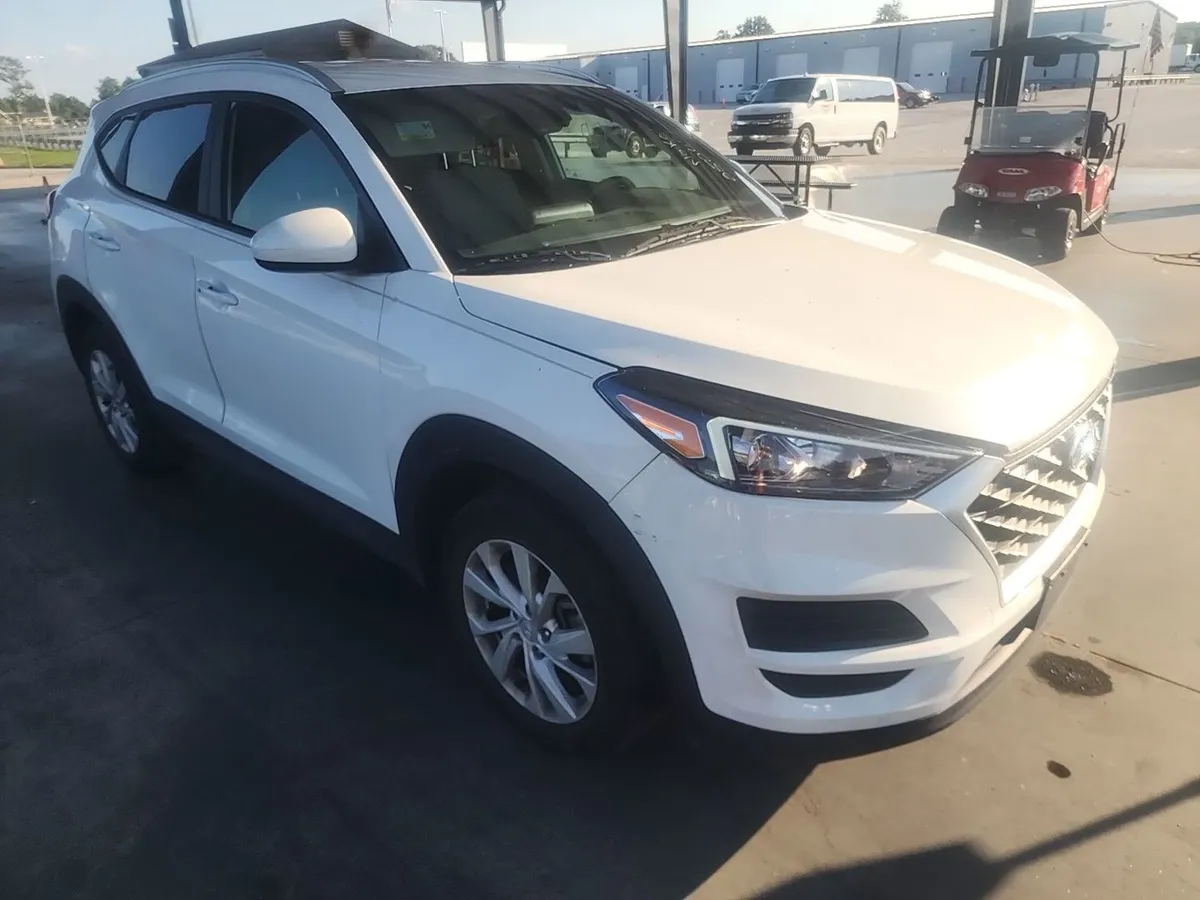
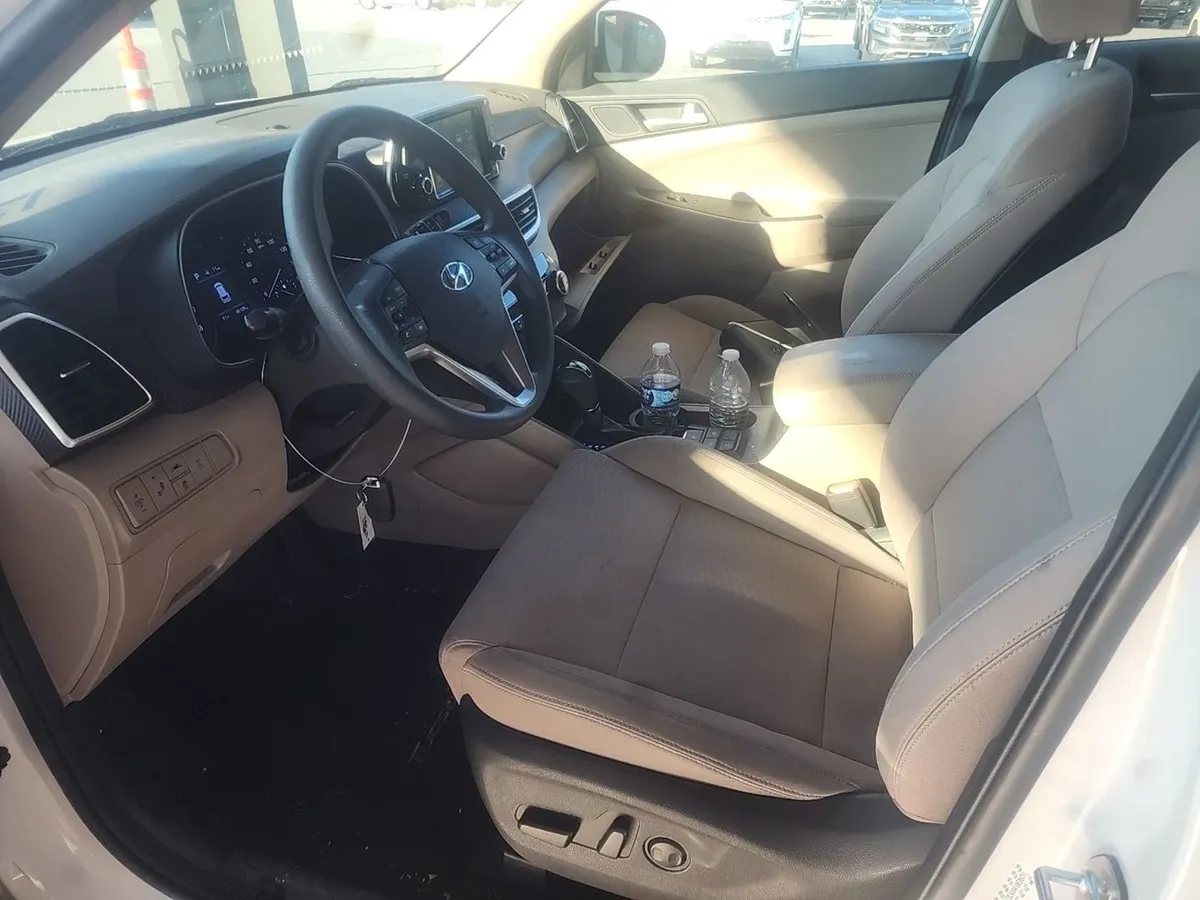 **The read:** 45,000 miles on a seven-year-old compact SUV is the story. Low miles sell themselves on a listing. It's the thinnest spread of the five, so it's a turn car, not a margin car: price it to move, and it frees the money for the next buy. Budget a little for the bumper touch-ups visible in the photos.
**The math (estimates):** retail ~**$16,500–$18,500** · all-in ≈ $12,400 + $600 + ~$700 recon = **$13,700** · est. gross **$2,800–$4,800** · est. return **~20–35%**.
### 3. 2020 Ford Expedition Limited — Run `F-014` · 136k mi · grade 4.9 · hammered $13,750
**The read:** 45,000 miles on a seven-year-old compact SUV is the story. Low miles sell themselves on a listing. It's the thinnest spread of the five, so it's a turn car, not a margin car: price it to move, and it frees the money for the next buy. Budget a little for the bumper touch-ups visible in the photos.
**The math (estimates):** retail ~**$16,500–$18,500** · all-in ≈ $12,400 + $600 + ~$700 recon = **$13,700** · est. gross **$2,800–$4,800** · est. return **~20–35%**.
### 3. 2020 Ford Expedition Limited — Run `F-014` · 136k mi · grade 4.9 · hammered $13,750
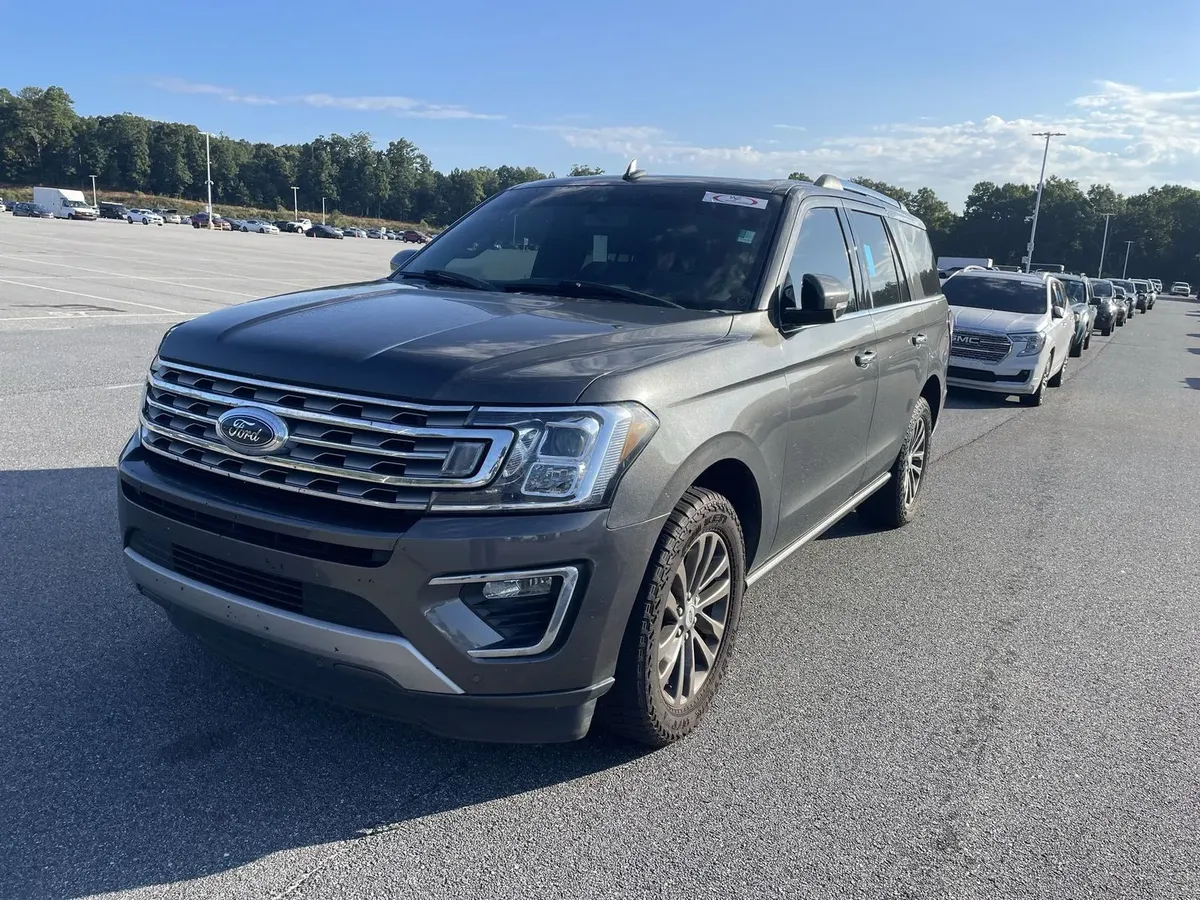
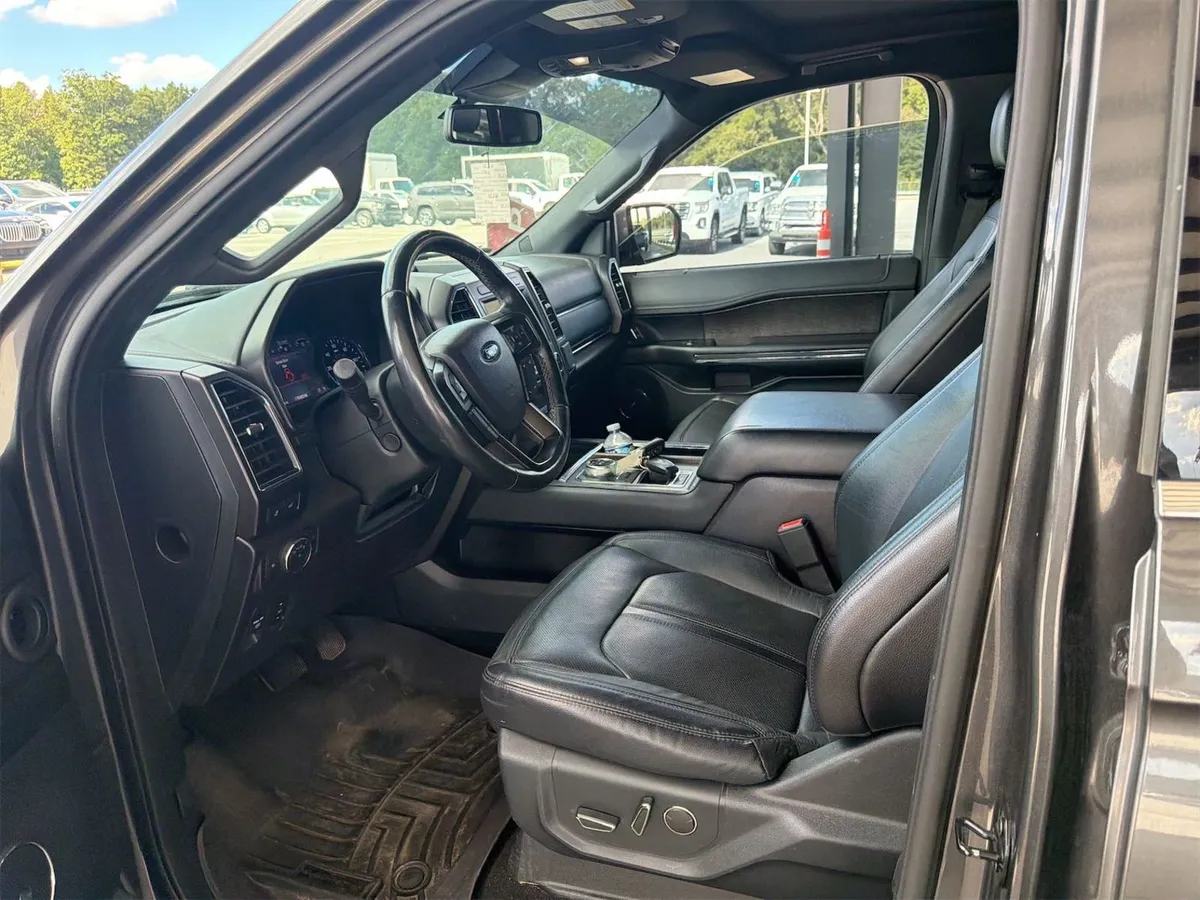 **The read:** this is the mispriced one. The miles pushed the hammer down, but a **4.9 grade** says the condition didn't follow the odometer. A leather, three-row, full-size SUV in this shape is exactly what Southeast families shop. Price it honestly for the miles and it's still a wide spread.
**The math (estimates):** retail ~**$21,000–$25,000** · all-in ≈ $13,750 + $600 + ~$900 recon = **$15,250** · est. gross **$5,750–$9,750** · est. return **~38–64%**.
### 4. 2021 Hyundai Palisade Calligraphy — Run `F-002` · 116k mi · grade 4.7 · hammered $14,500
**The read:** this is the mispriced one. The miles pushed the hammer down, but a **4.9 grade** says the condition didn't follow the odometer. A leather, three-row, full-size SUV in this shape is exactly what Southeast families shop. Price it honestly for the miles and it's still a wide spread.
**The math (estimates):** retail ~**$21,000–$25,000** · all-in ≈ $13,750 + $600 + ~$900 recon = **$15,250** · est. gross **$5,750–$9,750** · est. return **~38–64%**.
### 4. 2021 Hyundai Palisade Calligraphy — Run `F-002` · 116k mi · grade 4.7 · hammered $14,500
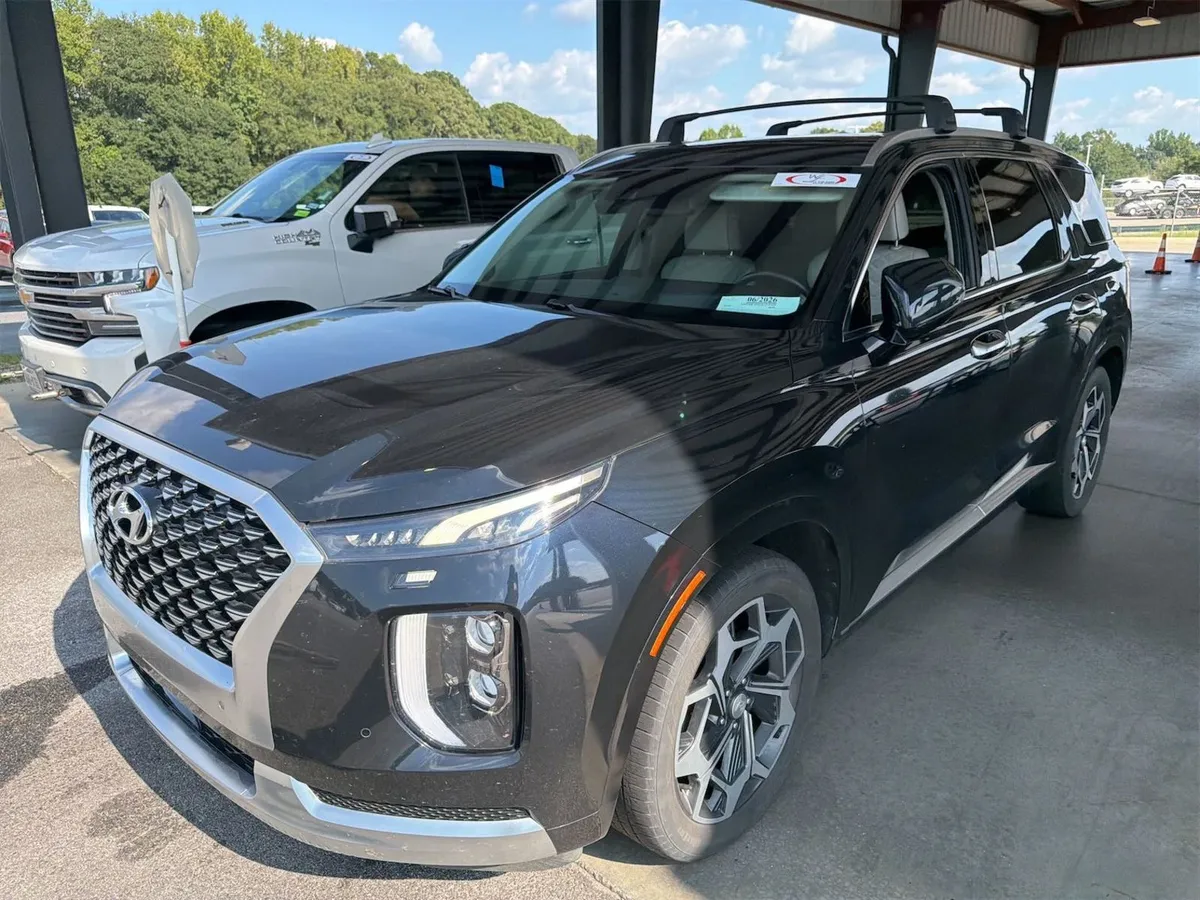
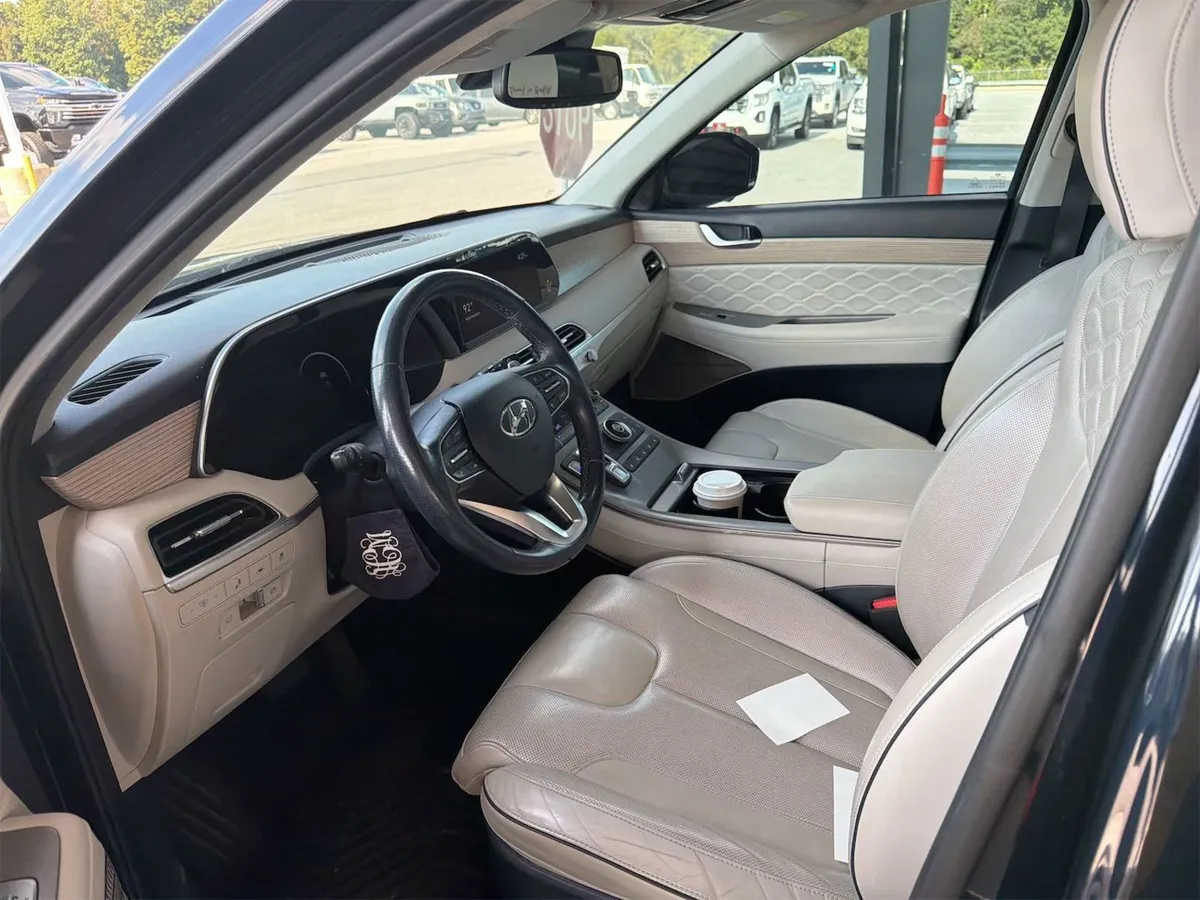 **The read:** the top trim of one of the most shopped three-row SUVs, at a 4.7. The light leather is the one thing to watch: it needs a proper clean, and it shows wear faster than black. Photograph that interior well, because it's what sells this car.
**The math (estimates):** retail ~**$22,000–$26,000** · all-in ≈ $14,500 + $600 + ~$800 recon = **$15,900** · est. gross **$6,100–$10,100** · est. return **~38–64%**.
### 5. 2021 Ford F-150 XLT 4x4 — Run `O-002` · 100k mi · grade 4.4 · hammered $16,500
**The read:** the top trim of one of the most shopped three-row SUVs, at a 4.7. The light leather is the one thing to watch: it needs a proper clean, and it shows wear faster than black. Photograph that interior well, because it's what sells this car.
**The math (estimates):** retail ~**$22,000–$26,000** · all-in ≈ $14,500 + $600 + ~$800 recon = **$15,900** · est. gross **$6,100–$10,100** · est. return **~38–64%**.
### 5. 2021 Ford F-150 XLT 4x4 — Run `O-002` · 100k mi · grade 4.4 · hammered $16,500
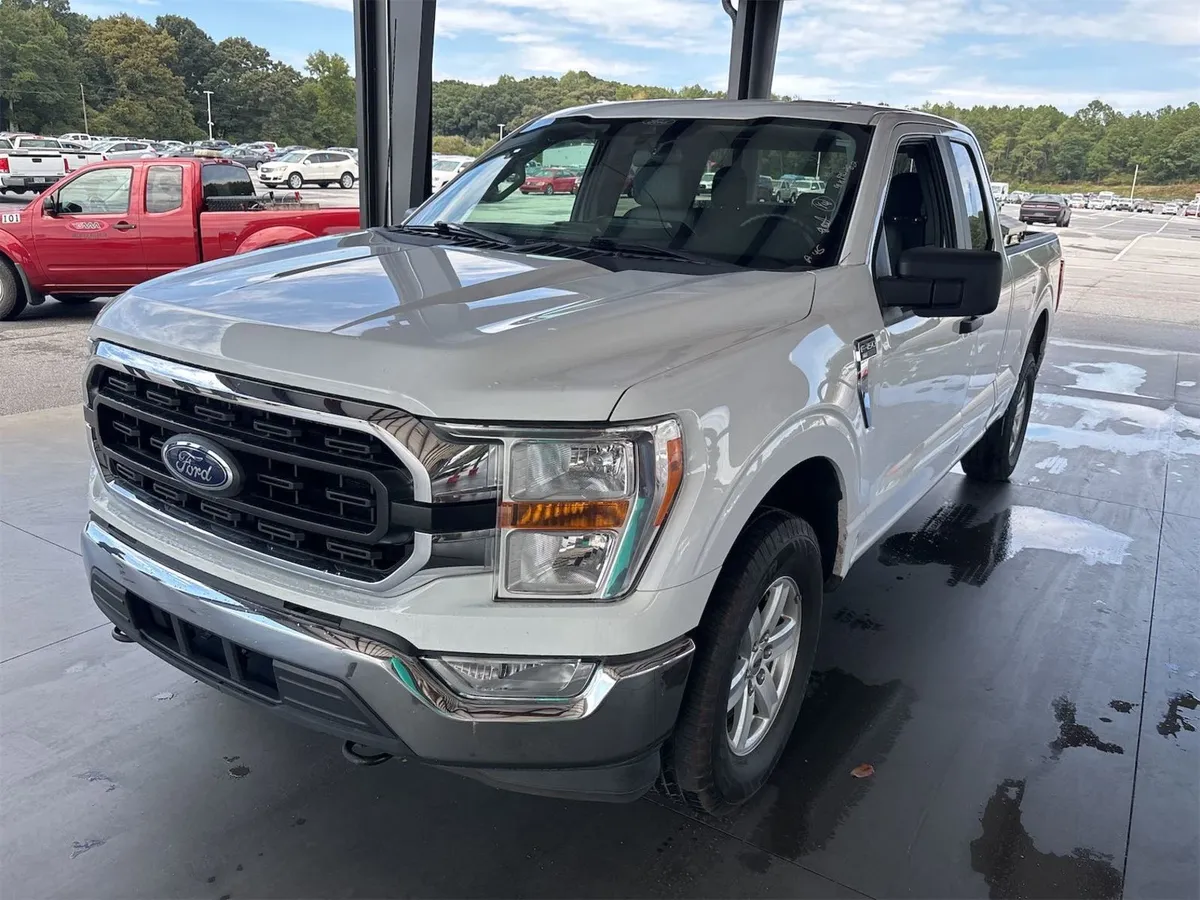
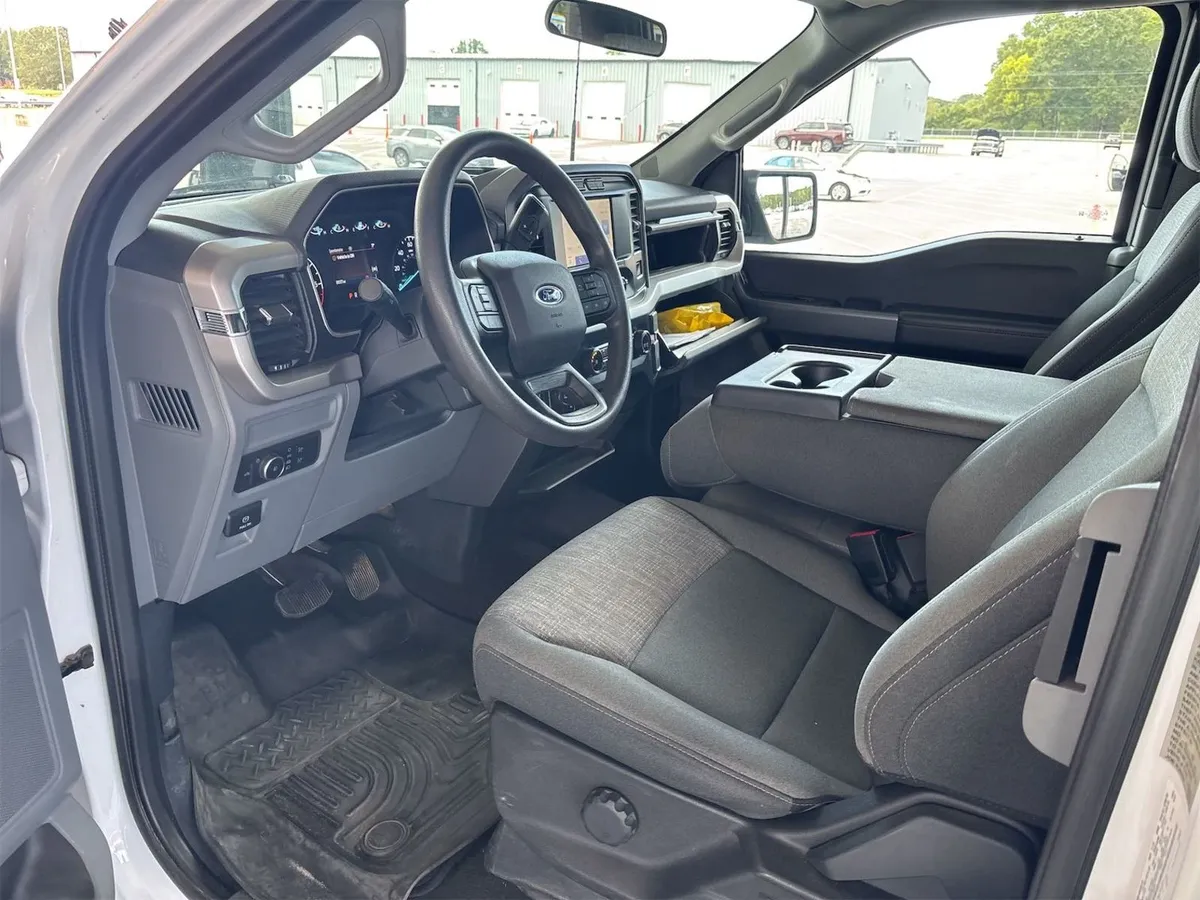 **The read:** the Georgia staple. A 4x4 XLT with a toolbox already in the bed, clean cloth interior, 4.4 grade. It's the most expensive of the five, but trucks like this are the safest money on the lot in this part of the country: they rarely sit.
**The math (estimates):** retail ~**$24,000–$28,000** · all-in ≈ $16,500 + $600 + ~$700 recon = **$17,800** · est. gross **$6,200–$10,200** · est. return **~35–57%**.
## What the returns really mean
Here's what the five hammered for, straight from the sale:
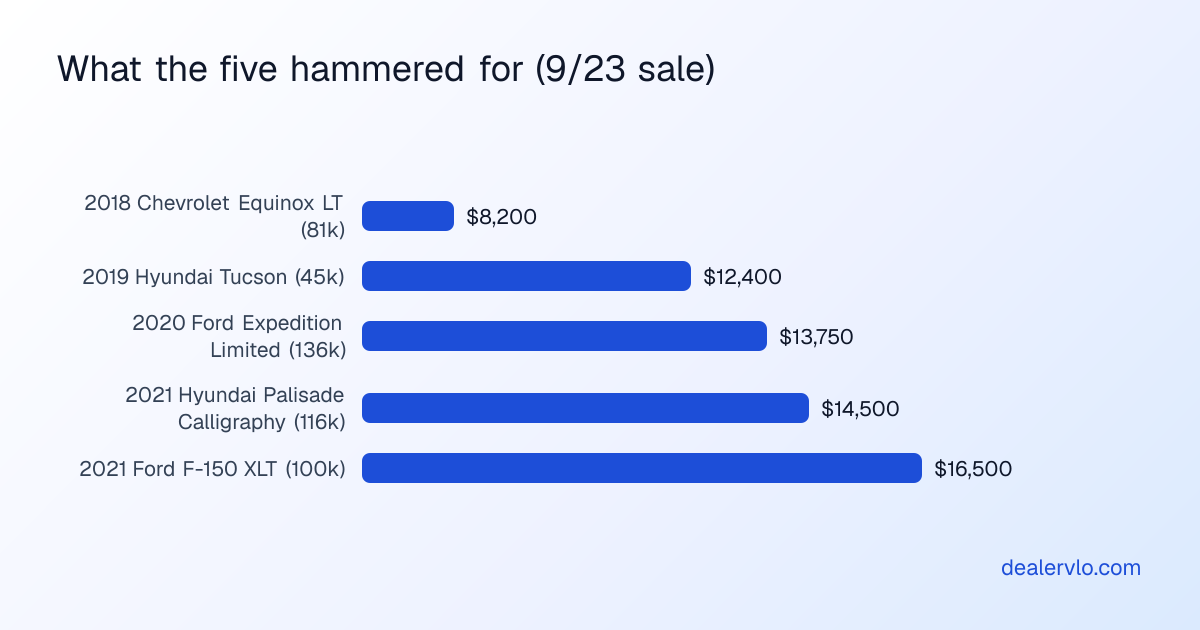
And here are the estimated returns side by side:
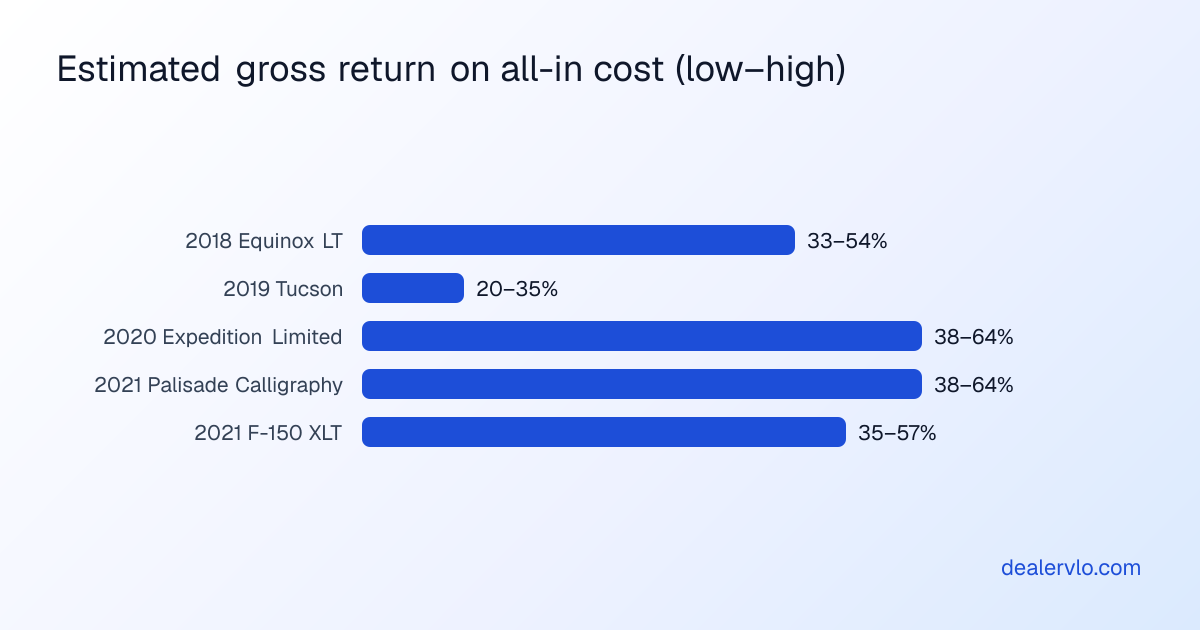
Three things to keep in mind before you treat those numbers as money in the bank:
- **They're before holding cost.** If a car costs you, say, $30 a day to carry (floor-plan interest, insurance, the slow slide in value), 30 days on the lot takes about $900 off every one of these. [Holding costs on aging inventory](/blog/gross-profit-vs-holding-costs-aged-inventory) breaks that daily number down.
- **They're before overhead.** Rent, payroll and insurance come out of the gross too. [Used car dealer profit margin](/blog/used-car-dealer-profit-margin) walks through working out what each car has to earn just to cover them.
- **Speed is the multiplier.** A 25% return on a car that sells in two weeks can beat a 60% return on one that sits for three months, because that money buys the next car sooner.
Want to run your own numbers before the next sale? The free calculator below works out the most you can bid and still hit your margin.
Track every auction buy's all-in cost and margin in DealerVLO, free for 14 days
## Honorable mentions
Three more from the same sale that were close:
- **2020 Chevrolet Tahoe Premier** (Run `F-010`, 149k mi, grade 4.5, $16,500). Same story as the Expedition: miles pulled the price down, the grade didn't.
- **2022 Subaru Ascent Limited** (Run `C-025`, 69k mi, grade 4.9, $18,800). Very clean, lower miles, a slightly thinner spread.
- **2024 Jeep Grand Cherokee L Limited** (Run `X-005`, 105k mi, grade 4.5, $17,800). Late model, high miles for its age, still a real gap to retail.
## The one I'd walk away from
A **2020 Ford Explorer XLT** (Run `F-004`) showed **12,021 miles** and hammered at **$14,750**. On paper, that's the steal of the sale: an Explorer with that few miles usually brings a lot more.
That's exactly why I'd pass until I'd read everything. When a price is far below what the miles and the grade say it should be, the lane usually knew something the run sheet doesn't show: an announced issue, a title brand, or an odometer question. Sometimes it's a real steal. You want to know which before you bid, not after. It's the same discipline as [reading the real gross behind an auction spread](/blog/auction-paper-spread-vs-real-gross).
## Turning them fast: where DealerVLO fits
Buying right is half of it. The other half is getting from the lane to a signed deal before holding cost eats the spread. This is the part of the business I built [DealerVLO](/) to speed up:
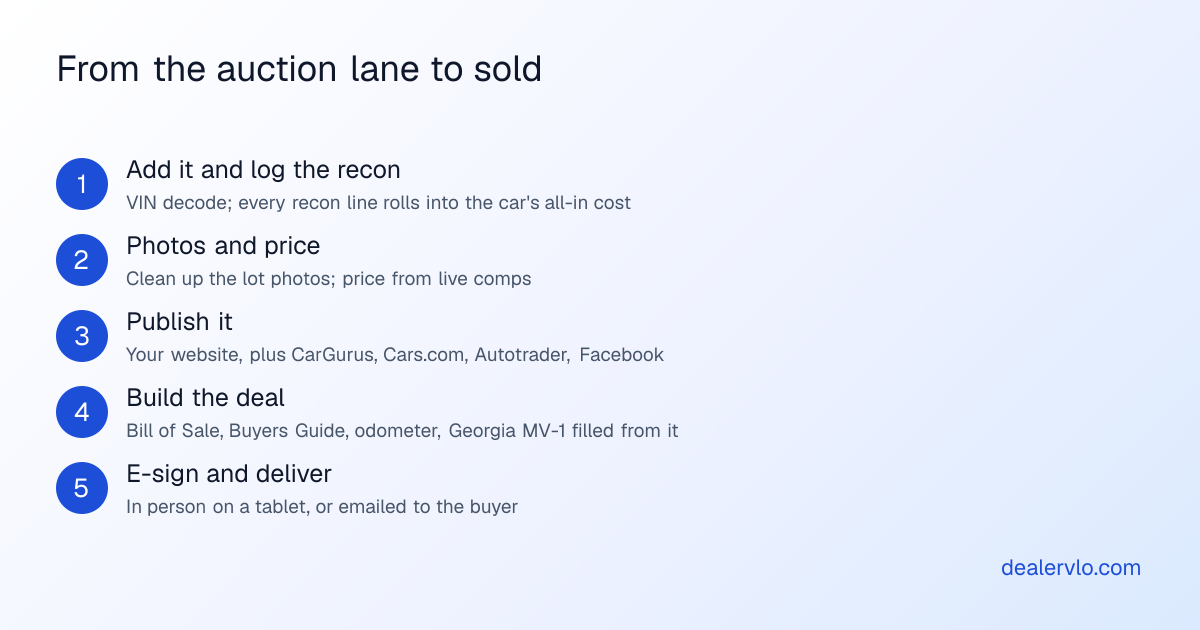
- **Know the real cost from day one.** Add the car with its VIN decoded, then log every recon line against it. Each car's all-in cost and margin sit on its page, next to how many days it's been on the lot.
- **Make the auction photos sellable.** Photos like the ones above are fine for a run sheet, not for a listing. DealerVLO's optional AI photo enhance puts the car on a clean backdrop without altering the car itself.
- **Price from live comps.** The AI price suggestion shows a price range from live comparable listings and a target price for selling in about 30 days, so you can check it against the car's all-in cost before you list it.
- **Advertise it everywhere at once.** Every car posts automatically to the dealer website that comes with DealerVLO. It also goes out on the listing feeds to CarGurus, Cars.com, Autotrader and Facebook once you've enrolled with each (you still pay those sites' own fees). More on how those work in [car listing sites for dealers](/blog/car-listing-sites-for-dealers).
- **Finish the paperwork from the deal.** Build the deal once and DealerVLO fills the Bill of Sale, the FTC Buyers Guide, the odometer statement and the Georgia title application ([the MV-1](/guide/how-to-fill-out-form-mv-1-georgia)) straight from it, with no retyping the VIN into every form.
- **Get it signed on the spot.** E-signatures on the deal documents let the buyer sign in person on a tablet or from an emailed link, so a sale doesn't wait on a second trip to the lot.
None of that changes what you paid at the auction. What it changes is how many days it takes to turn that buy back into cash, and that's where these returns are won or lost.
List, price and paper your next auction buy in DealerVLO: start your 14-day free trial
## Frequently asked questions
### What is a good ROI on a car bought at a dealer auction?
There's no fixed number, because it depends on your recon, your market, and how fast the car sells. The useful way to think about it is estimated gross divided by your all-in cost (hammer price, buyer fee, transport, and recon). On the five cars in this post, my estimates run roughly 20% to 64% before overhead and holding costs. The low end of that range on a car that sells in two weeks can beat the high end on one that sits for three months.
### How do you calculate ROI on a used car from auction?
Add up the all-in cost: the hammer price, the buyer fee, transport, and your reconditioning. Subtract that from a realistic retail price for your market to get the estimated gross. Divide the gross by the all-in cost. Then remember holding cost: every week the car sits costs you floor-plan interest, insurance, and some depreciation, so the faster it turns, the more of that return you actually keep.
### What used cars sell fastest for a lot in the Southeast?
In my read of this market, full-size trucks and three-row SUVs are the steadiest sellers, with clean compact SUVs close behind. Four of the five buys in this post are in exactly that lane. The model matters more than the price: a clean truck that sells in two weeks beats a cheap sedan that sits for two months.
### Should I bid on a car whose price looks too low for its miles?
Read the announcements and the condition report first. A price far below what the miles and grade suggest usually means the lane knew something the run sheet doesn't show: an announced issue, a title brand, or an odometer question. Sometimes it's a real steal, but you want to know which before the gavel drops, not after.
### How do you sell auction cars faster?
Get them online the day they land. Good photos, a price set from live comps, the car on your own website and the listing sites, and paperwork you can finish on the spot all shorten the time between the auction and the sale. Every day you cut off the clock is holding cost you keep.
## Bottom line
The five cars that penciled in Atlanta weren't the cheapest on the sheet. They were the clean, fast-selling ones where the price hadn't caught up with the condition: a 4.9 Expedition, a 4.7 Palisade, a 4.4 F-150, a 4.6 Equinox and a low-mile Tucson. The estimated returns are real room in the deal. Whether you keep it comes down to how fast you get each car priced, listed and signed.
DealerVLO keeps that whole loop in one place, from the car's true all-in cost to the website, the listing feeds, the filled paperwork and the e-signature, for a flat $29 a month with unlimited users. [Start your free 14-day trial](/signup) and run your next auction buy through it.
---
## FAQ
### What is a good ROI on a car bought at a dealer auction?
There's no fixed number, because it depends on your recon, your market, and how fast the car sells. The useful way to think about it is estimated gross divided by your all-in cost (hammer price, buyer fee, transport, and recon). On the five cars in this post, my estimates run roughly 20% to 64% before overhead and holding costs. The low end of that range on a car that sells in two weeks can beat the high end on one that sits for three months.
### How do you calculate ROI on a used car from auction?
Add up the all-in cost: the hammer price, the buyer fee, transport, and your reconditioning. Subtract that from a realistic retail price for your market to get the estimated gross. Divide the gross by the all-in cost. Then remember holding cost: every week the car sits costs you floor-plan interest, insurance, and some depreciation, so the faster it turns, the more of that return you actually keep.
### What used cars sell fastest for a lot in the Southeast?
In my read of this market, full-size trucks and three-row SUVs are the steadiest sellers, with clean compact SUVs close behind. Four of the five buys in this post are in exactly that lane. The model matters more than the price: a clean truck that sells in two weeks beats a cheap sedan that sits for two months.
### Should I bid on a car whose price looks too low for its miles?
Read the announcements and the condition report first. A price far below what the miles and grade suggest usually means the lane knew something the run sheet doesn't show: an announced issue, a title brand, or an odometer question. Sometimes it's a real steal, but you want to know which before the gavel drops, not after.
### How do you sell auction cars faster?
Get them online the day they land. Good photos, a price set from live comps, the car on your own website and the listing sites, and paperwork you can finish on the spot all shorten the time between the auction and the sale. Every day you cut off the clock is holding cost you keep.
**The read:** the Georgia staple. A 4x4 XLT with a toolbox already in the bed, clean cloth interior, 4.4 grade. It's the most expensive of the five, but trucks like this are the safest money on the lot in this part of the country: they rarely sit.
**The math (estimates):** retail ~**$24,000–$28,000** · all-in ≈ $16,500 + $600 + ~$700 recon = **$17,800** · est. gross **$6,200–$10,200** · est. return **~35–57%**.
## What the returns really mean
Here's what the five hammered for, straight from the sale:

And here are the estimated returns side by side:

Three things to keep in mind before you treat those numbers as money in the bank:
- **They're before holding cost.** If a car costs you, say, $30 a day to carry (floor-plan interest, insurance, the slow slide in value), 30 days on the lot takes about $900 off every one of these. [Holding costs on aging inventory](/blog/gross-profit-vs-holding-costs-aged-inventory) breaks that daily number down.
- **They're before overhead.** Rent, payroll and insurance come out of the gross too. [Used car dealer profit margin](/blog/used-car-dealer-profit-margin) walks through working out what each car has to earn just to cover them.
- **Speed is the multiplier.** A 25% return on a car that sells in two weeks can beat a 60% return on one that sits for three months, because that money buys the next car sooner.
Want to run your own numbers before the next sale? The free calculator below works out the most you can bid and still hit your margin.
Track every auction buy's all-in cost and margin in DealerVLO, free for 14 days
## Honorable mentions
Three more from the same sale that were close:
- **2020 Chevrolet Tahoe Premier** (Run `F-010`, 149k mi, grade 4.5, $16,500). Same story as the Expedition: miles pulled the price down, the grade didn't.
- **2022 Subaru Ascent Limited** (Run `C-025`, 69k mi, grade 4.9, $18,800). Very clean, lower miles, a slightly thinner spread.
- **2024 Jeep Grand Cherokee L Limited** (Run `X-005`, 105k mi, grade 4.5, $17,800). Late model, high miles for its age, still a real gap to retail.
## The one I'd walk away from
A **2020 Ford Explorer XLT** (Run `F-004`) showed **12,021 miles** and hammered at **$14,750**. On paper, that's the steal of the sale: an Explorer with that few miles usually brings a lot more.
That's exactly why I'd pass until I'd read everything. When a price is far below what the miles and the grade say it should be, the lane usually knew something the run sheet doesn't show: an announced issue, a title brand, or an odometer question. Sometimes it's a real steal. You want to know which before you bid, not after. It's the same discipline as [reading the real gross behind an auction spread](/blog/auction-paper-spread-vs-real-gross).
## Turning them fast: where DealerVLO fits
Buying right is half of it. The other half is getting from the lane to a signed deal before holding cost eats the spread. This is the part of the business I built [DealerVLO](/) to speed up:

- **Know the real cost from day one.** Add the car with its VIN decoded, then log every recon line against it. Each car's all-in cost and margin sit on its page, next to how many days it's been on the lot.
- **Make the auction photos sellable.** Photos like the ones above are fine for a run sheet, not for a listing. DealerVLO's optional AI photo enhance puts the car on a clean backdrop without altering the car itself.
- **Price from live comps.** The AI price suggestion shows a price range from live comparable listings and a target price for selling in about 30 days, so you can check it against the car's all-in cost before you list it.
- **Advertise it everywhere at once.** Every car posts automatically to the dealer website that comes with DealerVLO. It also goes out on the listing feeds to CarGurus, Cars.com, Autotrader and Facebook once you've enrolled with each (you still pay those sites' own fees). More on how those work in [car listing sites for dealers](/blog/car-listing-sites-for-dealers).
- **Finish the paperwork from the deal.** Build the deal once and DealerVLO fills the Bill of Sale, the FTC Buyers Guide, the odometer statement and the Georgia title application ([the MV-1](/guide/how-to-fill-out-form-mv-1-georgia)) straight from it, with no retyping the VIN into every form.
- **Get it signed on the spot.** E-signatures on the deal documents let the buyer sign in person on a tablet or from an emailed link, so a sale doesn't wait on a second trip to the lot.
None of that changes what you paid at the auction. What it changes is how many days it takes to turn that buy back into cash, and that's where these returns are won or lost.
List, price and paper your next auction buy in DealerVLO: start your 14-day free trial
## Frequently asked questions
### What is a good ROI on a car bought at a dealer auction?
There's no fixed number, because it depends on your recon, your market, and how fast the car sells. The useful way to think about it is estimated gross divided by your all-in cost (hammer price, buyer fee, transport, and recon). On the five cars in this post, my estimates run roughly 20% to 64% before overhead and holding costs. The low end of that range on a car that sells in two weeks can beat the high end on one that sits for three months.
### How do you calculate ROI on a used car from auction?
Add up the all-in cost: the hammer price, the buyer fee, transport, and your reconditioning. Subtract that from a realistic retail price for your market to get the estimated gross. Divide the gross by the all-in cost. Then remember holding cost: every week the car sits costs you floor-plan interest, insurance, and some depreciation, so the faster it turns, the more of that return you actually keep.
### What used cars sell fastest for a lot in the Southeast?
In my read of this market, full-size trucks and three-row SUVs are the steadiest sellers, with clean compact SUVs close behind. Four of the five buys in this post are in exactly that lane. The model matters more than the price: a clean truck that sells in two weeks beats a cheap sedan that sits for two months.
### Should I bid on a car whose price looks too low for its miles?
Read the announcements and the condition report first. A price far below what the miles and grade suggest usually means the lane knew something the run sheet doesn't show: an announced issue, a title brand, or an odometer question. Sometimes it's a real steal, but you want to know which before the gavel drops, not after.
### How do you sell auction cars faster?
Get them online the day they land. Good photos, a price set from live comps, the car on your own website and the listing sites, and paperwork you can finish on the spot all shorten the time between the auction and the sale. Every day you cut off the clock is holding cost you keep.
## Bottom line
The five cars that penciled in Atlanta weren't the cheapest on the sheet. They were the clean, fast-selling ones where the price hadn't caught up with the condition: a 4.9 Expedition, a 4.7 Palisade, a 4.4 F-150, a 4.6 Equinox and a low-mile Tucson. The estimated returns are real room in the deal. Whether you keep it comes down to how fast you get each car priced, listed and signed.
DealerVLO keeps that whole loop in one place, from the car's true all-in cost to the website, the listing feeds, the filled paperwork and the e-signature, for a flat $29 a month with unlimited users. [Start your free 14-day trial](/signup) and run your next auction buy through it.
---
## FAQ
### What is a good ROI on a car bought at a dealer auction?
There's no fixed number, because it depends on your recon, your market, and how fast the car sells. The useful way to think about it is estimated gross divided by your all-in cost (hammer price, buyer fee, transport, and recon). On the five cars in this post, my estimates run roughly 20% to 64% before overhead and holding costs. The low end of that range on a car that sells in two weeks can beat the high end on one that sits for three months.
### How do you calculate ROI on a used car from auction?
Add up the all-in cost: the hammer price, the buyer fee, transport, and your reconditioning. Subtract that from a realistic retail price for your market to get the estimated gross. Divide the gross by the all-in cost. Then remember holding cost: every week the car sits costs you floor-plan interest, insurance, and some depreciation, so the faster it turns, the more of that return you actually keep.
### What used cars sell fastest for a lot in the Southeast?
In my read of this market, full-size trucks and three-row SUVs are the steadiest sellers, with clean compact SUVs close behind. Four of the five buys in this post are in exactly that lane. The model matters more than the price: a clean truck that sells in two weeks beats a cheap sedan that sits for two months.
### Should I bid on a car whose price looks too low for its miles?
Read the announcements and the condition report first. A price far below what the miles and grade suggest usually means the lane knew something the run sheet doesn't show: an announced issue, a title brand, or an odometer question. Sometimes it's a real steal, but you want to know which before the gavel drops, not after.
### How do you sell auction cars faster?
Get them online the day they land. Good photos, a price set from live comps, the car on your own website and the listing sites, and paperwork you can finish on the spot all shorten the time between the auction and the sale. Every day you cut off the clock is holding cost you keep.